
When Not To Use Frosted Glass Situations Where Its A Bad Choice
📏 Custom Sizes Available
🚚 Nation Wide Delivery
🛡️ BS EN 12150 Certified
Frosted glass is often praised for its ability to provide privacy while allowing light to pass through. It’s widely used in bathrooms, offices, kitchens, and modern interiors. However, despite its many advantages, frosted glass is not always the right solution.
In some situations, using frosted glass can reduce functionality, increase maintenance, or even create safety and comfort issues. Understanding where frosted glass doesn’t work well is just as important as knowing where it shines.
This guide explains when you should avoid frosted glass, why it can be problematic in certain scenarios, and what alternatives may work better.
📏 Custom Sizes Available
🚚 Nation Wide Delivery
🛡️ BS EN 12150 Certified
Why It’s Important to Consider the Downsides of Frosted Glass
Frosted glass is often a permanent choice. Once it’s cut, toughened, and installed, reversing the decision can be costly. Many homeowners assume frosted glass is a universal solution for privacy, only to discover later that it compromises visibility, warmth, or usability.
If you’re still exploring different frosted finishes, thicknesses, and applications, this detailed UK guide to frosted glass options provides a helpful overview before committing:
👉 https://www.glasshelp.co.uk/frosted-glass/
📏 Custom Sizes Available
🚚 Nation Wide Delivery
🛡️ BS EN 12150 Certified
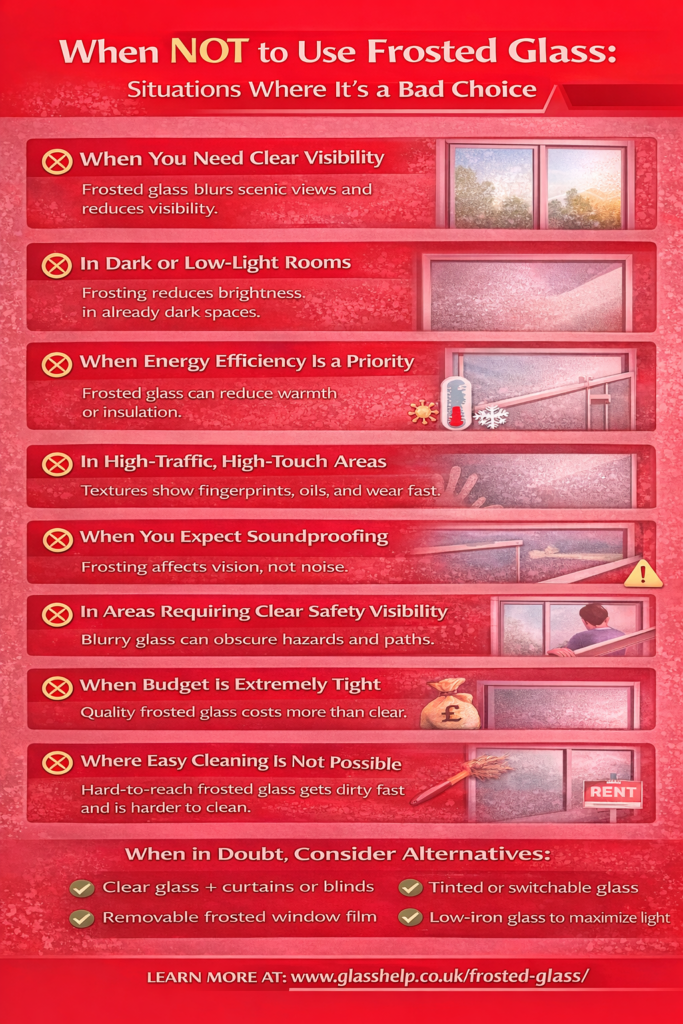
1. When You Need Clear Visibility
This is the most obvious — yet most commonly overlooked — limitation.
Why Frosted Glass Fails Here
Frosted glass intentionally blurs visibility. If you need to:
- See outdoors clearly
- Monitor activity
- Enjoy uninterrupted views
…frosted glass will work against you.
Where This Becomes a Problem
- Living room windows with scenic views
- Kitchens overlooking gardens
- Home offices where visual connection matters
- Retail displays that rely on product visibility
In these spaces, frosted glass can feel restrictive and visually disconnect the room from its surroundings.
📏 Custom Sizes Available
🚚 Nation Wide Delivery
🛡️ BS EN 12150 Certified
2. In Dark or Low-Light Rooms
Although frosted glass allows light to pass through, it reduces brightness compared to clear glass.
Why It’s a Bad Choice
In rooms that already suffer from limited daylight, frosted glass:
- Softens light too much
- Makes spaces feel dull or enclosed
- Increases reliance on artificial lighting
Common Problem Areas
- North-facing rooms
- Basements or lower floors
- Narrow hallways with small windows
In these cases, clear or lightly tinted glass is often a better option.
📏 Custom Sizes Available
🚚 Nation Wide Delivery
🛡️ BS EN 12150 Certified
3. When Energy Efficiency Is a Priority
Frosted glass can impact thermal performance — especially if it replaces modern, high-performance glazing.
The Issue
- Frosted finishes can reduce solar heat gain
- Poorly specified glass may increase heat loss
- Older frosted panels may lack modern insulation
Where This Matters Most
- External windows
- Conservatories
- Energy-efficient homes
If insulation and heat retention are priorities, frosted glass must be carefully specified — or avoided altogether in favour of energy-rated clear glazing.
📏 Custom Sizes Available
🚚 Nation Wide Delivery
🛡️ BS EN 12150 Certified
4. In High-Traffic, High-Touch Areas
Not all frosted glass is easy to maintain.
Why This Can Be a Problem
Some frosted finishes — particularly sandblasted glass — have a textured surface that:
- Shows fingerprints easily
- Traps oils and dirt
- Develops stains over time
Problematic Locations
- Kitchen doors
- Frequently used internal doors
- Areas handled by children
In these areas, frosted glass can quickly look worn and dirty if the wrong finish is chosen.
📏 Custom Sizes Available
🚚 Nation Wide Delivery
🛡️ BS EN 12150 Certified
5. When You Expect Soundproofing
This is a very common misconception.
The Reality
Frosted glass affects visibility, not sound transmission. On its own, it offers little to no sound insulation.
Where This Causes Issues
- Home offices
- Meeting rooms
- Bedrooms near noisy areas
If acoustic performance is required, frosted glass alone will disappoint. Laminated or acoustic glass is needed instead.
📏 Custom Sizes Available
🚚 Nation Wide Delivery
🛡️ BS EN 12150 Certified
6. In Areas That Require Clear Safety Visibility
In some situations, seeing clearly is a safety requirement, not just a preference.
Why Frosted Glass Can Be Risky
Reduced visibility can:
- Obscure hazards
- Make navigation difficult
- Increase accident risk
Examples
- Staircases (especially with children or elderly users)
- Balustrades in tight spaces
- Glass doors along walkways
In these cases, clear glass or partially frosted designs are often safer.
📏 Custom Sizes Available
🚚 Nation Wide Delivery
🛡️ BS EN 12150 Certified
7. When Budget Is Extremely Tight
Frosted glass is usually more expensive than clear glass.
Cost Considerations
- Custom frosting adds manufacturing cost
- Toughening is often required
- Replacement is expensive if mistakes are made
If the project budget is limited, frosted window film may offer a short-term alternative — though it won’t match the durability or finish of true frosted glass.
📏 Custom Sizes Available
🚚 Nation Wide Delivery
🛡️ BS EN 12150 Certified
8. In Rental Properties or Temporary Spaces
Because frosted glass is permanent, it may not suit situations where flexibility is needed.
Why It’s a Poor Fit
- Cannot be easily reversed
- May not align with landlord requirements
- Limits future design changes
In rentals or temporary commercial spaces, removable solutions like window film are often more practical.
📏 Custom Sizes Available
🚚 Nation Wide Delivery
🛡️ BS EN 12150 Certified
9. Where Easy Cleaning Is Not Possible
Maintenance access matters more than people expect.
The Problem
Frosted glass installed in:
- Hard-to-reach locations
- Tight corners
- High ceilings
…can become difficult to clean, especially if textured finishes are used.
Once stains or marks build up, restoration can be difficult or impossible.
📏 Custom Sizes Available
🚚 Nation Wide Delivery
🛡️ BS EN 12150 Certified
10. When Design Flexibility Is Important
Design trends change.
Why Frosted Glass Can Limit You
- Patterns are permanent
- Opacity cannot be adjusted
- Replacing glass is costly
If you expect to update your interior design in the future, frosted glass may lock you into a look longer than you’d like.
📏 Custom Sizes Available
🚚 Nation Wide Delivery
🛡️ BS EN 12150 Certified
Better Alternatives in These Situations
If frosted glass isn’t suitable, consider:
- Clear glass with curtains or blinds
- Low-iron clear glass for brightness
- Tinted glass for glare control
- Switchable smart glass (where budget allows)
- Frosted window film for temporary privacy
Each alternative solves specific problems that frosted glass may introduce.
📏 Custom Sizes Available
🚚 Nation Wide Delivery
🛡️ BS EN 12150 Certified
How to Decide If Frosted Glass Is Right for You
Before ordering, ask yourself:
- Do I need privacy all the time?
- Will reduced clarity affect usability or safety?
- Is light or warmth already limited in this space?
- Can I easily clean and maintain this glass?
- Is this a long-term or temporary solution?
Honest answers to these questions prevent regret.
📏 Custom Sizes Available
🚚 Nation Wide Delivery
🛡️ BS EN 12150 Certified
Final Thoughts
Frosted glass is an excellent material — when used in the right place. But it isn’t a universal solution. In areas where visibility, light, safety, energy efficiency, or flexibility matter more than privacy, frosted glass can become a poor choice.
The key is matching the glass to the purpose, not just the aesthetic.
If you’re weighing your options and want to explore where frosted glass does work well — along with finishes, thicknesses, and use cases — this comprehensive UK resource is a smart next step:
👉 https://www.glasshelp.co.uk/frosted-glass/
📏 Custom Sizes Available
🚚 Nation Wide Delivery
🛡️ BS EN 12150 Certified