
Glass Partition Walls for Rental Properties: What’s Allowed & What’s Smart
Glass partition walls are a stylish way to divide space, maximise natural light, and create modern, open-plan interiors — but when it comes to rental properties, landlords, tenants and property managers must understand what’s allowed, what’s required, and what’s best practice.
This guide combines legal context, safety requirements, practical installation advice, and value-enhancing strategies to help you decide when and how to implement glass partitions in residential rentals.
1. The Appeal of Glass Partition Walls in Rentals
Glass partition walls offer several advantages in rental properties:
- Visual light and openness: They let daylight penetrate deep into interior spaces, making smaller rooms feel larger.
- Modern aesthetics: Clean lines and transparency can elevate property appeal to premium renters.
- Functional zoning: Separate areas (e.g., living vs. workspace) without solid walls.
- Easy customisation: Options range from clear to frosted, coloured or patterned glass.
For design inspiration and technical options, explore this glass partition walls resource which showcases different styles and considerations for residential and commercial applications.
2. Legal Requirements Every Landlord Should Know
Before installing any feature — especially glass in interior walls — landlords must ensure compliance with safety and building standards.
a. Safety Glass Regulations
Under UK building regulations (particularly Approved Document K and related British Standards), safety glazing is required in critical locations where breakage poses a risk to people. Safety glass (toughened or laminated) must be used in areas where glass is:
- Below 800 mm from the floor,
- Within 1500 mm of doorway glazing,
- Adjacent to doors within about 300 mm of the edge,
- Anywhere people are likely to collide with it. Planning Portal+1
These rules apply to internal glazed partitions as well as doors and windows, so if a glass partition extends into critical safety heights, it must comply with these standards. Even in private rented homes, these safety requirements are essential to reduce the risk of injury and landlord liability.
b. Landlord Responsibilities for Repairs & Standards
Under UK tenancy law — such as the Homes (Fitness for Human Habitation) Act and guidance from Shelter — landlords must ensure rented homes are safe, fit for habitation, and free from hazards. This includes windows, doors, and glass installations. GOV.UK
While landlords don’t have to install features like partitions, they must ensure any glass present is safe and compliant. If existing glass becomes damaged, cracked, or unsafe, it must be repaired or replaced promptly.
c. Tenant Alterations vs Landlord Permission
Tenants generally cannot install permanent fixtures in a rented property without the landlord’s written consent. This includes glass walls, structural partitions, or modifications that impact the building fabric. Always check the tenancy agreement — and get permission in writing — before any such changes. If a tenant installs a feature without permission, they may be liable for costs to restore the property.
Often, landlords and tenants find creative compromises (like modular or temporary partitions) that provide functionality without permanent alteration.
3. When Are Glass Partition Walls “Allowed”?
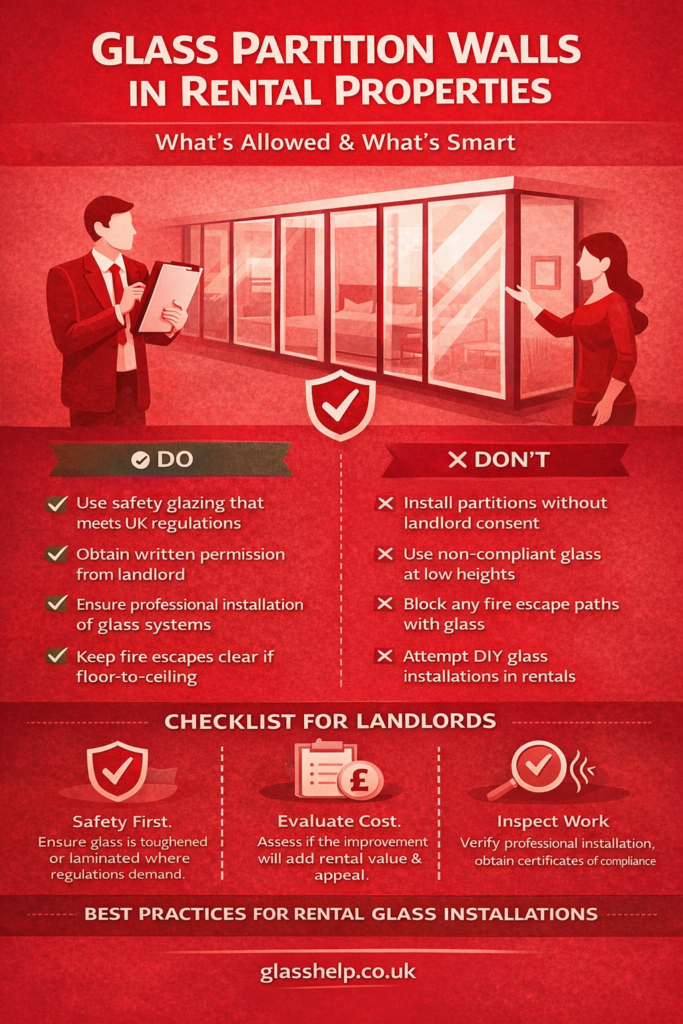
There’s no blanket legal prohibition on glass partition walls in rental properties — but their use must:
✔ Comply with safety glazing regulations (especially at lower heights). Planning Portal
✔ Be consented in writing by the landlord if it’s a tenant-initiated improvement.
✔ Not interfere with fire escape routes or essential services.
✔ Be installed by qualified professionals if fixing into walls, floors, or ceilings.
In many cases, landlords choose to install partitions themselves as a value-adding feature, boosting rental appeal and differentiating the property from competitors.
4. Safety Glass: What It Is & Why It Matters
a. Toughened vs Laminated Glass
- Toughened glass is stronger and shatters into small, less dangerous pieces.
- Laminated glass holds together if broken, providing extra safety and security.
Both meet safety standards — and either can be appropriate for partitions depending on location and risk. In areas where tenants might lean, fall or brush into the glass (e.g., near living area walkways), using compliant safety glass is essential.
Applying safety glass is not just good practice — it’s part of meeting building regulations and reducing risk of injury or landlord liability. British Landlords Association
5. Practical & Smart Design Tips for Rental Glass Partitions
a. Choose the Right System
There are two broad approaches:
Fixed glass partitions – permanent, secure, often frameless or with minimal framing
Movable / modular glass systems – non-permanent, flexible panels that can be repositioned
In rentals, movable or modular systems can be especially smart because they avoid permanent alterations while offering light and zoning benefits.
b. Use Frosted or Manifested Glass for Privacy
Clear glass looks great but may not suit bedrooms or bathrooms. Using frosted glass or manifestation (visual markers to prevent accidental collision) satisfies safety and privacy needs — and often aligns with regulations requiring marking on large glazed areas. KCA Partitioning
c. Keep Fire & Escape Routes Clear
Partitions — especially when floor-to-ceiling — must not obstruct fire escape paths or compartmentation. Consult building regulations or a qualified installer when integrating partitions into circulation areas.
d. Consider Acoustic Performance
Glass may be less sound-insulating than solid walls. In flats or multi-tenant properties, consider acoustic glass systems or seals that reduce noise transmission between rooms.
e. Use Professional Installation
Glass systems (especially structural partitions) require precision. Professional installation ensures compliance with regulations, reduces the risk of damage, and maintains warranty obligations.
6. Does a Landlord Have To Install Glass Features?
No. According to general landlord responsibilities, property improvements (like installing glass partitions) are not mandatory unless required for safety or compliance with regulation. Landlords must keep properties free from serious hazards, but feature upgrades are usually optional unless stated in tenancy agreements. Shelter England
However, many landlords choose to invest in partitions (especially glass ones) because they:
- Increase rental value and appeal
- Attract higher-quality tenants
- Provide modern living environments
It’s often part of a refurb strategy rather than a legal requirement.
7. Cost Considerations for Landlords
Glass partition walls vary widely in cost, depending on size, type, thickness, finishes, and installation complexity.
Key cost drivers include:
- Safety glass specification (toughened or laminated)
- Framed vs frameless design
- Acoustic performance
- Professional installation vs DIY
Typically, quality partition systems are more expensive than simple stud walls — but the aesthetic and rental return benefits often justify the investment, especially in premium markets.
8. Striking the Balance: Smart Strategies for Rentals
a. Communicate Early With Tenants
If tenants request partitions for lifestyle needs (e.g., creating a home office), landlords may agree if it enhances property value — but get written consent detailing responsibilities, removal terms, and repair obligations at tenancy end.
b. Choose Reversible or Modular Solutions
Movable glass systems or track-mounted partitions can offer style without permanent changes. If tenants leave, you can adapt the space for the next occupant without undoing construction work.
c. Document Everything
Keep records of installations, safety compliance certificates, and correspondence — especially when significant features like glass partitions are present. This protects landlords and supports regulatory compliance.
Conclusion: What’s Allowed & What’s Smart
Glass partition walls can be a valuable enhancement in rental properties — offering aesthetic appeal, better light, and flexible use of space. However, landlords and tenants must understand:
- Safety glass and building regulations apply (especially in critical locations). Planning Portal
- Installations should be consented and compliant.
- Design choices (privacy, acoustics, fire safety) matter in rented settings.
- Professional installation minimises risk and ensures quality.
When done right, glass partitions can boost rental value, tenant satisfaction, and long-term property appeal — making them a smart strategic investment for modern landlords.