
Glass Staircases vs Wooden vs Steel: Long-Term Cost and Maintenance Comparison
Choosing a staircase is not just a design decision — it’s a 10–30 year ownership decision. The material you choose affects maintenance workload, long-term costs, durability, and how the staircase ages in real homes (kids, pets, wet shoes, moving furniture) and in commercial spaces (high footfall, cleaning teams, stricter inspections).
This guide compares glass vs wood vs steel staircases with a practical focus on what you’ll spend over time and what you’ll need to maintain — not just what looks good on day one.
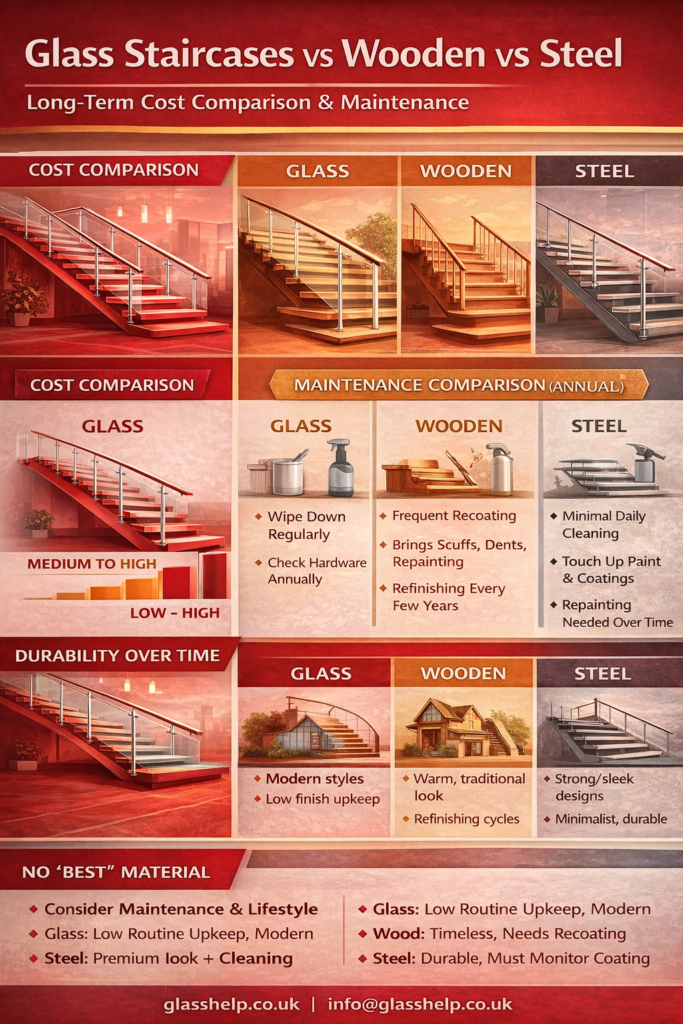
The quick takeaway (for most buyers)
- Wood often has the lowest entry cost and feels warm, but it typically has the highest ongoing “finish” maintenance (scratches, dents, refinishing, repainting/staining).
- Steel is strong and can last decades, but long-term cost depends heavily on corrosion protection (especially outdoors/coastal areas) and paint/coating upkeep.
- Glass (usually glass balustrades/panels, sometimes glass treads in premium builds) can be low-maintenance day-to-day, but it may bring higher upfront cost and higher “replacement cost” if a panel is damaged.
If you’re planning a modern look with maximum light, compare options and configurations on this glass staircase page (it also helps you understand how thickness and glass type choices affect cost). Glass Help
1) What “long-term cost” actually includes
When people compare staircase prices, they often compare only the build/installation quote. A better comparison is lifecycle cost, which includes:
- Upfront cost (materials + fabrication + install)
- Routine cleaning (time and products)
- Periodic maintenance (recoating wood, repainting steel, replacing seals/hardware)
- Repairs (chips, cracks, squeaks, loose fixings)
- Major refresh (full refinish / major repaint / panel replacement)
- Downtime disruption (especially for businesses)
A common way homeowners meet surprise costs is during renovation cycles — stairs often need updates during broader refurb work. UK renovation cost guidance can help you benchmark what “staircase work” tends to cost when updates become necessary. MyJobQuote
2) Upfront cost comparison (what typically drives it)
Glass staircases (usually: glass balustrades + metal/wood structure)
Cost drivers
- Glass type (toughened/laminated), thickness, edge finishing
- Hardware system (frameless channels, posts, clamps)
- Custom fabrication and site measuring
- Higher precision fitting (alignment matters visually)
Reality check
Most homes don’t use all-glass structural treads. The common “glass staircase” look is glass side panels / balustrades paired with timber or steel strings and treads — often a smart balance of cost + style. Glass Help
Wooden staircases
Cost drivers
- Timber species (softwood vs hardwood)
- Finish quality (painted, stained, clear lacquer)
- Joinery complexity (winder stairs, curved details)
- Balustrade style
Wood can be economical, but premium hardwood and bespoke joinery can climb quickly.
Steel staircases
Cost drivers
- Steel grade, fabrication complexity, welding time
- Coating system (powder coat, paint, galvanizing)
- Design style (floating, mono-stringer, industrial)
Steel often becomes cost-effective when you need strength in a compact design, but fabrication and finishing can add up.
3) Maintenance workload: what you actually do year-to-year
Glass: low effort cleaning, periodic checks
Typical routine
- Regular wipe-down to reduce fingerprints, dust, streaks
- Occasional deeper clean for corners, clamps, handrails
- Annual check: fixings tight, seals intact, no chips on edges
Good care advice usually boils down to cleaning + being mindful when moving bulky items + checking fixings periodically. stairpartsonline.co.uk
Common long-term costs
- Replacing worn rubber gaskets or protective pads (small cost)
- Hardware refresh if exposed to moisture (bathroom zones / near pool areas)
- Panel replacement if damaged (rare, but costly compared to wood scratches)
Who glass suits best
- Buyers who want bright, modern spaces and prefer cleaning over refinishing
- Homes where you’ll value visibility and “open” feel long-term
Wood: “finish maintenance” is the big one
Typical routine
- Sweep/vacuum often (grit scratches finishes)
- Spot clean spills quickly (especially on stained wood)
- Protect high-wear areas (runners, mats, pads on furniture)
Periodic maintenance
- Recoating or refinishing depending on wear:
- Painted stairs show scuffs and chips
- Clear-coated wood shows scratches and dull patches
- Stained wood may need touch-ups where it wears through
Common long-term costs
- Refinishing is the classic big-ticket maintenance event for wood stairs over the years (especially in family homes).
Who wood suits best
- Buyers who want warmth and don’t mind periodic refresh cycles
- Homes where the staircase is likely to be updated as part of décor changes
Steel: minimal daily work, but coatings matter
Typical routine
- Dust and wipe down (especially matte finishes that show marks)
- Keep moisture under control (wet shoes + trapped water near fixings)
Periodic maintenance
- Inspect coating for chips/scratches (they can become rust points)
- Touch up exposed steel, especially on edges and weld zones
- Outdoor or coastal installs: more frequent checks
Common long-term costs
- Repainting or recoating over time, depending on environment and finish system
- Rust remediation if maintenance was delayed
Who steel suits best
- Buyers who want strong, slim designs
- Commercial spaces where durability matters and maintenance can be scheduled
4) Durability over time: how each material “ages”
Glass aging pattern
- Looks “new” for a long time if cleaned regularly
- Can show fingerprints and smears easily (more visible in strong daylight)
- Hardware condition often determines long-term appearance
Wood aging pattern
- Develops character, but also:
- squeaks (movement)
- dents (impact)
- finish wear on nosings (front edge of treads)
- Very fixable, but maintenance is hands-on
Steel aging pattern
- Structurally stable
- Appearance depends on coating system:
- powder coat: durable but chips can be visible
- paint: easy touch-ups but may need rework later
5) Long-term cost scenarios (realistic examples)
Scenario A: Busy family home (kids/pets)
- Wood: higher chance of dents/scratches → refinishing sooner
- Glass: frequent cleaning, but less “wear and tear” damage from daily use
- Steel: durable, but watch for coating chips from toys/furniture impacts
Scenario B: Rental property
- Wood: repairs are common; refinishing cost can appear between tenancies
- Steel: robust; touch-up paint is manageable
- Glass: looks premium, but damage events (rare) can be expensive
Scenario C: Commercial / high footfall
- Steel often wins for structural resilience
- Glass works well for balustrades if installed to spec and maintained (cleaning schedules)
- Wood can look great but may show wear quickly unless well protected
6) How to choose: a practical checklist
Choose GLASS if you want:
- Maximum light and modern style
- Lower “finish maintenance” than wood
- A staircase that stays visually consistent for years
Start with a configuration review on this glass staircase page to understand panel types, thickness options, and what typically affects pricing. Glass Help
Choose WOOD if you want:
- Warmth, classic feel, and easy future style changes
- You don’t mind refinishing cycles (or you plan a runner anyway)
Choose STEEL if you want:
- Structural strength, slim profiles, and long service life
- You’re willing to monitor coatings (especially in damp/outdoor settings)
7) Buyer tips to reduce long-term costs (any material)
- Plan for cleaning access (especially glass corners and clamps)
- Protect high-wear zones (tread nosings, landing edges)
- Specify the right finish for your lifestyle:
- wood: durable topcoat, darker stain hides marks
- steel: good coating system for environment
- glass: choose hardware that resists corrosion where needed
- Do an annual “stair MOT”: check looseness, wobble, noises, and any damage (simple inspections prevent expensive fixes later). stairpartsonline.co.uk
Conclusion
There isn’t one “best” staircase material — but there is a best choice for your maintenance tolerance and long-term budget:
- Wood = ongoing refinishing potential + warmth
- Steel = long structural life + coating upkeep
- Glass = premium look + cleaning + occasional hardware/panel risk
If you tell me whether this is UK home vs commercial, indoor vs outdoor, and your preferred style (floating / closed string / industrial / minimalist), I’ll recommend the most cost-efficient build approach and the best “low-maintenance” spec.