
Glass Staircase FAQs: Answers to the Most Common Buyer Questions
Glass staircases are one of the most searched-for modern home upgrades — and also one of the most misunderstood. Buyers often love the look but hesitate because of questions around safety, cost, maintenance, and regulations.
This FAQ guide answers the most common questions buyers ask before choosing a glass staircase, using clear explanations and real-world considerations. Whether you’re renovating a home or planning a new build, this article will help you make confident, informed decisions.
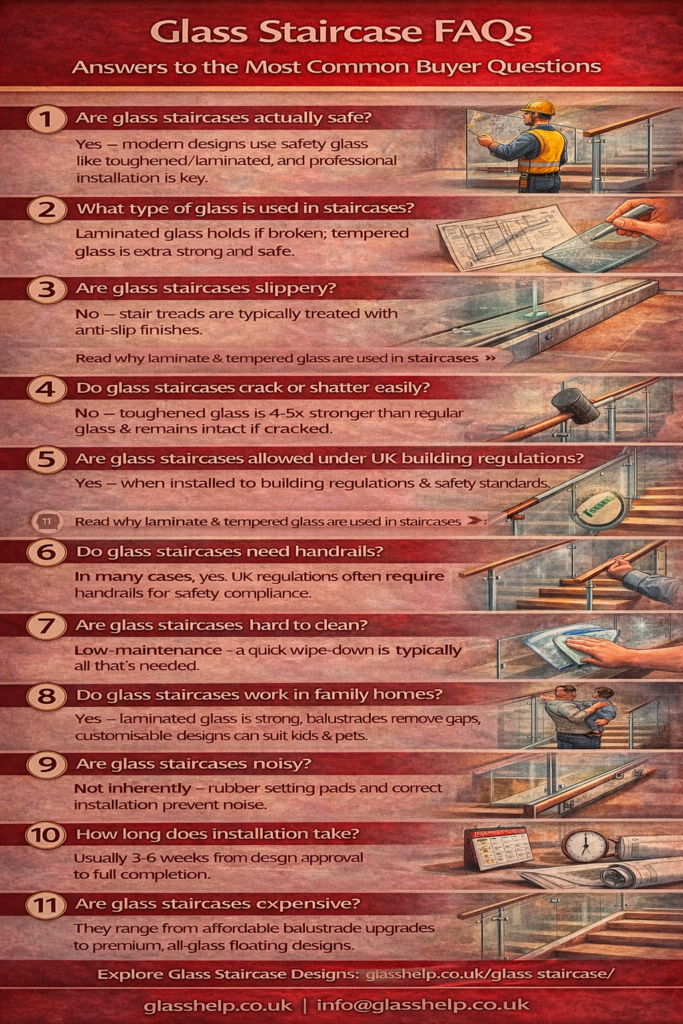
1. Are glass staircases actually safe?
Yes — when designed and installed correctly, glass staircases are extremely safe.
Modern glass staircases use safety glass, typically:
- Toughened (tempered) glass
- Laminated safety glass
- Or a combination of both
These glass types are engineered to handle impact, daily use, and structural loads. Laminated glass in particular is designed to stay intact even if cracked, preventing falls.
Safety issues usually arise not from the glass itself, but from:
- Incorrect glass specification
- Poor installation
- Weak supporting structures
2. What type of glass is used in staircases?
Staircases never use ordinary window glass.
The most common options are:
- Tempered (toughened) glass – very strong, breaks into small blunt pieces
- Laminated glass – multiple glass layers bonded together, holds in place if damaged
In many staircases, laminated safety glass is preferred for balustrades and areas where fall protection is critical.
If you want a deeper explanation of how these glass types behave and where each is used, this internal guide explains it clearly:
👉 https://www.glasshelper.co.uk/what-type-of-glass-is-used-in-staircases/
3. Are glass staircases slippery?
This is a very common concern — and a valid one.
The truth:
- Glass balustrades (side panels) are not slippery because you don’t walk on them.
- Glass stair treads (steps themselves) are treated with anti-slip finishes such as:
- Etched surfaces
- Ceramic frit patterns
- Anti-slip coatings
When specified properly, glass steps meet slip-resistance standards similar to wood or stone.
Most homes choose glass balustrades with solid steps (wood or metal), which removes this concern entirely.
4. Do glass staircases crack or shatter easily?
No — safety glass is far stronger than most people expect.
- Toughened glass is up to 4–5 times stronger than standard glass.
- Laminated glass remains in place even if cracked.
Cracking usually occurs only when:
- Edges are damaged during handling
- Glass is forced into misaligned fixings
- Structural movement wasn’t accounted for
With professional installation and correct specification, glass staircases are designed to last decades.
5. Are glass staircases allowed under UK building regulations?
Yes, glass staircases are fully permitted in the UK — provided they meet building regulations.
Key compliance areas include:
- Use of safety glass
- Minimum balustrade height
- Load resistance
- Handrail requirements (in many cases)
A reputable installer will design the staircase to meet UK Building Regulations and relevant British Standards.
Never choose a supplier who cannot explain compliance clearly.
6. Do glass staircases need handrails?
In many cases, yes.
Even with glass balustrades, building regulations often require:
- A continuous handrail
- Correct handrail height
- Secure fixing
Handrails don’t have to be bulky — slim metal or timber handrails can be integrated cleanly without ruining the look.
Skipping handrails to “keep it minimal” often leads to failed inspections or expensive retrofits.
7. Are glass staircases hard to clean?
Glass staircases are low-maintenance, but not maintenance-free.
Typical upkeep:
- Regular wipe-down with a non-abrasive glass cleaner
- Occasional cleaning of handrails and fixings
- Annual visual inspection of fixings
Clear glass shows fingerprints more than frosted or tinted finishes, but cleaning is straightforward and quick.
Many homeowners find glass easier to maintain than painted wood, which shows scuffs and wear.
8. Do glass staircases work in family homes with children or pets?
Yes — with the right design choices.
For family homes:
- Laminated glass is strongly recommended
- Frosted or lightly tinted glass can reduce visible marks
- Framed or semi-framed systems may feel more reassuring
Glass balustrades also eliminate gaps between spindles, which can actually improve child safety compared to traditional railings.
9. Are glass staircases noisy?
No — glass staircases are not inherently noisy.
Noise issues usually come from:
- Poor fixing methods
- Movement between components
- Incorrect setting blocks
Proper installation includes:
- Rubber isolation pads
- Correct tolerances
- Secure fixings
When installed correctly, glass staircases are no noisier than wood or steel stairs.
10. How long does installation take?
For most homes:
- On-site installation: 1–3 days
- Complex or bespoke staircases: up to a week
However, total project time includes:
- Design and approvals
- Fabrication of glass
- Scheduling installation
A full project typically runs 3–6 weeks from final measurement to completion.
For a clear overview of how the installation process works step by step, this internal guide is useful:
👉 https://www.glasshelper.co.uk/how-glass-staircases-are-installed/
11. Are glass staircases expensive?
Glass staircases are a premium feature, but they come in a wide range of budgets.
Costs vary depending on:
- Size and layout
- Frameless vs framed systems
- Glass thickness and finish
- Installation complexity
Some homeowners start with a glass balustrade upgrade rather than a full staircase replacement, which is far more affordable and still delivers a modern look.
12. Will a glass staircase add value to my home?
In many cases, yes.
Glass staircases:
- Increase natural light
- Make spaces feel larger
- Create a strong “wow factor” for buyers
They are particularly attractive in:
- Modern homes
- Renovated properties
- Architect-designed spaces
While value depends on the market, glass staircases often enhance saleability and first impressions.
13. What’s the difference between frameless and framed glass staircases?
- Frameless: Minimal visible supports, cleaner look, higher cost, higher precision required
- Framed: Posts or rails support the glass, slightly more visible structure, often more budget-friendly
Both can be safe and stylish — the choice depends on budget, structure, and aesthetic preference.
14. Can glass staircases be customised?
Absolutely.
Custom options include:
- Clear, frosted, or tinted glass
- Low-iron (ultra-clear) glass
- Custom handrails
- Integrated lighting
- Curved or angled panels
Almost all glass staircases are made to measure, not off-the-shelf products.
15. Where should I start if I’m planning a glass staircase?
The best starting point is understanding design options, layouts, and safety considerations before requesting quotes.
A good overview of modern glass staircase types and configurations can be found here:
👉 Glass staircase design options and buyer guidance
https://www.glasshelp.co.uk/glass-staircase/
This helps you speak confidently with suppliers and avoid unsuitable designs early on.
Final Thoughts
Glass staircases are no longer experimental or risky — they are a well-established, safe, and stylish choice when designed properly.
Most buyer concerns come down to:
- Safety glass selection
- Professional installation
- Regulatory compliance
Once those are handled correctly, glass staircases offer durability, low maintenance, and timeless modern appeal.