
Acid-Etched vs Sandblasted Frosted Glass: Key Differences You Should Know
Frosted glass is a popular choice for homes, offices, and commercial interiors because it delivers privacy without sacrificing natural light. But when it comes to how frosted glass is made, two methods dominate the industry: acid etching and sandblasting.
At first glance, both finishes may look similar. In reality, they differ significantly in appearance, durability, maintenance, cost, and ideal use cases. Choosing the wrong type can lead to faster wear, higher maintenance, or disappointing results.
This guide breaks down the real, practical differences between acid-etched and sandblasted frosted glass—so you can make a confident, informed decision.
What Is Frosted Glass? (Quick Recap)
Frosted glass is glass that has been treated to diffuse light and obscure visibility, creating a translucent surface. Unlike clear glass, it prevents direct viewing while still allowing daylight to pass through.
It is commonly used in:
- Bathrooms and shower enclosures
- Office partitions and meeting rooms
- Privacy windows and doors
- Decorative panels and interior features
If you want a broader overview of applications, benefits, and design options, this guide to custom frosted glass solutions explains how frosted glass is used in modern spaces:
👉 https://www.glasshelp.co.uk/frosted-glass/
What Is Acid-Etched Frosted Glass?
How Acid Etching Works
Acid-etched glass is created by applying hydrofluoric acid to the surface of the glass. The acid gently corrodes the surface, producing a uniform, silky-smooth matte finish.
This process is usually done in a controlled factory environment, ensuring consistency across the entire panel.
Key Characteristics
- Smooth and even texture
- Soft, elegant appearance
- Non-reflective surface
- Fingerprint-resistant compared to sandblasted glass
Best Uses
Acid-etched glass is ideal for:
- Bathrooms and shower screens
- Interior doors
- Office partitions
- Residential privacy windows
Because of its refined look, it’s often preferred in modern and minimalist designs.
What Is Sandblasted Frosted Glass?
How Sandblasting Works
Sandblasted glass is created by blasting the glass surface with high-pressure abrasive particles (such as sand or aluminum oxide). This physically chips away at the surface, creating a frosted effect.
Unlike acid etching, sandblasting can be applied selectively, making it ideal for custom designs, logos, and patterns.
Key Characteristics
- Rougher, textured surface
- Deeper frosting effect
- Can be fully or partially frosted
- More variation in finish
Best Uses
Sandblasted glass is commonly used for:
- Decorative panels
- Custom logos or artwork
- Feature walls
- Commercial branding elements
It’s often chosen when visual impact or customization is more important than ease of maintenance.
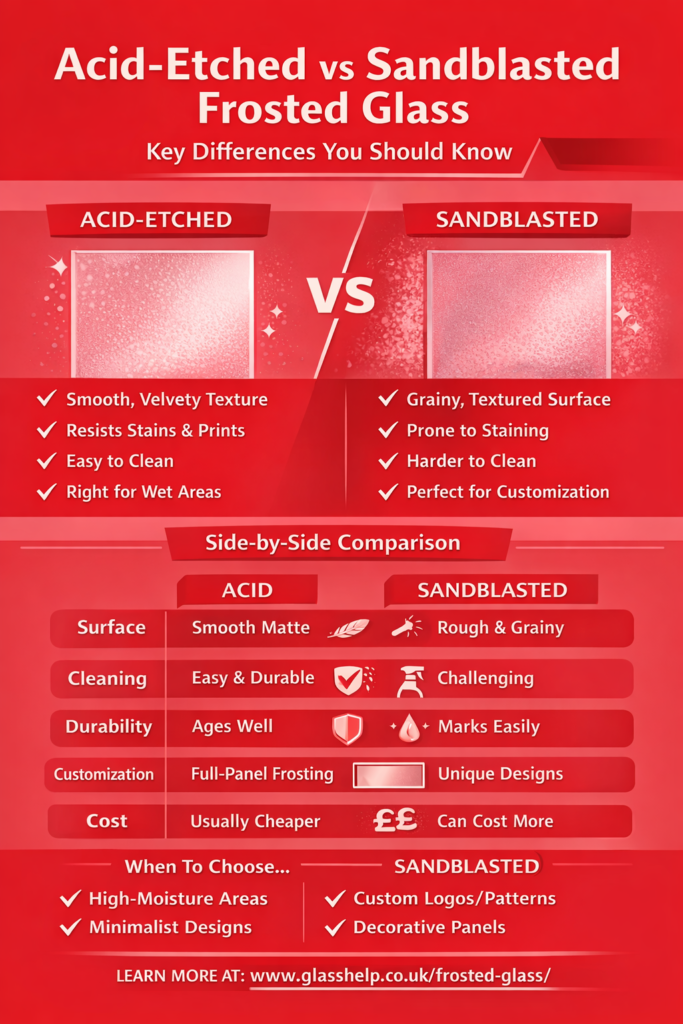
Acid-Etched vs Sandblasted Glass: Side-by-Side Comparison
1. Surface Texture
- Acid-etched glass: Smooth and velvety
- Sandblasted glass: Rough and grainy
This difference directly affects cleaning and long-term appearance.
2. Visual Appearance
- Acid-etched: Soft, uniform, contemporary
- Sandblasted: Bold, textured, slightly more opaque
Acid-etched glass offers a subtle, high-end look, while sandblasted glass makes a stronger visual statement.
3. Maintenance & Cleaning
- Acid-etched glass is easier to clean and less likely to show fingerprints or water stains.
- Sandblasted glass traps oils and dirt more easily due to its rough surface and may require specialized cleaners or sealants.
For bathrooms and high-touch areas, acid-etched glass is usually the more practical option.
4. Durability Over Time
Sandblasted glass is more vulnerable to:
- Permanent staining
- Uneven wear
- Visible marks from oils and moisture
Acid-etched glass tends to age more gracefully, maintaining a consistent appearance for years.
5. Customization Options
- Sandblasting allows for intricate designs, gradients, and logos.
- Acid etching is better suited for full-panel frosting rather than detailed artwork.
If branding or decorative patterns are important, sandblasting offers greater creative freedom.
6. Cost Considerations
- Acid-etched glass is often more cost-effective for large, fully frosted panels.
- Sandblasted glass can become more expensive, especially for detailed or custom designs.
The final cost depends on glass size, thickness, and level of customization.
Which Option Is Better for Bathrooms?
For bathrooms, shower screens, and humid environments, acid-etched frosted glass is usually the better choice.
Why?
- Resists water stains
- Easier to clean
- Maintains a consistent appearance
- Less prone to discoloration
Sandblasted glass can be used in bathrooms, but it often requires sealing and more frequent maintenance to prevent staining.
If safety is also a concern—especially in wet areas—pairing frosted finishes with tempered safety glass is recommended. This guide explains why tempered glass is commonly used in such applications:
👉 https://www.glasshelp.co.uk/tempered-glass/
Common Myths About Acid-Etched and Sandblasted Glass
Myth 1: They Look Exactly the Same
They may appear similar from a distance, but up close the difference in texture, light diffusion, and finish quality is very noticeable.
Myth 2: Sandblasted Glass Is Always Stronger
The frosting method does not determine glass strength. Strength depends on whether the glass is tempered or laminated, not whether it’s acid-etched or sandblasted.
Myth 3: Acid-Etched Glass Is Slippery or Fragile
Acid etching only affects the surface texture. It does not weaken the glass or make it unsafe.
How to Choose the Right Option for Your Project
Ask yourself the following questions:
- Is the glass in a high-moisture or high-touch area? → Acid-etched
- Do you need custom patterns or branding? → Sandblasted
- Is long-term maintenance a concern? → Acid-etched
- Is this a decorative feature piece? → Sandblasted
There is no universal “best” option—only the best option for your specific use case.
Final Thoughts
Acid-etched and sandblasted frosted glass serve different purposes, even though they’re often grouped together. Acid-etched glass excels in cleanability, consistency, and modern aesthetics, while sandblasted glass shines in custom design and decorative applications.
Understanding these differences ensures you invest in the right solution—one that looks good today and continues to perform well over time.
If you’re planning a project and want to explore professionally made frosted glass options, finishes, and applications, this detailed frosted glass resource is a great place to start:
👉 https://www.glasshelp.co.uk/frosted-glass/