
Where Should You Use Frosted Glass in Your Home? A Room-by-Room Guide
Frosted glass has become a staple of modern home design — not just for its clean, contemporary look, but for its ability to balance privacy, light, and style. Unlike clear glass, frosted glass blurs visibility while still allowing daylight to pass through, making it an ideal solution for many areas of the home.
But where exactly does frosted glass work best?
In this room-by-room guide, we’ll explore where to use frosted glass in your home, why it works so well in each space, and what design considerations to keep in mind so you get both function and beauty.
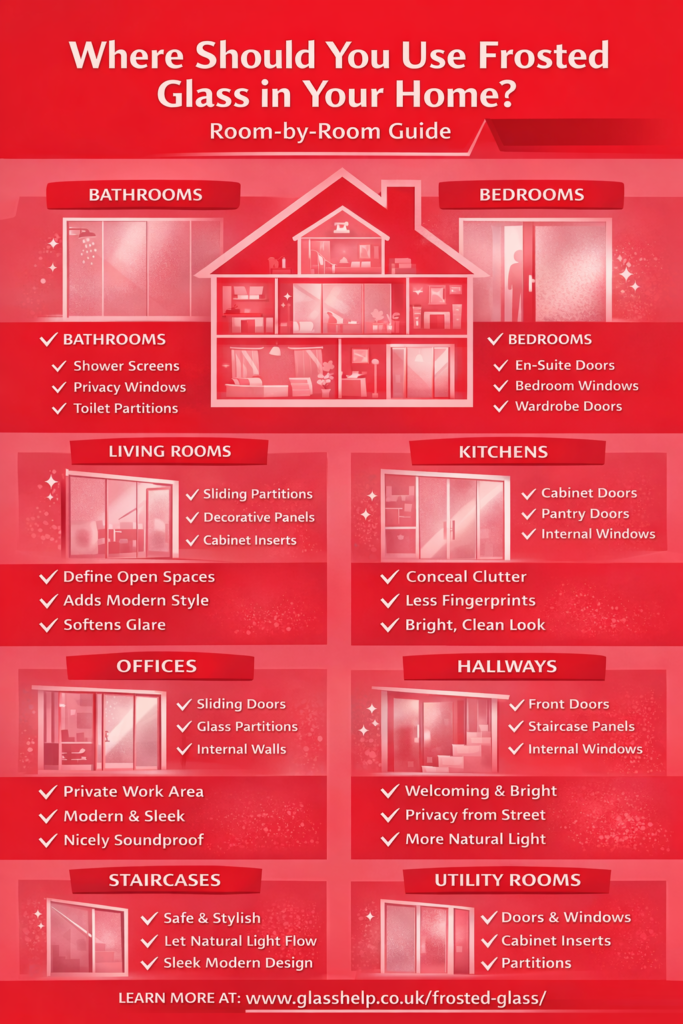
What Makes Frosted Glass Ideal for Residential Spaces?
Before diving into specific rooms, it’s important to understand why frosted glass is so widely used in homes:
- It provides privacy without darkness
- It softens and diffuses harsh light
- It creates a modern, minimal aesthetic
- It hides fingerprints and smudges better than clear glass
- It works well with both traditional and contemporary interiors
If you’re exploring different styles, thicknesses, and applications, this guide to custom frosted glass solutions explains how frosted glass is used across residential spaces:
👉 https://www.glasshelp.co.uk/frosted-glass/
1. Bathrooms – The Most Common and Practical Use
Bathrooms are the most popular place to use frosted glass — and for good reason.
Best Applications
- Shower screens and enclosures
- Bathroom windows
- Toilet cubicles or partitions
- Frosted glass doors
Why It Works
Bathrooms require maximum privacy while still benefiting from natural light. Frosted glass allows daylight in while completely obscuring visibility, making it ideal for both small and large bathrooms.
It also:
- Reduces the need for curtains or blinds
- Resists water marks better than clear glass
- Enhances the sense of space in compact bathrooms
For shower areas, frosted glass is often paired with safety glazing. If you’re planning a bathroom upgrade, this guide to glass shower screens explains suitable glass types and layouts:
👉 https://www.glasshelp.co.uk/glass-shower-screens/
2. Bedrooms – Privacy Without Heavy Window Coverings
Bedrooms benefit from natural light but also require discretion — especially in urban or closely spaced homes.
Best Applications
- Bedroom windows facing neighboring properties
- En-suite bathroom doors
- Walk-in wardrobe doors
Why It Works
Frosted glass:
- Maintains privacy even during daylight hours
- Eliminates the need for bulky curtains or blinds
- Creates a calm, diffused lighting effect
In en-suite bathrooms, frosted glass doors or panels allow light to flow between spaces without compromising comfort.
3. Living Rooms – Subtle Separation Without Closing Space
While living rooms don’t typically require full privacy, frosted glass can still play an important role.
Best Applications
- Decorative panels
- Sliding partitions
- Feature windows
- Shelving or cabinet inserts
Why It Works
In open-plan homes, frosted glass can subtly divide areas without blocking sightlines or light. It’s particularly effective for separating:
- Living rooms from dining areas
- Lounges from home offices
- Seating areas from hallways
The result is a space that feels open, yet intentionally designed.
4. Kitchens – Light Control and Style Combined
Kitchens often benefit from glass, but clear glass can show clutter and fingerprints.
Best Applications
- Cabinet doors
- Pantry doors
- Internal kitchen partitions
- Windows facing neighboring homes
Why It Works
Frosted glass:
- Conceals mess behind cabinets
- Softens bright sunlight
- Adds a modern, clean finish
- Requires less frequent cleaning than clear glass
It’s especially useful for kitchens that open into dining or living spaces, offering visual separation without closing the area off.
5. Home Offices – Privacy Without Isolation
With more people working from home, dedicated office spaces have become essential.
Best Applications
- Office partitions
- Sliding doors
- Internal walls
Why It Works
Frosted glass provides:
- Visual privacy for video calls
- Noise reduction (when paired with proper glazing)
- Natural light flow that improves focus and comfort
Unlike solid walls, frosted glass keeps a home office feeling connected to the rest of the house while still offering a professional environment.
If you’re creating defined zones within your home, frosted glass is also commonly used in glass partition walls, which are designed to divide spaces without making them feel smaller:
👉 https://www.glasshelp.co.uk/glass-partition-walls/
6. Hallways & Entryways – Bright, Private First Impressions
Hallways and entryways often lack windows, making them feel dark and narrow.
Best Applications
- Front door side panels
- Internal hallway windows
- Staircase panels
Why It Works
Frosted glass allows light to pass into interior spaces while maintaining privacy from outside. It’s especially effective for:
- Front doors facing the street
- Homes with narrow corridors
- Multi-level houses where light needs to travel
The result is a brighter, more welcoming entrance without sacrificing security.
7. Staircases – Safety Meets Modern Design
Staircases are often overlooked when it comes to design, yet they offer great opportunities for glass.
Best Applications
- Stair balustrades
- Side panels
- Half-height walls
Why It Works
Frosted glass:
- Improves safety while maintaining visibility
- Allows light to flow between floors
- Adds a contemporary architectural feature
It’s particularly useful in homes where staircases block light from reaching lower levels.
8. Utility Rooms & Laundry Areas – Practical Privacy
Utility spaces don’t need full transparency, but they do benefit from light.
Best Applications
- Internal doors
- Windows
- Storage cabinets
Why It Works
Frosted glass hides appliances and storage while keeping the space bright and functional. It also stands up well to humidity and frequent use.
How to Choose the Right Frosted Glass for Each Room
When selecting frosted glass for your home, consider:
- Privacy level needed (bathrooms vs living areas)
- Moisture exposure (bathrooms, kitchens, utility rooms)
- Cleaning and maintenance requirements
- Safety glazing needs (especially for doors and stairs)
Different rooms may require different frosting methods or glass thicknesses, depending on usage and location.
Final Thoughts
Frosted glass is one of the most versatile materials you can use in your home. From bathrooms and bedrooms to kitchens, offices, and staircases, it enhances privacy, improves lighting, and elevates interior design — all without making spaces feel closed or dark.
If you’re planning a renovation or new build and want to explore professionally made frosted glass options, finishes, and applications, this comprehensive guide is a great place to start:
👉 https://www.glasshelp.co.uk/frosted-glass/