Comparison

Comparison

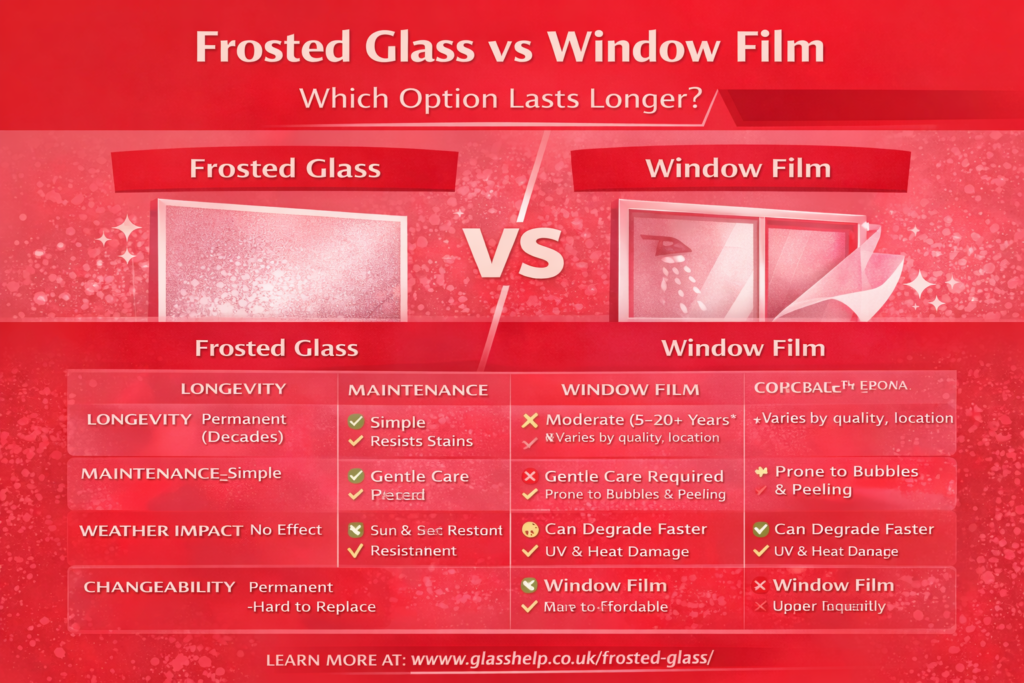
Frosted Glass vs Window Film: Which Option Lasts Longer?

Dec 22, 2025

When improving privacy, lighting, and style in your home or office, frosted glass and window film are two of the most popular solutions. Both create a translucent effect that softens light and conceals what’s behind the glass, but they differ significantly in durability, performance, maintenance, and cost.

This article breaks down both options — why each might suit your space, how long you can expect them to last, and which choice might be best for your project.

What Is Frosted Glass?

Frosted glass refers to glass that has been permanently treated to create a matte, translucent finish. This effect is usually achieved through acid etching or sandblasting, permanently altering the glass surface. Frosted glass allows light to pass through but blurs images — perfect for privacy without sacrificing brightness. Wikipedia

👉 To learn more about frosted glass types, uses, and finishes before making a choice, check out this comprehensive guide on frosted glass options and applications:
Frosted Glass Panels & Uses – UK Frosted Glass Guide


What Is Window Film?

Window film is a thin, self-adhesive material applied directly onto the surface of existing glass to replicate a frosted look. Films come in many styles — frosted, decorative, mirrored, tinted, or solar control — and can be removed or replaced easily. WF Glazing Protection

Unlike frosted glass, window film does not permanently change the glass and can be updated as design trends or needs evolve.


Durability: How Long Does Each Option Last?

When it comes to longevity, the answer isn’t as simple as “glass always lasts longer.” Both frosted glass and window film have unique performance timelines that depend on use, placement, and maintenance.

1. Frosted Glass Longevity

Frosted glass is permanent and durable because the frosted finish is part of the glass itself — not an added layer that can peel, bubble, or wear off. Since the finish is etched or blasted into the surface, it won’t fade or delaminate over time. This makes frosted glass ideal for areas that see a lot of daily use, such as bathroom screens, office partitions, or stairwell balustrades. securityfilm.ca

That means once installed, frosted glass can last for decades — potentially as long as the glass itself — with minimal change in appearance or performance.


2. Window Film Longevity

Window film doesn’t alter the glass; instead, it sits on top of it. As a result:

  • Window films are generally not as permanent as frosted glass.
  • Their lifespan varies significantly depending on quality, installation, climate, and exposure. ADD.HERES+1

Typical Window Film Lifespan Range:

  • Budget or Decorative Films: ~5–10 years AP Tinting
  • Mid-Range Films: ~10–15 years Frosted Glass Man
  • High-End Commercial/UV Films: ~15–20+ years in optimal conditions Solar X

Films installed indoors — away from harsh UV exposure and extreme temperatures — typically last longer than those on exterior surfaces.


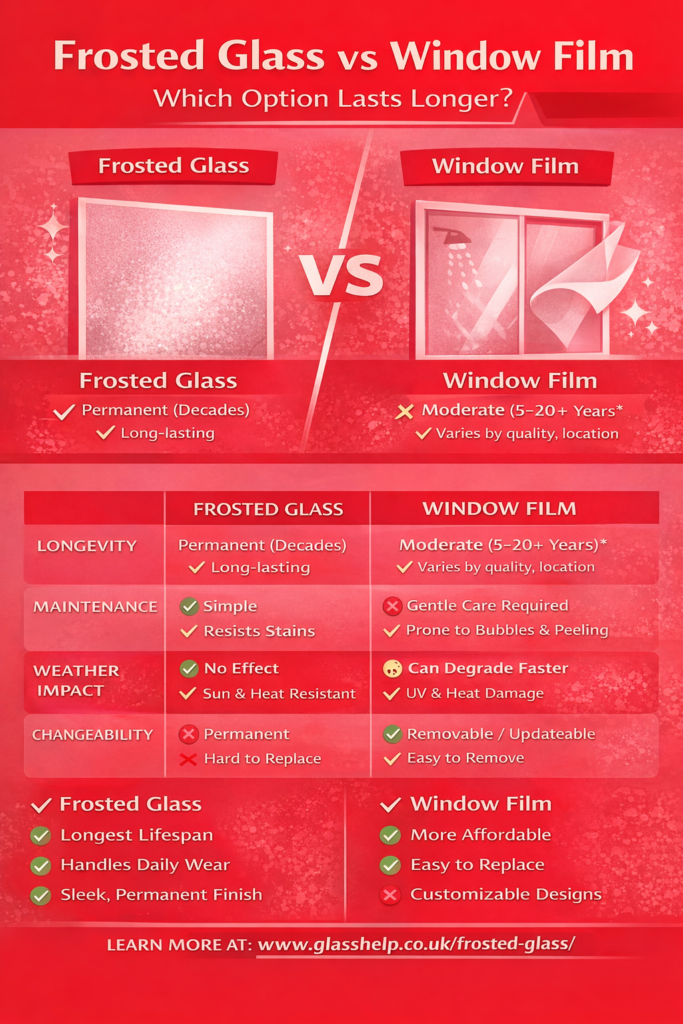
Comparison: Frosted Glass vs Window Film Lifespan

FeatureFrosted GlassWindow Film
LongevityPermanent (decades) securityfilm.caModerate (5–20+ yrs depending on quality) Solar X
Weather ImpactUnaffected by sun or weatherUV & heat can degrade over time Solar X
MaintenanceSimple cleaningRequires gentle care to avoid damage sydneyglassfrosting
ChangeabilityPermanentRemovable & replaceable WF Glazing Protection
InstallationRequires glass replacementApplied to existing glass

Why Frosted Glass Lasts Longer

The key reason frosted glass tends to outlast window film is that its frosted effect is an integral part of the glass surface — not an added layer that can deteriorate. There’s no adhesive, no peel-away layer, and no film edges that can lift. This makes it exceptionally suited to permanent installations or high-traffic areas. securityfilm.ca

Because it doesn’t rely on synthetic adhesives or layered materials, typical issues associated with film — such as bubbling, peeling, or yellowing — don’t occur with etched or sandblasted glass.


When Window Film Can Last Just as Long

That said, quality window films have come a long way. Expert installation by a reputable applicator significantly boosts the lifespan of window film by ensuring strong adhesion and proper curing. Solar X

With professional installation and indoor placement, many premium films can perform effectively for 10–20 years, especially decorative and privacy films. Solar X

Factors that help window film last longer:

  • Higher quality material with UV inhibitors
  • Interior placement (protected from weather)
  • Expert installation
  • Gentle cleaning and maintenance

Pros & Cons: Lifespan vs Flexibility

Both frosted glass and window film have advantages beyond just durability:

Frosted Glass

✔ Longest lifespan — permanent solution
✔ Requires minimal maintenance
✔ Strong, quality finish ideal for bathrooms & offices
✘ More expensive upfront
✘ Harder to change design or pattern once installed

Window Film

✔ More affordable
✔ Easy to update or replace
✔ Offers creative design options
✘ Doesn’t last as long as glass in most cases
✘ May degrade faster in direct sun or exterior locations

In spaces where you may want periodic design updates (e.g., branding on office glass, seasonal aesthetics, or temporary privacy needs), window film excels thanks to its removability and adaptability. WF Glazing Protection


Which Option Should You Choose?

Here’s a simple guide to help you decide based on your priorities:

🧱 Choose Frosted Glass If:

  • You want a permanent solution that won’t need replacing.
  • The area receives heavy use (e.g., high foot traffic).
  • You value a premium finish and minimal maintenance.
  • You’re installing in a bathroom, front door panel, or shower screen.

🎨 Choose Window Film If:

  • You’re budget-conscious and want privacy without replacing glass.
  • You want custom designs or occasional change-outs.
  • The film will be protected from heavy UV exposure (e.g., indoors).
  • You prefer a quicker, non-disruptive installation.

Maintaining Your Frosted Glass or Window Film

To maximize longevity:

For Frosted Glass:

  • Clean with mild detergent and soft cloth.
  • Avoid abrasive tools that can scratch etched surfaces.

For Window Film:

  • Allow 30 days for proper curing before cleaning.
  • Use mild soap and water, no ammonia or abrasive cleaners.
  • Avoid sharp objects near the surface to reduce peeling. sydneyglassfrosting

Proper care ensures that window film lasts toward the upper end of its lifespan, and frosted glass remains beautiful and functional for many years with little fuss.


Final Thoughts

When comparing frosted glass vs window film for longevity, frosted glass usually wins the durability battle thanks to its permanent, integrated finish. However, modern window films — especially high-quality professional options — can still offer many years of reliable service when installed and cared for properly.

If your priority is a long-lasting privacy solution with a timeless finish, frosted glass remains the best choice for long-term use. But if you value flexibility, creativity, and cost-effectiveness, quality window film shouldn’t be overlooked.

Ready to explore premium frosted glass options for your home or office project? Start with this comprehensive UK resource on frosted glass styles, finishes, and applications:
👉 Frosted Glass Panels & Uses – UK Frosted Glass Guide
Comparison

Acid-Etched vs Sandblasted Frosted Glass: Key Differences You Should Know

Dec 22, 2025

Frosted glass is a popular choice for homes, offices, and commercial interiors because it delivers privacy without sacrificing natural light. But when it comes to how frosted glass is made, two methods dominate the industry: acid etching and sandblasting.

At first glance, both finishes may look similar. In reality, they differ significantly in appearance, durability, maintenance, cost, and ideal use cases. Choosing the wrong type can lead to faster wear, higher maintenance, or disappointing results.

This guide breaks down the real, practical differences between acid-etched and sandblasted frosted glass—so you can make a confident, informed decision.


What Is Frosted Glass? (Quick Recap)

Frosted glass is glass that has been treated to diffuse light and obscure visibility, creating a translucent surface. Unlike clear glass, it prevents direct viewing while still allowing daylight to pass through.

It is commonly used in:

  • Bathrooms and shower enclosures
  • Office partitions and meeting rooms
  • Privacy windows and doors
  • Decorative panels and interior features

If you want a broader overview of applications, benefits, and design options, this guide to custom frosted glass solutions explains how frosted glass is used in modern spaces:
👉 https://www.glasshelp.co.uk/frosted-glass/


What Is Acid-Etched Frosted Glass?

How Acid Etching Works

Acid-etched glass is created by applying hydrofluoric acid to the surface of the glass. The acid gently corrodes the surface, producing a uniform, silky-smooth matte finish.

This process is usually done in a controlled factory environment, ensuring consistency across the entire panel.

Key Characteristics

  • Smooth and even texture
  • Soft, elegant appearance
  • Non-reflective surface
  • Fingerprint-resistant compared to sandblasted glass

Best Uses

Acid-etched glass is ideal for:

  • Bathrooms and shower screens
  • Interior doors
  • Office partitions
  • Residential privacy windows

Because of its refined look, it’s often preferred in modern and minimalist designs.


What Is Sandblasted Frosted Glass?

How Sandblasting Works

Sandblasted glass is created by blasting the glass surface with high-pressure abrasive particles (such as sand or aluminum oxide). This physically chips away at the surface, creating a frosted effect.

Unlike acid etching, sandblasting can be applied selectively, making it ideal for custom designs, logos, and patterns.

Key Characteristics

  • Rougher, textured surface
  • Deeper frosting effect
  • Can be fully or partially frosted
  • More variation in finish

Best Uses

Sandblasted glass is commonly used for:

  • Decorative panels
  • Custom logos or artwork
  • Feature walls
  • Commercial branding elements

It’s often chosen when visual impact or customization is more important than ease of maintenance.


Acid-Etched vs Sandblasted Glass: Side-by-Side Comparison

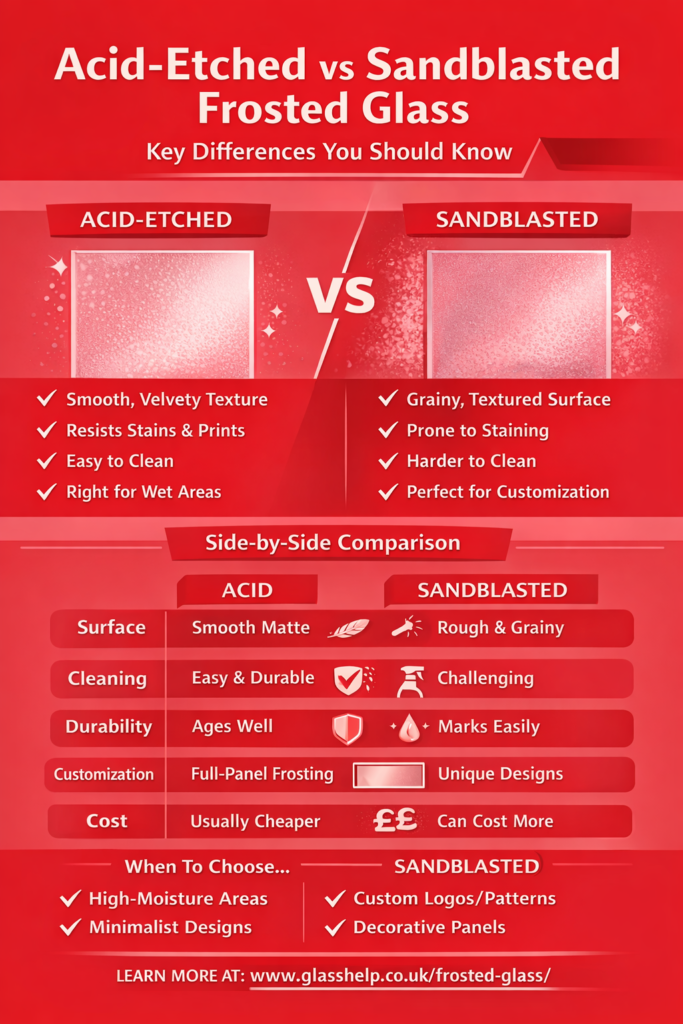
1. Surface Texture

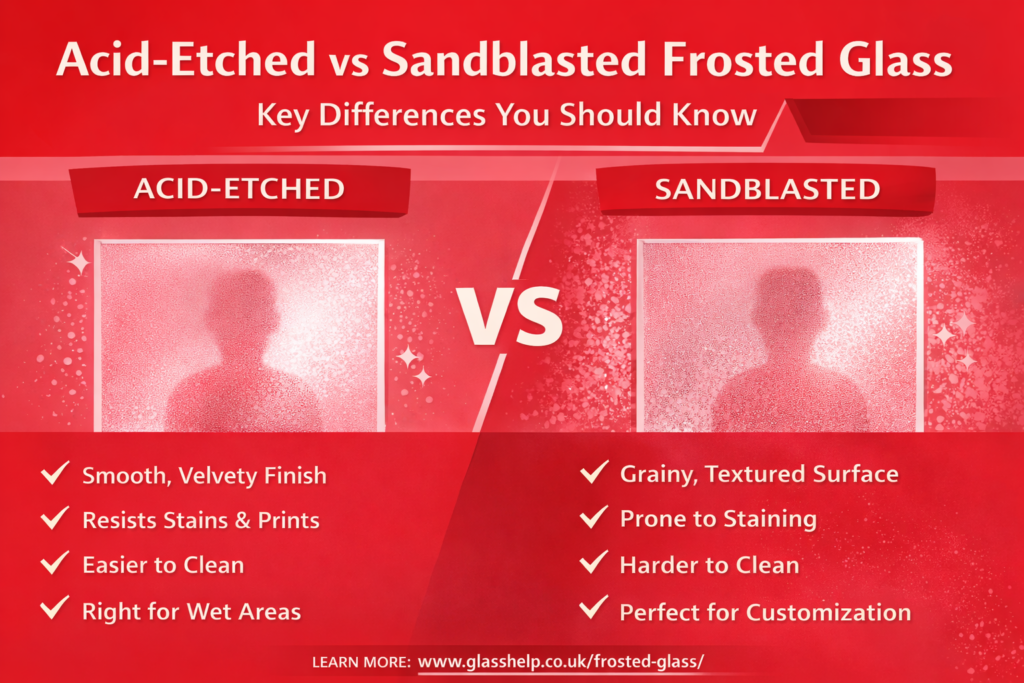
  • Acid-etched glass: Smooth and velvety
  • Sandblasted glass: Rough and grainy

This difference directly affects cleaning and long-term appearance.


2. Visual Appearance

  • Acid-etched: Soft, uniform, contemporary
  • Sandblasted: Bold, textured, slightly more opaque

Acid-etched glass offers a subtle, high-end look, while sandblasted glass makes a stronger visual statement.


3. Maintenance & Cleaning

  • Acid-etched glass is easier to clean and less likely to show fingerprints or water stains.
  • Sandblasted glass traps oils and dirt more easily due to its rough surface and may require specialized cleaners or sealants.

For bathrooms and high-touch areas, acid-etched glass is usually the more practical option.


4. Durability Over Time

Sandblasted glass is more vulnerable to:

  • Permanent staining
  • Uneven wear
  • Visible marks from oils and moisture

Acid-etched glass tends to age more gracefully, maintaining a consistent appearance for years.


5. Customization Options

  • Sandblasting allows for intricate designs, gradients, and logos.
  • Acid etching is better suited for full-panel frosting rather than detailed artwork.

If branding or decorative patterns are important, sandblasting offers greater creative freedom.


6. Cost Considerations

  • Acid-etched glass is often more cost-effective for large, fully frosted panels.
  • Sandblasted glass can become more expensive, especially for detailed or custom designs.

The final cost depends on glass size, thickness, and level of customization.


Which Option Is Better for Bathrooms?

For bathrooms, shower screens, and humid environments, acid-etched frosted glass is usually the better choice.

Why?

  • Resists water stains
  • Easier to clean
  • Maintains a consistent appearance
  • Less prone to discoloration

Sandblasted glass can be used in bathrooms, but it often requires sealing and more frequent maintenance to prevent staining.

If safety is also a concern—especially in wet areas—pairing frosted finishes with tempered safety glass is recommended. This guide explains why tempered glass is commonly used in such applications:
👉 https://www.glasshelp.co.uk/tempered-glass/


Common Myths About Acid-Etched and Sandblasted Glass

Myth 1: They Look Exactly the Same

They may appear similar from a distance, but up close the difference in texture, light diffusion, and finish quality is very noticeable.


Myth 2: Sandblasted Glass Is Always Stronger

The frosting method does not determine glass strength. Strength depends on whether the glass is tempered or laminated, not whether it’s acid-etched or sandblasted.


Myth 3: Acid-Etched Glass Is Slippery or Fragile

Acid etching only affects the surface texture. It does not weaken the glass or make it unsafe.


How to Choose the Right Option for Your Project

Ask yourself the following questions:

  • Is the glass in a high-moisture or high-touch area? → Acid-etched
  • Do you need custom patterns or branding? → Sandblasted
  • Is long-term maintenance a concern? → Acid-etched
  • Is this a decorative feature piece? → Sandblasted

There is no universal “best” option—only the best option for your specific use case.


Final Thoughts

Acid-etched and sandblasted frosted glass serve different purposes, even though they’re often grouped together. Acid-etched glass excels in cleanability, consistency, and modern aesthetics, while sandblasted glass shines in custom design and decorative applications.

Understanding these differences ensures you invest in the right solution—one that looks good today and continues to perform well over time.

If you’re planning a project and want to explore professionally made frosted glass options, finishes, and applications, this detailed frosted glass resource is a great place to start:
👉 https://www.glasshelp.co.uk/frosted-glass/

Comparison

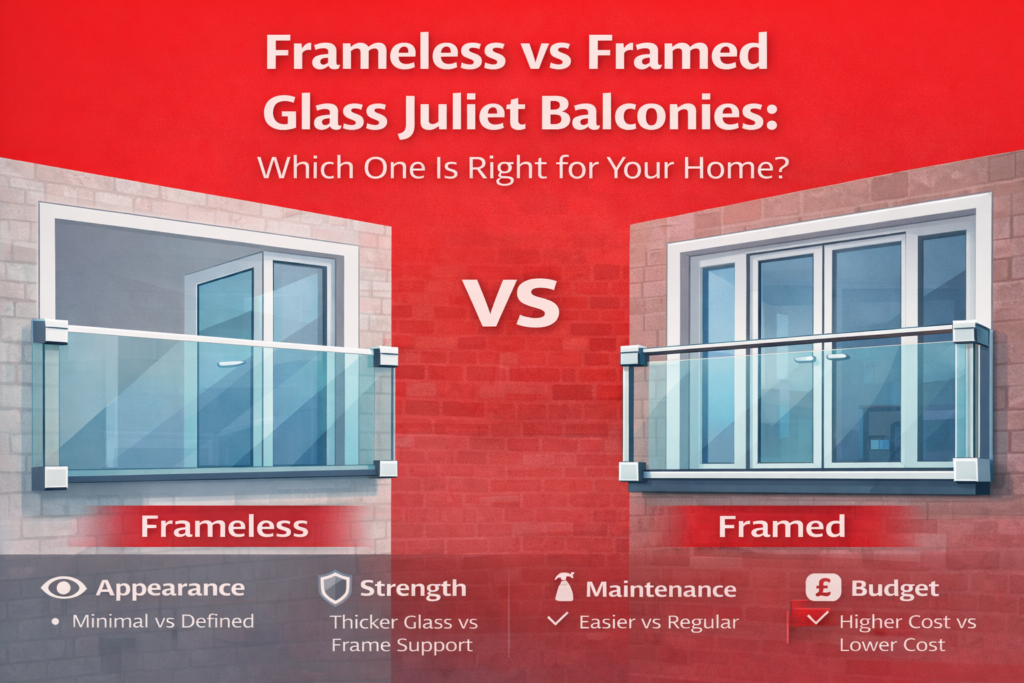
Frameless vs Framed Glass Juliet Balconies: Which One Is Right for Your Home?

Dec 22, 2025

When homeowners start researching glass Juliet balconies, one question comes up again and again:

Should I choose a frameless or framed glass Juliet balcony?

At first glance, the difference may seem purely visual. In reality, the choice affects appearance, structural behaviour, safety performance, maintenance, installation complexity, and budget. Choosing the wrong type for your home can lead to unnecessary costs or compromises later.

This guide provides a clear, side-by-side comparison to help you choose the right solution for your property.


What Is a Glass Juliet Balcony? (Quick Overview)

A glass Juliet balcony is a fixed safety barrier installed outside upper-floor windows or French doors. Unlike a traditional balcony, it has no walk-on platform. Its purpose is to:

  • Prevent falls
  • Allow full-height doors to open safely
  • Increase natural light
  • Improve outward views
  • Enhance the building’s appearance

To understand how different systems are designed and installed, this guide to glass Juliet balconies explains common configurations, fixing methods, and glass options used in UK homes:
glass Juliet balconies – https://www.glasshelp.co.uk/glass-juliet-balcony/


Frameless Glass Juliet Balconies Explained

A frameless glass Juliet balcony uses structural laminated safety glass as the primary support. There is no surrounding metal frame; instead, the glass is fixed using discreet side-mounted brackets or point fixings.

Key Characteristics

  • Ultra-modern, minimalist appearance
  • Uninterrupted views and maximum daylight
  • Thicker laminated glass required
  • Precision installation essential

Frameless Juliet balconies are especially popular in new builds, contemporary homes, and architectural renovations where clean lines are a priority.


Framed Glass Juliet Balconies Explained

A framed glass Juliet balcony incorporates a visible metal frame or handrail, typically aluminium or stainless steel, which supports the glass panel.

Key Characteristics

  • Defined edges and visible structure
  • Works well with traditional or mixed-style façades
  • Can use slightly thinner glass
  • More forgiving on uneven walls

Framed systems are commonly chosen for period properties, loft conversions, and cost-conscious projects.


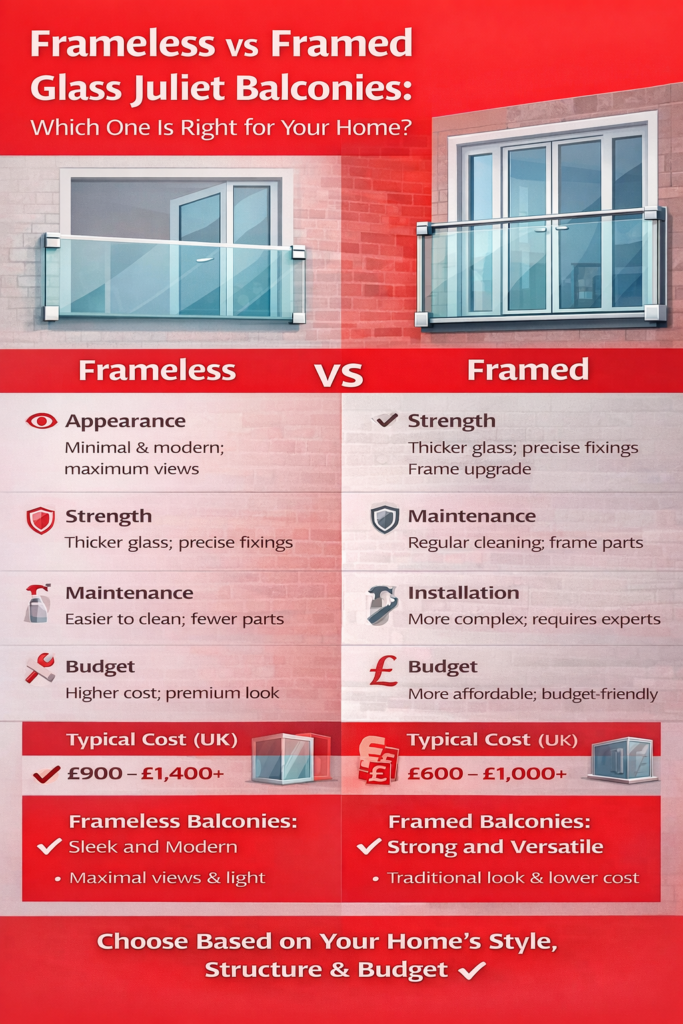
Side-by-Side Comparison: Frameless vs Framed

1. Appearance & Visual Impact

Frameless Glass Juliet Balconies

  • Sleek and modern
  • Glass appears to “float”
  • Maximises views and light
  • Best suited to contemporary architecture

Framed Glass Juliet Balconies

  • More defined and structured look
  • Frame can visually anchor the design
  • Slight interruption to sightlines from handrail

Best for aesthetics: Frameless systems, if modern design is your priority.


2. Strength & Structural Behaviour

Both systems are engineered to meet UK safety standards, but they achieve strength differently.

Frameless Systems

  • Rely on thicker laminated glass
  • Glass carries most of the load
  • Requires strong fixing points and solid wall structure

Framed Systems

  • Frame helps distribute loads
  • More tolerant of structural imperfections
  • Often easier to adapt to older buildings

Best for challenging structures: Framed systems.


3. Glass Thickness & Specification

Frameless

  • Typically 17.5mm–21.5mm laminated glass
  • Higher material cost
  • Heavier panels

Framed

  • Often 13.5mm–17.5mm laminated glass
  • Frame contributes to overall strength
  • Lower glass cost

This difference alone can significantly affect total price.


4. Maintenance & Long-Term Care

Frameless Juliet Balconies

  • Fewer components
  • Easy to clean
  • No paint or coatings
  • Periodic fixing inspection recommended

Framed Juliet Balconies

  • Frame may need cleaning
  • Powder-coated finishes can weather over time
  • More components to maintain

Lower maintenance: Frameless systems.


5. Installation Complexity

Frameless Installation

  • Requires accurate measurements
  • Less tolerance for uneven walls
  • Needs experienced installers

Framed Installation

  • More forgiving during fitting
  • Frames can hide minor imperfections
  • Often quicker in retrofit projects

Easier installation: Framed systems, especially in older homes.


6. Budget & Cost Comparison (UK)

Cost is often the deciding factor.

Frameless Glass Juliet Balconies

  • Thicker glass
  • More precise engineering
  • Typical installed cost: £900–£1,400+

Framed Glass Juliet Balconies

  • Thinner glass possible
  • Simpler installation
  • Typical installed cost: £600–£1,000+

Frameless systems usually cost 20–40% more than framed alternatives.


Safety: Is One Safer Than the Other?

This is a common misconception.

✔ Both systems use laminated safety glass
✔ Both must meet UK fall-protection requirements
✔ Both are safe when correctly specified and installed

Safety depends far more on glass quality, fixing method, and professional installation than on whether the system is framed or frameless.

For additional safety-focused insight, this UK-based explanation of what makes a Juliet balcony compliant breaks down the structural and regulatory considerations clearly:
Juliet balcony compliance explained – https://360gss.co.uk/what-makes-a-juliet-balcony-compliant/


Which One Adds More Property Value?

  • Frameless systems often appeal more in modern apartments and new builds.
  • Framed systems blend better with traditional properties.

Both options can add value when chosen appropriately for the building style.


Which Should You Choose?

Choose a frameless glass Juliet balcony if:

  • You want a minimalist, modern look
  • Views and daylight are your top priority
  • Budget allows for premium materials
  • Your structure supports precise fixing

Choose a framed glass Juliet balcony if:

  • You want better value for money
  • Your home has traditional features
  • Walls or openings are uneven
  • You want a more forgiving installation

Real-World Perspective

From a design and safety standpoint, manufacturers highlight that both systems perform exceptionally well when correctly designed. This overview of Juliet balcony benefits and design choices provides additional context for homeowners weighing visual style against practicality:
Juliet balcony benefits explained – https://smartbalustrades.co.uk/articles/what-are-juliet-balconies-and-their-benefits/


Final Verdict

There is no universal “best” option — only the right option for your home.

  • Frameless glass Juliet balconies deliver unmatched visual clarity and modern appeal.
  • Framed glass Juliet balconies offer excellent value, flexibility, and structural tolerance.

The right choice balances design goals, building structure, budget, and long-term expectations.

Comparison

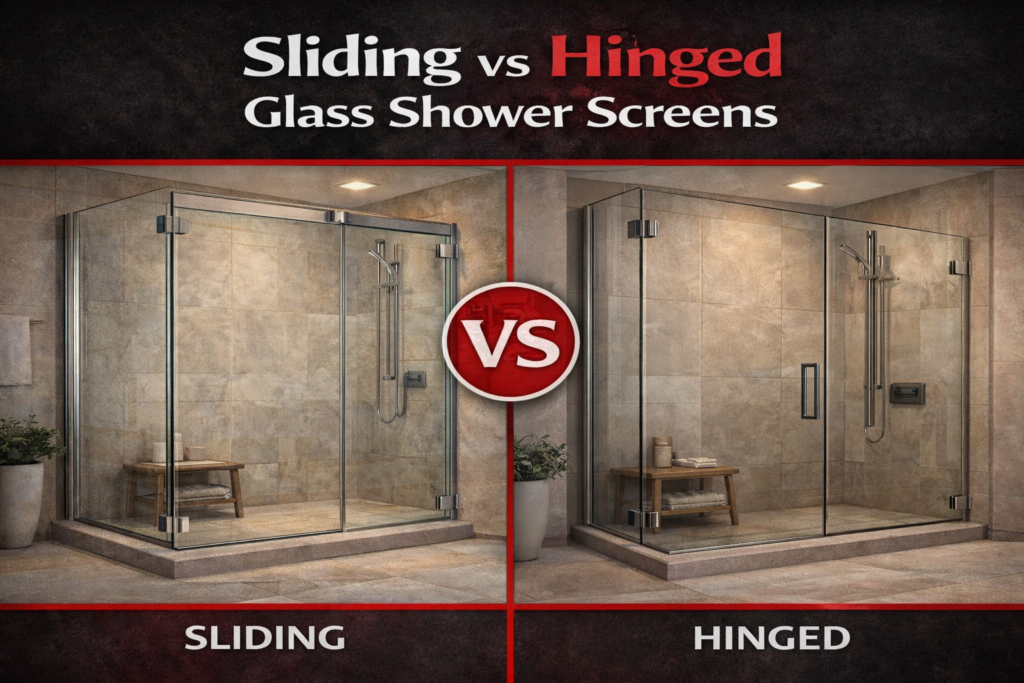
Sliding vs Hinged Glass Shower Screens: Which Works Best for Your Bathroom?

Dec 19, 2025

Complete UK Buyer’s Guide — Hygiene, Space, Style & Practicality

Choosing between sliding and hinged glass shower screens is one of the biggest practical decisions you’ll make when designing or renovating your bathroom. The right choice depends on your bathroom size, layout, daily use, cleaning preferences, and long-term practicality.

In this comprehensive guide, we’ll compare sliding vs hinged shower screens across multiple criteria — from space efficiency and maintenance to accessibility and aesthetics — so you can confidently choose the best fit for your space and lifestyle.


🛁 What Are Sliding and Hinged Shower Screens?

Sliding Shower Screens

Sliding shower screens consist of one or more glass panels that glide horizontally on top/bottom tracks to open and close. They are excellent for bathrooms with limited space, where there’s no clearance for doors to swing outward.
Sliding screens typically use tracks and rollers to support movement. Plumbworld+1

Hinged Shower Screens

Also called pivot or swing doors, hinged screens are attached to the wall by hinges. They swing open like a door, providing full entry width and generally a more open feel. Plumbworld+1

Both options may come in framed, semi-framed, or frameless styles depending on how much hardware you want visible. They are usually made from toughened safety glass for durability and compliance with UK rules. For examples and design variations of shower screens, visit this guide:
👉 Glass shower screens styles and optionshttps://www.glasshelp.co.uk/glass-shower-screens/


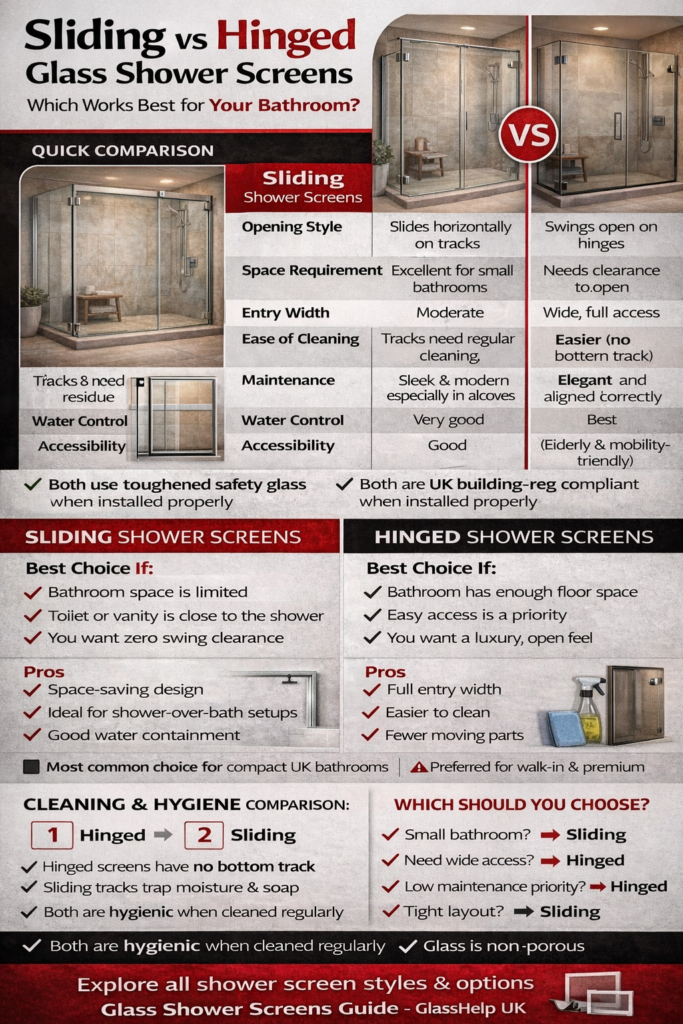
🧠 Detailed Comparison: Sliding vs Hinged Shower Screens

Below is a clear head-to-head look at how these two common designs stack up.

FeatureSliding Shower ScreensHinged Shower Screens
Space RequirementExcellent for small bathrooms — no clearance needed to open. Schicker Luxury Shower Doors, Inc.Requires room to swing open; best suited to larger spaces. Plumbworld
Entry WidthLimited to track opening range; can feel narrower. Schicker Luxury Shower Doors, Inc.Full opening — easier access, especially for larger users. ABC Glass & Mirror
Cleaning & MaintenanceTracks can accumulate soap scum and require regular cleaning. Schicker Luxury Shower Doors, Inc.No bottom track — easier to wipe down and maintain. ABC Glass & Mirror
Style & AestheticSleek & modern, especially in alcoves. Schicker Luxury Shower Doors, Inc.Elegant and classic; works well in walk-in designs. ABC Glass & Mirror
AccessibilitySmooth side-to-side movement, but narrower space. Wholesale Bathrooms GlasgowWider opening — better for mobility, elderly access. Plumbworld
Water ContainmentGood with quality seals; overlapping panels help keep splashes inside. Schicker Luxury Shower Doors, Inc.Good when fitted precisely; potential splash outward if hinge swings in. ABC Glass & Mirror
Installation ComplexityModerate — tracks must be level and smooth. Schicker Luxury Shower Doors, Inc.Higher precision needed for hinges and swing clearance. ABC Glass & Mirror
Cost RangeOften more economical than complex hinged options. Schicker Luxury Shower Doors, Inc.Can be higher — hinges and hardware may add cost. ABC Glass & Mirror

📏 Space & Bathroom Layout — Critical Starting Point

One of the most practical considerations when choosing between sliding and hinged screens is available space:

Sliding Screens

  • Ideal for compact bathrooms where space is at a premium.
  • Because sliding doors move sideways along a track, they require no clearance for opening, making them perfect for narrow bathrooms or shower-over-bath setups. Schicker Luxury Shower Doors, Inc.

Hinged Screens

  • Work best in bathrooms with ample floor space.
  • Hinged doors need room to swing open — typically outward — which means they’re less suitable in tight enclosures but great when access and ease of movement are priorities. Plumbworld

🧼 Cleaning & Maintenance Differences

Sliding Shower Screens

  • Tracks collect soap scum, grime, and mildew over time.
  • Regular cleaning of the track and rollers keeps doors operating smoothly.
  • Good quality tracks often include removable runners for deeper clean cycles. Schicker Luxury Shower Doors, Inc.

Hinged Shower Screens

  • Easier to keep clean due to fewer nooks and crannies.
  • No bottom tracks mean smooth glass panels that are easy to wipe down.
  • Hinges can occasionally need lubrication or checking over time, but overall maintenance is lower. ABC Glass & Mirror

🚪 Accessibility & Everyday Use

Hinged Screens

  • Because the door can swing fully open, they provide the widest point of entry — helpful for larger users, families, or users with mobility challenges. ABC Glass & Mirror
  • Easy access means less stepping over trays and narrower gaps.

Sliding Screens

  • Sliding panels may limit entry width slightly, which can feel tight for some users. Schicker Luxury Shower Doors, Inc.
  • That said, sliding doors don’t require clearance — making them practical in tight, cluttered bathrooms.

If accessibility is a priority (e.g., for elderly users or people with limited mobility), it’s worth considering how the door type impacts ease of entry and exit.


🛠 Installation Considerations

Glass shower screens — whether sliding or hinged — must be installed correctly to ensure safety, watertight performance, and longevity. Both types use toughened safety glass to meet building standards. glasshelper.co.uk

Sliding Screens

  • Track alignment is essential for smooth movement.
  • Tracks must be level and well-sealed to prevent water ingress beneath the doors.

Hinged Screens

  • Hinges must be securely fixed to the wall or frame.
  • Sufficient clearance around the door swing area must be allowed in the design phase.

Professional installation helps avoid:

  • Misalignment
  • Water leaks
  • Premature hardware wear

GlassHelper’s shower door installation services supply and fit a range of screen styles with safety glass and corrosion-resistant hardware — ideal for either sliding or hinged options. glasshelper.co.uk


🏡 Style, Aesthetics & Design Impact

Both sliding and hinged screens can be integrated into different visual styles, but they have slightly different aesthetics.

Sliding Screens

  • Good for minimalist, modern bathrooms
  • Tracks and runners can be designed to match hardware finishes
  • Keep open sightlines when closed

Hinged Screens

  • Often associated with a more upscale, elegant appearance
  • Frameless hinged designs can create a nearly invisible barrier
  • Mobile pivot locations allow creative placement

Note: aesthetic impact also depends on the glass type — clear, frosted, or textured options can shift the visual expression of either screen type.


💡 Practical Tips for Your Decision

Here’s a simple rule of thumb when choosing between these options:

✔ Go Sliding If:

  • Your bathroom is small or narrow
  • You want uninterrupted floor space
  • Easy access matters more than wide entry
  • You want a more space-efficient solution

✔ Go Hinged If:

  • You have sufficient room for door swing
  • You want larger shower entry
  • You prefer simpler cleaning
  • You’re aiming for a slightly more luxury look

✨ Final Thoughts

There’s no one-size-fits-all answer — the right choice between sliding and hinged glass shower screens comes down to your bathroom’s space, usage, and personal style.

Sliding screens are unbeatable in compact spaces and offer a sleek, practical solution. Hinged screens deliver a wider entry, easier cleaning, and a timeless feel when room allows.

Whatever you choose, ensure the glass is toughened safety glass and professionally installed to maximise durability and performance — whether you’re upgrading an existing enclosure or designing a new bathroom from scratch.

If you want to explore design styles, glass finishes, and custom options that work with either sliding or hinged systems, check out this detailed guide to today’s shower screen choices:
👉 Glass shower screens — types, features & how to choosehttps://www.glasshelp.co.uk/glass-shower-screens/

Comparison

What Type of Glass Is Best for Shower Screens? Clear, Frosted, or Tinted

Dec 19, 2025

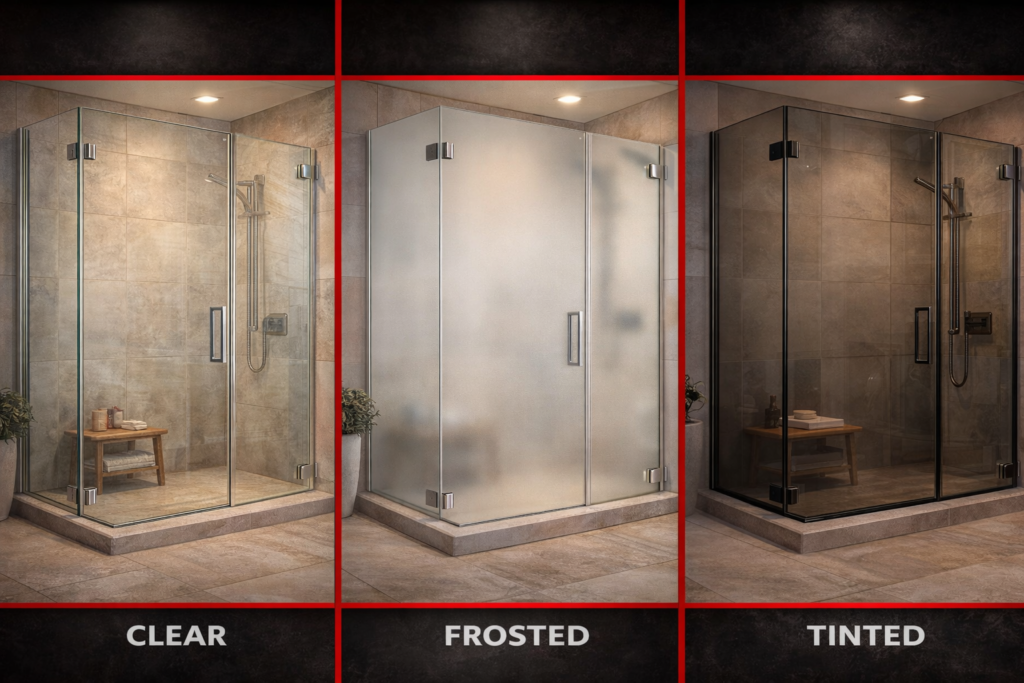
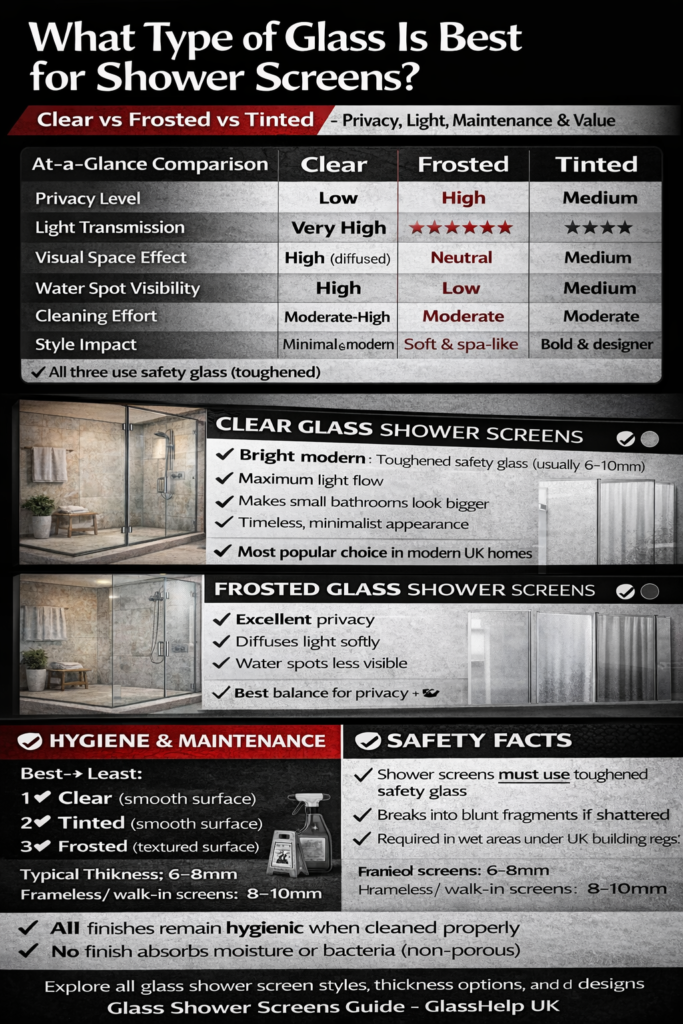
When choosing a shower screen for your bathroom, one of the most important decisions isn’t just whether you want glass — it’s what type of glass finish you should choose. The choice between clear, frosted, and tinted glass affects privacy, light flow, maintenance, aesthetics, and even perceived space.

This practical buyer’s guide breaks down the pros and cons of each glass type, and helps you decide which is best for your bathroom, based on real factors like functionality, style, and everyday usage.


Understanding the Options: Clear vs Frosted vs Tinted Glass

Before comparing performance, it helps to define what these glass types are:

Clear Glass

Clear glass is exactly that — transparent with no surface treatments. It lets light pass through unobstructed, creating an open and modern feel. Alamo Glass & Mirror

Frosted Glass

Frosted glass undergoes a surface treatment (such as sandblasting or acid etching) that scatters light and obscures visibility while still allowing light to diffuse into the shower area. Country Glass

Tinted Glass

Tinted glass has a coloured hue (often grey, bronze, or smoke tint). It reduces glare and offers a softer, warming effect while providing some degree of privacy without making the glass opaque. Fortune Shower Doors

All three options can be used in shower screens, and most are offered in standard safety glass using toughened (tempered) processing for strength and impact resistance — a requirement for bathroom applications.

If you want a full picture of all styles, customisations, and glass thickness options for shower screens, this resource gives a comprehensive overview:
👉 Glass shower screens – style, type & specification guidehttps://www.glasshelp.co.uk/glass-shower-screens/ Glass Help


1. Clear Glass Shower Screens — Bright, Open, and Minimal

Advantages

Clear glass is the most popular choice for modern bathroom designs because it offers:

  • Maximum light transmission: The absence of surface treatments means more daylight or artificial light flows through the enclosure. Alamo Glass & Mirror
  • Visual openness: Especially in smaller bathrooms, clear glass helps create the perception of space and continuity. Gatsby Glass
  • Minimalist, timeless aesthetic: It complements almost any tile, fixture, or colour scheme without standing out. Alamo Glass & Mirror

Considerations

  • Privacy: Clear glass offers no privacy, which may be a concern in shared bathrooms. Alamo Glass & Mirror
  • Maintenance: Water spots, soap scum, and fingerprints are more visible, so regular wiping or a squeegee helps maintain a pristine look. Gatsby Glass

Best For

  • En-suite bathrooms
  • Small bathrooms needing extra light
  • Modern and minimalist interiors

2. Frosted Glass Shower Screens — Privacy and Soft Light

Advantages

Frosted glass offers enhanced privacy while still allowing light into the showering area:

  • Privacy without blocking light: The translucent surface diffuses light and obscures visibility without making the enclosure dark. Country Glass
  • Water spots and fingerprints less visible: The textured surface hides minor water spots and marks better than clear glass. Plumbworld
  • Soft and calming aesthetic: Frosted glass can create a relaxing, spa-like atmosphere — ideal for bathrooms with multiple users. Alamo Glass & Mirror

Considerations

  • Reduced sense of space: Because it partially obscures sightlines, frosted glass may make a small bathroom feel slightly more enclosed. Alamo Glass & Mirror
  • Cleaning texture: While it hides marks well, the textured surface can hold soap scum in grooves, which may require occasional deeper cleaning. Plumbworld

Best For

  • Family bathrooms
  • Shared homes
  • Those prioritising privacy over maximum openness

3. Tinted Glass Shower Screens — Style and Soft Ambience

Advantages

Tinted glass adds a subtle colour to the shower panel, creating a unique look with functional perks:

  • Gentle light control: Tints can filter harsh bathroom lighting or direct sunlight — toning down glare and making the shower feel more relaxing. Fortune Shower Doors
  • Moderate privacy: While not as private as frosted glass, tinted options still offer more discretion than clear glass. Fortune Shower Doors
  • Style statement: Tinted panels pair especially well with dark hardware or premium tile schemes, making them popular in designer bathrooms. Fortune Shower Doors

Considerations

  • Can make small bathrooms feel darker: Especially in spaces with limited natural light. Newline
  • Less timeless than clear: Tints can be stylish but may feel dated if trends change.

Best For

  • Larger bathrooms with good natural light
  • Environments where a design statement matters
  • Users seeking a soft, warmer showering space

Clear vs Frosted vs Tinted — Practical Side-by-Side

Here’s a quick comparison to help you decide based on outcome:

FeatureClear GlassFrosted GlassTinted Glass
Light Transmission⭐⭐⭐⭐⭐⭐⭐⭐⭐⭐⭐⭐
Privacy⭐⭐⭐⭐⭐⭐
Maintenance (Visibility of Spots)⭐⭐⭐⭐⭐⭐⭐⭐⭐
Design StyleModern & OpenSoft & Spa-likeStylish & Warm
Best for Small Baths⚠️⚠️
Best for Shared Use⚠️⚠️

Clear suits minimalist, bright designs; frosted prioritises privacy; tinted strikes a balance while adding mood and calming light.


How Privacy and Cleaning Affect Choice

Privacy is often the decisive factor. For example, in a master bathroom used by a couple, clear glass may be ideal. But in a family bathroom shared by siblings, privacy becomes crucial, making frosted or even lightly tinted panels more sensible.

Similarly, clear glass shows every droplet because of its transparency — while frosted or tinted surfaces hide many water spots and fingerprints, making them visually cleaner between full cleans. Alamo Glass & Mirror+1


Glass Type Consistency With Safety and Building Requirements

Whichever finish you choose, the glass in shower screens must still comply with safety standards — especially if mounted near wet floor surfaces or within reach zones. Tempered or toughened glass is common and mandatory in most jurisdictions because it’s impact-resistant and breaks safely if stressed. Gatsby Glass

If you want guidance on glass thickness and safety considerations for bathrooms (beyond just finish), this internal resource explains them in homeowner-friendly terms:
👉 https://www.glasshelper.co.uk/uk-building-regs-for-glass-a-simple-homeowners-guide-2025-update/ Glass Helper


Other Considerations When Choosing Glass Finish

1. Bathroom Size

  • Small bathrooms benefit from clear panels that make the space feel larger.
  • Frosted or tinted can work stylishly in large bathrooms with plenty of daylight.

2. Visual Cohesion

  • Match glass finish to your overall scheme — for example, tinted glass with bronze or black hardware adds cohesion to warm palettes.

3. Future Needs

  • If selling the home in future, clear glass’s timeless look may appeal to a broader audience.

Final Thoughts — Finding Your Best Fit

There is no universally “best” shower glass finish — only the best choice for your space and priorities:

  • 🛁 Go with Clear Glass if you want brightness, openness, and a timeless modern feel.
  • 🔒 Choose Frosted Glass if privacy, reduced cleaning visibility, and a spa-like feel are priorities.
  • 🎨 Consider Tinted Glass if you want style, softer light, and a unique bathroom ambience.

For design ideas, glass thickness guidance, and installation tips tailored to your bathroom, explore the full glass shower screens resource here:
👉 https://www.glasshelp.co.uk/glass-shower-screens/ — a comprehensive guide to types, finishes, and design options

Comparison

Glass Shower Screens vs Shower Curtains: Hygiene, Durability & Value

Dec 19, 2025

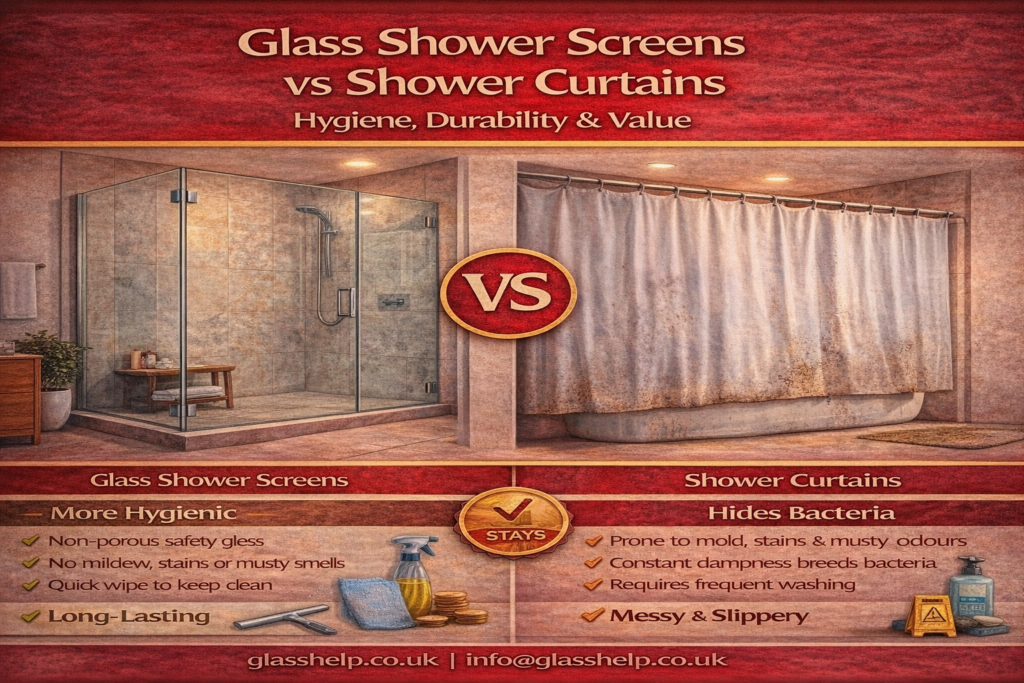
When planning or upgrading a bathroom, one of the most common decisions homeowners face is whether to install glass shower screens or stick with traditional shower curtains. On the surface, the choice may seem mostly aesthetic or budget-driven — but in reality, the difference goes much deeper.

From hygiene and long-term durability to maintenance effort and property value, these two options perform very differently over time.

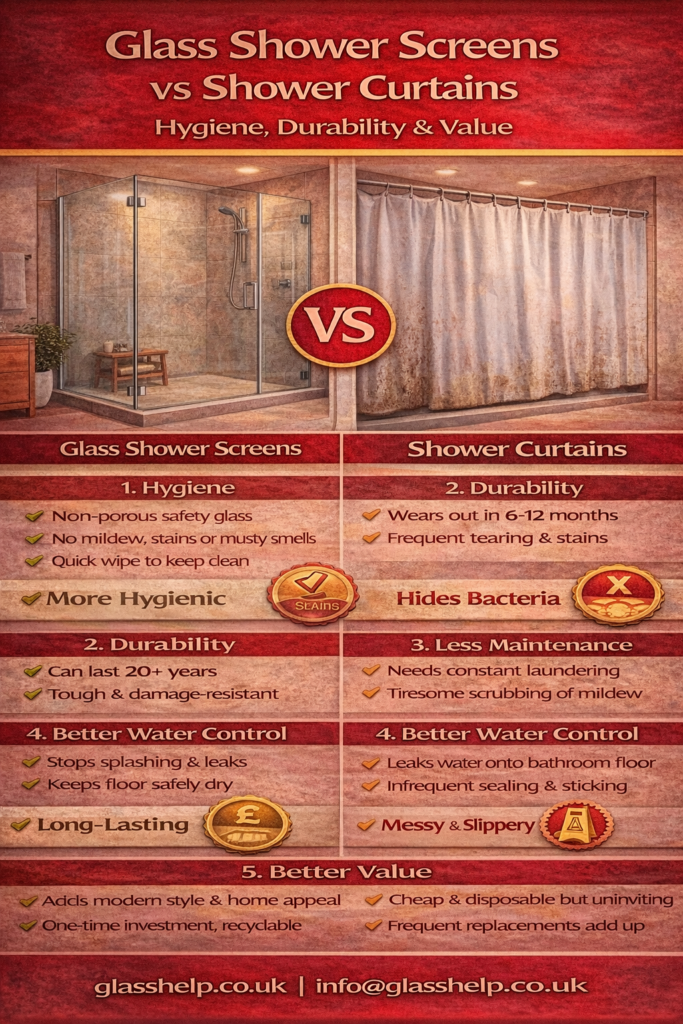
This in-depth comparison breaks down glass shower screens vs shower curtains in practical terms, helping you decide which option offers the best balance of cleanliness, longevity, and overall value for your bathroom.


1. Hygiene: Which Option Is Cleaner Long-Term?

Shower Curtains: A Hidden Hygiene Problem

Shower curtains are often chosen because they’re inexpensive and easy to install — but they are notoriously unhygienic over time.

Common hygiene issues include:

  • Mould and mildew growth along the bottom edge
  • Soap scum buildup trapped in fabric folds
  • Bacteria thriving in damp, porous materials
  • Frequent replacement due to staining and odour

Even with regular washing, shower curtains remain exposed to constant moisture and warmth — ideal conditions for microbial growth.

Glass Shower Screens: Non-Porous and Hygienic

Glass shower screens are made from non-porous safety glass, which means:

  • Water does not soak into the surface
  • Bacteria and mould cannot penetrate the material
  • Soap residue can be wiped away easily

With simple daily or weekly cleaning, glass screens remain visibly and hygienically clean for years. Many modern screens also include easy-clean coatings that reduce limescale and water spotting.

Verdict on hygiene:
Glass shower screens are significantly more hygienic than shower curtains over the long term.


2. Durability: How Long Do They Really Last?

Shower Curtains: Short Lifespan

Shower curtains are designed as temporary solutions.

Typical lifespan:

  • 6–12 months for fabric curtains
  • Slightly longer for plastic or vinyl versions

Common durability problems:

  • Tearing at hooks
  • Discolouration
  • Stiffness and cracking (vinyl)
  • Permanent mould staining

Even with careful use, most households replace shower curtains multiple times over a few years.

Glass Shower Screens: Built to Last

Glass shower screens are manufactured from toughened safety glass, engineered to withstand:

  • Daily temperature changes
  • Water pressure
  • Accidental impact

When properly installed, a glass shower screen can last 10–20 years or more, often outliving other bathroom fittings.

The glass itself rarely needs replacement; maintenance is usually limited to seals or hardware over time.

Verdict on durability:
Glass shower screens dramatically outperform shower curtains in lifespan and reliability.


3. Maintenance & Cleaning Effort

Shower Curtains: Frequent and Frustrating

To keep a shower curtain reasonably clean, you must:

  • Remove and wash it frequently
  • Scrub mouldy areas
  • Replace it once stains become permanent

Even with effort, curtains often look tired quickly.

Glass Shower Screens: Simple, Predictable Cleaning

Glass shower screens require:

  • A quick wipe with a squeegee after use (optional but effective)
  • Weekly cleaning with mild glass cleaner
  • Occasional attention to seals and hinges

No soaking, no laundering, no replacements.

Verdict on maintenance:
Glass shower screens are easier and less time-consuming to maintain.


4. Water Containment & Bathroom Protection

Shower Curtains: Inconsistent Water Control

Shower curtains often:

  • Stick to the body while showering
  • Allow water to escape at the sides
  • Cause wet floors and damp mats

This can lead to:

  • Slippery floors
  • Water damage to bathroom fittings
  • Increased cleaning outside the shower area

Glass Shower Screens: Superior Water Control

Properly fitted glass shower screens:

  • Create a defined water barrier
  • Reduce splashing and leaks
  • Protect flooring and walls

Walk-in and hinged glass designs are engineered to direct water back into the shower area, improving bathroom safety and longevity.


5. Safety Considerations

Shower Curtains

  • No risk of glass breakage
  • But increased slip risk from water escaping onto floors

Glass Shower Screens

  • Made from toughened safety glass
  • Designed to break safely if damaged
  • Provide structural stability

In modern bathrooms, glass shower screens are considered safe and compliant when professionally installed.


6. Aesthetics & Bathroom Design Impact

Shower Curtains: Functional but Dated

While available in many colours and patterns, shower curtains:

  • Visually close off the space
  • Make bathrooms feel smaller
  • Often clash with modern design styles

Glass Shower Screens: Modern and Open

Glass shower screens:

  • Allow light to flow freely
  • Make bathrooms feel larger and brighter
  • Complement modern and minimalist designs
  • Showcase tiles and fixtures

For homeowners focused on design and visual quality, glass screens are the clear winner.


7. Cost Comparison: Short-Term vs Long-Term Value

Initial Cost

  • Shower curtain: very low upfront cost
  • Glass shower screen: higher initial investment

Long-Term Cost

Shower curtains require:

  • Repeated replacements
  • More cleaning products
  • Potential water damage repairs

Glass shower screens:

  • One-time investment
  • Minimal ongoing costs
  • Long service life

Over 5–10 years, many homeowners find that glass shower screens cost less overall than repeatedly replacing curtains.


8. Impact on Property Value

Bathrooms are one of the most important rooms for resale appeal.

  • Shower curtains are often seen as temporary or low-end
  • Glass shower screens signal modernisation and quality

While a shower curtain won’t reduce value, a well-installed glass shower screen can enhance buyer perception and make a bathroom feel upgraded.


9. Environmental Considerations

Shower Curtains

  • Often made from plastic or synthetic fabrics
  • Frequently discarded
  • Contribute to household waste

Glass Shower Screens

  • Long-lasting
  • Fully recyclable glass
  • Reduced waste over time

From a sustainability standpoint, glass screens are the more responsible option.


10. Which Option Is Right for You?

Choose a Shower Curtain if:

  • You need a temporary or very low-budget solution
  • The bathroom is rarely used
  • You plan a renovation soon

Choose a Glass Shower Screen if:

  • You value hygiene and cleanliness
  • You want long-term durability
  • You prefer a modern, open bathroom design
  • You want better water control and safety

For homeowners planning a lasting bathroom upgrade, glass shower screens consistently provide better hygiene, durability, and overall value.

If you want to explore different styles, thickness options, and design layouts, this dedicated guide is a good starting point:
👉 Glass shower screens – styles, safety & options
https://www.glasshelp.co.uk/glass-shower-screens/


Further Guidance

For broader guidance on glass use, safety, and applications across the home, you can explore additional resources here:
👉 https://www.glasshelper.co.uk/


Final Verdict

While shower curtains may seem convenient at first, their hygiene issues, short lifespan, and ongoing replacement costs quickly add up. Glass shower screens, on the other hand, offer a cleaner, longer-lasting, and higher-value solution that improves both daily use and long-term satisfaction.

For most modern homes, glass shower screens are the smarter investment — not just for looks, but for health, durability, and value over time.