
Tips

Tips

Emergency Glazier Services UK: Fast, Safe, and Reliable Glass Solutions

Nov 25, 2025

Emergency Glazier Services UK: Fast, Safe, and Reliable Glass Solutions

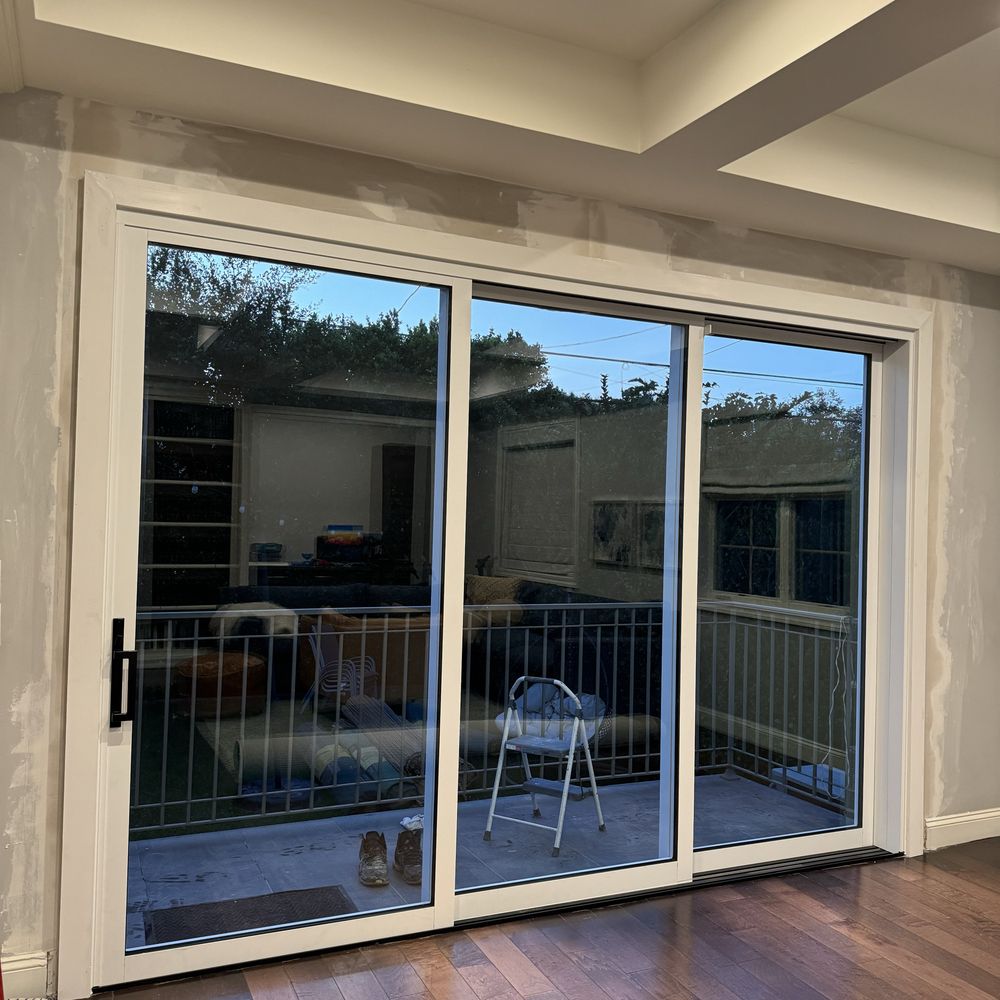
Accidents and emergencies involving glass can happen at any time. Broken windows, shattered doors, vandalised shopfronts, or damaged glass partitions can pose serious safety risks and compromise property security. That’s where emergency glazier services in the UK come in, providing rapid response, professional repair, and high-quality replacement solutions to restore safety and peace of mind.

This article explains how emergency glaziers operate, the types of situations they handle, the glass materials involved, and why professional expertise is essential for safe and compliant repairs.

What Is an Emergency Glazier?

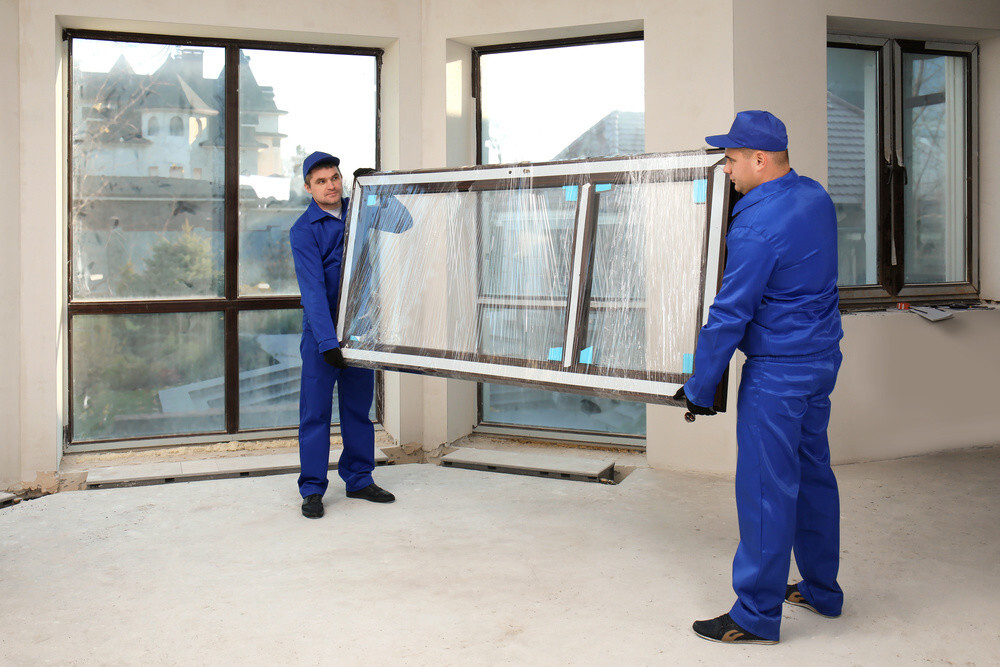
An emergency glazier is a qualified professional who specialises in the immediate repair or replacement of damaged glass. Unlike standard glaziers, emergency specialists are available outside regular working hours, often 24/7, to respond to urgent incidents. Their services are vital for both residential and commercial properties.

Common Emergency Glass Situations

Emergency glaziers in the UK typically respond to:

  • Shattered windows or doors due to accidents or weather events
  • Broken shopfronts caused by burglary, vandalism, or impact
  • Cracked or compromised balustrades and partitions
  • Damaged conservatories, skylights, or glass roofs
  • Misted or broken double-glazed units affecting thermal efficiency
  • Storm damage and falling debris affecting property glazing

The Emergency Glazier Process

UK emergency glazier services follow a structured process to ensure safety, fast response, and quality repair:

1. Immediate Assessment

The glazier assesses the damage remotely (via phone/photos) or onsite to determine the urgency and type of intervention needed.

2. Securing the Property

Temporary boarding or protective barriers are installed to prevent injuries, theft, or further damage while awaiting repair.

3. Repair or Replacement

Depending on the damage, the glass is either repaired on-site (for minor cracks or chips) or replaced entirely with a correctly sized unit. The type of glass may include laminated, toughened, float, or double/triple-glazed panels.

4. Sealing and Finishing

After installation, all edges, frames, and fixings are sealed to ensure weatherproofing, insulation, and security.

5. Safety and Compliance Check

All emergency installations comply with UK standards such as BS 6262 and BS EN 12150. Professional glaziers verify that the work meets safety, structural, and thermal performance requirements.

Glass Types Used in Emergency Repairs

Emergency glaziers work with various glass types depending on the situation:

  • Toughened Glass: Heat-treated safety glass that breaks into small blunt pieces
  • Laminated Glass: Stays intact even when cracked, providing additional security
  • Float Glass: Standard glass for windows or non-safety applications
  • Insulated Glass Units: Double or triple glazing for thermal performance
  • Decorative and Custom Glass: For aesthetic or design-focused repairs

For custom or unusually sized glass, homeowners and businesses can source tailored products from trusted suppliers:
https://www.glassmirrorpro.com/custom-glass/

When to Call an Emergency Glazier

Property owners should contact an emergency glazier immediately if they notice:

  • Shattered or heavily cracked glass in windows or doors
  • Broken shopfronts, display windows, or security glass
  • Compromised safety glass in balustrades or partitions
  • Storm or vandalism-related glass damage
  • Water ingress or drafts caused by damaged glazing

Immediate intervention prevents injury, property theft, and further structural damage.

Costs of Emergency Glazier Services

Emergency glazing can be more expensive than standard repair due to urgent callouts and after-hours service. Typical UK cost ranges include:

  • Temporary boarding: £120–£250
  • Small window repairs: £100–£180
  • Single-pane replacement: £90–£200
  • Double-glazed unit replacement: £150–£400
  • Shopfront emergency repairs: £250–£800+

Custom glass or large-format panels may incur additional costs due to material and fabrication requirements.

Why Choose a Professional Emergency Glazier

Professional emergency glaziers ensure:

  • Safe removal of broken glass to prevent injury
  • Fast and reliable emergency response
  • Use of certified, high-quality glass materials
  • Compliance with UK building standards
  • Long-lasting repairs or replacements
  • Minimal disruption to daily life or business operations

Attempting DIY fixes can lead to further damage, reduced security, and potential legal or insurance issues.

Health and Safety Considerations

Emergency glaziers follow strict health and safety protocols, as outlined by the Health and Safety Executive (HSE):

  • Personal protective equipment (PPE) such as gloves, goggles, and safety clothing
  • Safe handling and disposal of broken or sharp glass
  • Use of mechanical lifting aids for heavy or large panels
  • Site risk assessments for emergency situations

Guidance on safe glazing practices is available here:
https://www.hse.gov.uk/construction/index.htm

Regulatory Compliance

Emergency glazing work must comply with British and European standards, including:

  • BS 6262 – Glazing materials and installation
  • BS EN 12150 – Thermally toughened safety glass
  • BS EN 1279 – Insulated glass units

For high-security or commercial premises, advice from the National Protective Security Authority ensures installations meet impact resistance and safety requirements:
https://www.npsa.gov.uk/building-protection/windows-glazed-facades

Conclusion

Emergency glazier services in the UK are crucial for maintaining safety, security, and structural integrity when glass is damaged. Whether it’s a broken window, shattered shopfront, or compromised safety glass, professional glaziers provide fast, compliant, and long-lasting solutions. Using a trusted supplier for custom or specialised glass ensures repairs meet the highest standards of quality and performance.

For custom glass solutions and made-to-measure panels, visit:
https://www.glassmirrorpro.com/custom-glass/
Tips

Glass Repair Services UK: A Complete Guide to Restoring Safety, Strength, and Clarity

Nov 25, 2025

Glass Repair Services UK: A Complete Guide to Restoring Safety, Strength, and Clarity

Glass is one of the most versatile and widely used materials in modern buildings, but it is also vulnerable to damage from weather, accidental impact, wear, and structural stress. When a window, door, shopfront, balustrade, or glass panel becomes cracked, shattered, or weakened, fast and professional repair services are essential to restore safety and prevent further issues. Throughout the UK, glass repair specialists provide a range of services designed to secure properties, improve performance, and minimise disruption.

This guide explores how glass repair services work in the UK, common types of damage, emergency response standards, and why choosing a qualified glazier is vital for long-term safety and quality.

Common Types of Glass Damage

UK glass repair companies deal with a wide variety of issues, each requiring specific techniques, materials, and safety practices:

1. Cracked Glass

Cracks can be caused by thermal stress, accidental impact, or structural movement. Even small cracks can grow quickly, making immediate repair essential to prevent full breakage.

2. Shattered or Broken Glass

When glass shatters completely—especially tempered or laminated glass—replacement is typically required. Broken panes pose a significant safety risk and must be cleared and replaced by professionals.

3. Seal Failure in Double Glazing

Condensation between panes, “misting,” or visible moisture usually indicates that the insulated glass unit (IGU) seal has failed. Repair may involve resealing or replacing the IGU while retaining the existing frame.

4. Scratches, Etching, and Surface Wear

Minor surface damage can often be polished out, but deeper scratches may require full replacement to restore clarity and strength.

5. Damaged Frames and Hardware

Glass repairs often include fixing or replacing window frames, hinges, seals, beads, and locking mechanisms to ensure the unit performs correctly.

Emergency Glass Repair Services

Many UK glass repair specialists offer 24/7 emergency callouts, especially for:

  • Shopfront break-ins
  • Storm damage
  • Broken windows or doors posing safety or security risks
  • Commercial property damage requiring immediate boarding up

Emergency glaziers usually follow a two-step approach:

  1. Immediate securing: Broken glass is removed, and temporary boarding is installed to secure the property.
  2. Replacement or repair: A new glass unit is manufactured, cut to size, and installed during a follow-up visit.

The Health and Safety Executive provides guidelines on safe handling and removal of broken glass:
https://www.hse.gov.uk/construction/index.htm

Types of Glass Used in Repairs

UK repair services work with a wide range of glass types to ensure compliance with national safety standards:

  • Toughened Safety Glass – heat-treated for strength; breaks into small blunt pieces
  • Laminated Safety Glass – two layers bonded with a plastic interlayer; stays intact when broken
  • Float Glass – standard glass used in many windows and picture frames
  • Fire-Rated Glass – designed to withstand high temperatures and maintain integrity
  • Acoustic Glass – reduces noise transfer, ideal for urban properties
  • Insulated Double or Triple Glazing – improves thermal efficiency and condensation resistance

Where custom sizes or special performance are needed, homeowners and businesses often turn to bespoke suppliers offering made-to-measure glass products. A helpful resource for customised options is:
https://www.glassmirrorpro.com/custom-glass/
Repair or Replace? How Glaziers Decide

Not all damage can be repaired. UK glaziers typically assess the following factors before recommending repair or replacement:

Extent of Damage

Cracks longer than a few centimetres often spread quickly and compromise integrity. In these cases, full replacement is safer.

Location of Crack or Break

Damage close to edges or corners usually weakens the structure, requiring replacement rather than repair.

Glass Type

Some safety glass types cannot be repaired once damaged because they are engineered to break completely for safety reasons.

Energy Efficiency Issues

If a double-glazed unit has misted or lost its insulation, repair may not restore full performance—replacement is often recommended.

Security Concerns

In commercial properties, banks, retail stores, and schools, any compromised panel typically requires immediate replacement to maintain security standards. Guidance for secure glazing is available from:
https://www.npsa.gov.uk/building-protection/windows-glazed-facades

The Glass Repair Process

1. Initial Inspection

A trained glazier examines the damage, checks structural integrity, and provides a repair or replacement recommendation.

2. Measuring and Assessing Compatibility

Accurate measurements are taken to ensure the new glass fits perfectly within the existing frame or structure.

3. Removal of Damaged Glass

Broken glass is carefully removed following strict safety procedures to protect property occupants and technicians.

4. Repair or Replacement

Depending on the assessment, the glass may be repaired using specialist tools or fully replaced with a new panel.

5. Sealing and Finishing

High-performance sealants and weatherproofing materials are applied to ensure a secure installation and prevent drafts or leaks.

6. Quality Check and Safety Compliance

Glaziers check that the installation meets British Standards such as BS 6262 and BS EN 1279 for sealed units.

Costs of Glass Repair in the UK

Prices vary depending on the glass type, size, thickness, and urgency of the job. Typical cost ranges include:

  • Small window repairs: £80–£150
  • Single-pane replacement: £90–£180
  • Double-glazed unit replacement: £120–£350
  • Emergency boarding-up services: £120–£250
  • Shopfront repairs: £250–£800+

Custom and architectural glass may cost more, especially when special safety or thermal properties are required.

Why Professional Glass Repair Matters

Using a qualified glazier ensures:

  • Safe removal of broken glass
  • Correct diagnosis of damage
  • Compliance with UK safety standards
  • High-quality materials and correct glass type
  • Accurate installation and long-term durability
  • Improved energy efficiency and security

Attempting DIY repair is dangerous and may lead to leaks, poor insulation, reduced security, and higher long-term costs.

When to Call a Glass Repair Specialist

You should contact a professional immediately if you notice:

  • Cracks that are spreading
  • Misted double-glazed units
  • Broken or shattered glass
  • Glass doors that no longer close properly
  • Shopfront damage or vandalism
  • Glass balustrades or partitions that feel loose

Fast action helps prevent further damage and restores safety as quickly as possible.

Conclusion

Glass repair services in the UK play a vital role in keeping homes, businesses, and public buildings safe and secure. From repairing cracked windows to replacing damaged shopfronts or restoring misted double-glazed units, professional glaziers provide essential expertise that ensures long-lasting, compliant, and high-quality results. With modern materials, precision tools, and 24/7 emergency service availability, UK glass repair specialists help property owners maintain safety, clarity, and performance year-round.

Tips

Glaziers in the UK: Skills, Standards, and the Evolving World of Modern Glasswork

Nov 25, 2025

Glaziers in the UK: Skills, Standards, and the Evolving World of Modern Glasswork

Glaziers play an essential role in the UK’s construction, renovation, and home-improvement sectors. Their work touches almost every type of building—residential homes, commercial facilities, listed properties, retail spaces, and modern architectural structures. Skilled glaziers combine craftsmanship, technical knowledge, and safety awareness to install, repair, and maintain glass products that are both functional and aesthetically pleasing.

This article explores what glaziers do, the standards they follow, current industry innovations, and why professional glazing services matter today more than ever.

What Glaziers Do

The primary responsibility of a glazier is to cut, fit, and install glass. However, the role is far broader and more technical than many people realize. The day-to-day tasks of a glazier in the UK may include:

1. Measuring and Template Creation

Accurate measurements are essential for safe and seamless installation. Glaziers often create templates for custom shapes, curved glass, or irregular spaces.

2. Cutting and Shaping Glass

Modern glazing requires precision cutting using professional equipment. Glaziers work with numerous types of glass, including toughened, laminated, acoustic, fire-rated, insulated units, and decorative or tinted glass.

3. Installation of Glazing Systems

From windows and doors to balustrades, shopfronts, partitions, splashbacks, and glass roofs, installation requires technical skill and knowledge of structural support, sealants, and fixings.

4. Repairs and Replacement

Glaziers are frequently called for emergency repairs when windows or doors are damaged, helping secure properties and restore safety.

5. Finishing, Sealing, and Compliance

Every installation must be sealed correctly to prevent drafts, leaks, and heat loss. Glaziers also ensure work complies with UK building regulations.

Training and Qualifications

In the UK, many glaziers enter the profession through apprenticeships or structured training schemes. Paths typically include:

  • Level 2 Fenestration Installer Apprenticeship
  • Level 3 qualifications in glass installation or processing
  • On-site experience gained through trade internships

Holding a CSCS card is often required to work on construction sites, proving competency and adherence to health and safety standards. Glaziers can also specialise in structural glazing, heritage restoration, architectural glass design, and more.

Health and Safety in Glazing

Working with glass involves inherent risks such as cuts, lifting injuries, and exposure to glass dust. UK glaziers follow strict safety rules outlined by the Health and Safety Executive (HSE), including:

  • Use of PPE such as gloves, goggles, and cut-resistant clothing
  • Safe lifting techniques and mechanical aids
  • Dust extraction when cutting glass
  • Proper disposal of sharp materials
  • Site-specific risk assessments

More information on safety requirements can be found at:
https://www.hse.gov.uk/construction/index.htm

Industry Standards and Regulations

Professional glazing work in the UK must meet a range of standards to ensure safety, performance, and compliance. Key standards include:

  • BS 6262 – glazing materials, safety, impact ratings, and installation
  • BS EN 12150 – thermally toughened safety glass
  • BS EN 1279 – insulated double- and triple-glazed units
  • Approved Document F & L – ventilation and thermal efficiency regulations

For high-security glazing, façade systems, and blast-resistant solutions, the National Protective Security Authority provides extensive guidance:
https://www.npsa.gov.uk/building-protection/windows-glazed-facades

Modern Innovations in the UK Glazing Industry

1. Custom-Made Architectural Glass

Homeowners and designers increasingly request bespoke glass for shower enclosures, partitions, shelves, balustrades, splashbacks, and feature walls. Custom-cut glass has become a major part of modern home design.

High-quality suppliers now offer made-to-measure products and online configurators, such as:
https://www.glassmirrorpro.com/custom-glass/
2. Energy-Efficient Glazing

With rising energy prices, energy-efficient glazing is in high demand. New insulated glass units can greatly reduce heat loss, improve acoustics, and help properties meet energy-rating requirements.

3. Safety and Security Glass

Laminated, fire-rated, and impact-resistant glass are increasingly used in both residential and commercial settings for enhanced safety.

4. Structural and Frameless Glass

Architectural trends favour open layouts and minimalist framing. UK glaziers now install large frameless panels, structural glass walls, and channel-set balustrades as part of modern designs.

Why Hiring a Professional Glazier Matters

Attempting DIY glass installation can lead to issues such as poor sealing, incorrect measurements, safety hazards, and non-compliance with building regulations. A qualified glazier ensures:

  • Accurate fitting and alignment
  • Compliance with British Standards
  • Correct material selection
  • Safe installation procedures
  • Long-lasting performance and manufacturer warranty integrity

For custom or large architectural projects, glaziers often collaborate with builders, architects, and designers to achieve seamless integration.

The Future of Glazing in the UK

The glazing industry continues to evolve, driven by sustainability goals, energy-efficient home improvements, modern architectural styles, and increasing demand for secure, durable materials. Skilled UK glaziers will remain essential as homes and commercial buildings adopt more advanced glazing solutions.

Conclusion

Glaziers in the UK are highly skilled professionals whose work extends far beyond fitting windows. They provide safe, compliant, and high-quality installations across residential, commercial, and architectural projects. As glass technology evolves, the demand for experienced glaziers continues to grow, offering property owners a blend of safety, design excellence, and long-term durability.

Tips

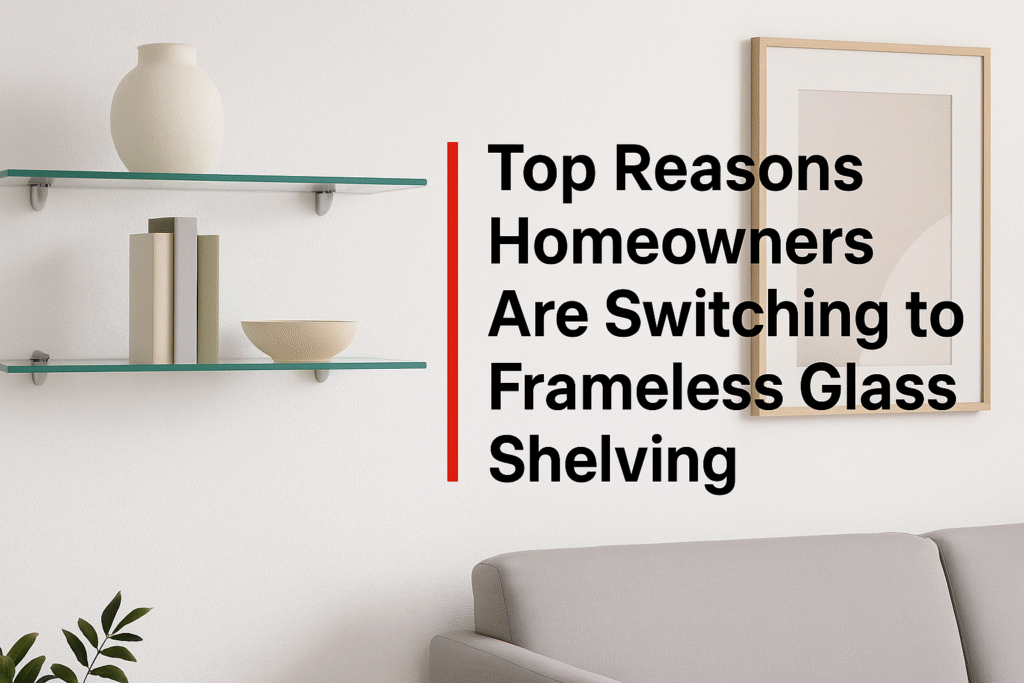
Top Reasons Homeowners Are Switching to Frameless Glass Shelving

Oct 25, 2025

Top Reasons Homeowners Are Switching to Frameless Glass Shelving

Updated · Interior Design Trends by Glass Helper UK

The clean, open look of frameless glass shelving has quickly become one of the biggest interior design upgrades of 2025.
From minimalist bathrooms to luxury living rooms, more UK homeowners are choosing this sleek, transparent storage solution over traditional framed units.
Here’s why frameless glass shelves are taking over modern homes — and how to order your own custom version through our
Glass Shelves Service.

1) Seamless, Floating Aesthetic

Frameless glass shelves create the illusion of floating in mid-air. This design trick visually enlarges the space — perfect for smaller UK bathrooms, kitchens, or apartments.
According to Houzz UK, transparent surfaces help reflect light, giving even compact bathrooms a bright, open atmosphere.

  • ✅ Sleek and contemporary look
  • ✅ Visually expands small rooms
  • ✅ Matches any wall colour or material

2) Strength Without Bulk

Many people assume frameless means fragile — but the opposite is true.
Tempered (toughened) glass used in frameless designs is 4–5 times stronger than regular float glass.
It can easily support daily-use items such as toiletries, décor, and small appliances.

Pilkington Toughened Glass ensures both durability and safe breakage behaviour — shattering into small, blunt cubes rather than sharp shards.

3) Minimal Maintenance

Unlike wooden or metal shelves, glass never rusts, warps, or needs painting.
Just a quick wipe with glass cleaner keeps it spotless. Frameless edges mean no joints to collect grime — ideal for humid bathrooms or busy kitchens.

  • ✅ No rust, no water damage
  • ✅ Simple to clean — one wipe and done
  • ✅ Long-lasting shine without sealants

4) Safety You Can Trust

Frameless glass shelves are always made from **tempered safety glass**, compliant with BS EN 12150 standards.
Even when damaged, they’re far safer than wood or metal, which can splinter or bend.
Edges are polished smooth to eliminate injury risks during cleaning or installation.

For added peace of mind, suppliers like ToughGlaze UK certify their tempered products with etched safety markings.

5) Hygienic & Moisture Resistant

Frameless glass is the most hygienic shelving option available. Its smooth surface prevents moisture, soap, or dust from collecting — a big advantage in steamy bathrooms.
According to the NHS, maintaining clean, dry bathroom surfaces reduces mould and bacterial growth, protecting both air quality and health.

6) Customisable for Every Room

Frameless shelving can be tailored in shape, thickness, and finish — from clear and low-iron to frosted or tinted glass.
Whether you’re styling a minimalist bathroom or an industrial-chic kitchen, frameless designs blend in beautifully.

  • ✅ Frosted glass for privacy
  • ✅ Bronze or grey tints for warmth
  • ✅ Low-iron crystal-clear finish for luxury interiors

7) Environmentally Friendly

Tempered glass is fully recyclable and far more sustainable than painted wood or coated metal.
Modern manufacturers like Saint-Gobain Glass UK design eco-friendly products that last decades, reducing household waste and environmental impact.

Pro Tip: For the cleanest “floating” illusion, use concealed stainless-steel brackets or hidden channel fixings — they keep your frameless shelf secure without visible hardware.

Order Frameless Glass Shelves

Tempered · Floating · Made-to-measure UK-wide
Sources & References
Tips

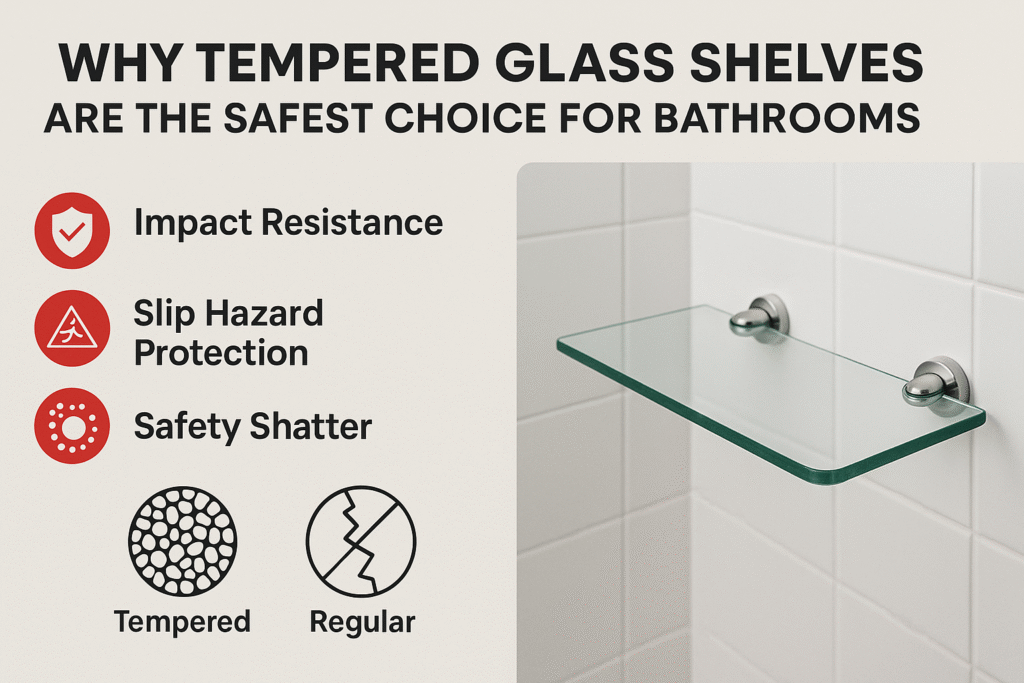
Why Tempered Glass Shelves Are the Safest Choice for Bathrooms

Oct 25, 2025

Why Tempered Glass Shelves Are the Safest Choice for Bathrooms

Updated · Bathroom Safety Insights by Glass Helper UK

Bathrooms are high-humidity, high-traffic areas — which means every surface, from mirrors to shelves, should be built for safety.
Tempered glass shelves have become the gold standard for modern bathrooms, offering unmatched durability and peace of mind.
Here’s why they’re the safest, most practical choice — and how to get them custom-cut through our
glass shelves service.

1) What Is Tempered Glass?

Tempered (or toughened) glass is produced by heating float glass to over 600°C, then rapidly cooling it to lock in surface compression.
This process makes it **four to five times stronger** than standard glass of the same thickness.

According to Pilkington UK, toughened glass not only resists impacts better but also breaks safely into small granular pieces instead of sharp shards — a key safety feature for bathrooms.

2) Safety First: Shatter Resistance

Regular glass can break into dangerous, jagged edges.
Tempered glass shelves, however, are engineered to withstand knocks, weight, and temperature changes — ideal for humid rooms with constant use.
If breakage ever occurs, they crumble into blunt cubes that significantly reduce injury risk.

  • ✅ Shatters into small safe pieces, not sharp splinters
  • ✅ Withstands up to 200°C temperature swings
  • ✅ Certified under BS EN 12150 safety standards

3) Moisture Resistance & Long-Term Durability

Bathrooms generate constant steam and condensation — materials like wood or metal eventually degrade.
Tempered glass is immune to rust, corrosion, or moisture absorption, maintaining clarity for decades with simple cleaning.
Saint-Gobain SATINOVO® MATT frosted glass options also resist fingerprints and soap residue, perfect for vanity shelving.

4) Easy Cleaning & Hygiene

Tempered glass shelves are non-porous — meaning bacteria, soap scum, or limescale can’t penetrate the surface.
Wipe weekly with an ammonia-free cleaner and a soft microfibre cloth to keep them sparkling.

The NHS advises regular cleaning of bathroom surfaces to prevent mould and bacteria growth, and glass makes that task easier than any porous alternative.

5) Strength-to-Thickness Ratio

Tempered glass offers a high load capacity without extra bulk — 6–10 mm glass is typically sufficient for most bathroom shelves.
This allows a light, “floating” look that wooden or plastic shelves can’t replicate, while remaining safe for heavy bottles or décor.

ToughGlaze UK reports that tempered glass maintains structural integrity even under bending stress or sudden load changes.

6) Compatibility with Bathroom Fixtures

Tempered glass shelves pair beautifully with chrome, matte black, or brushed brass brackets.
Because they’re transparent and reflective, they blend seamlessly into any modern or minimalist bathroom design.

  • ✅ Matches any wall tile or colour scheme
  • ✅ Works with LED underlighting for elegant glow
  • ✅ Polished edges ensure smooth, safe finish

7) Environmental Sustainability

Tempered glass is fully recyclable and retains quality for decades, reducing waste from frequent replacements.
Unlike coated plastics or composite shelves, it contains no harmful chemicals or emissions — a truly eco-conscious bathroom choice.

Pro Tip: Look for a discreet “BS EN 12150” mark etched into the glass — this confirms it’s been properly tempered and tested to UK safety standards.

Order Tempered Glass Shelves

Tempered · Polished · Made-to-measure UK-wide
Sources & References
Tips

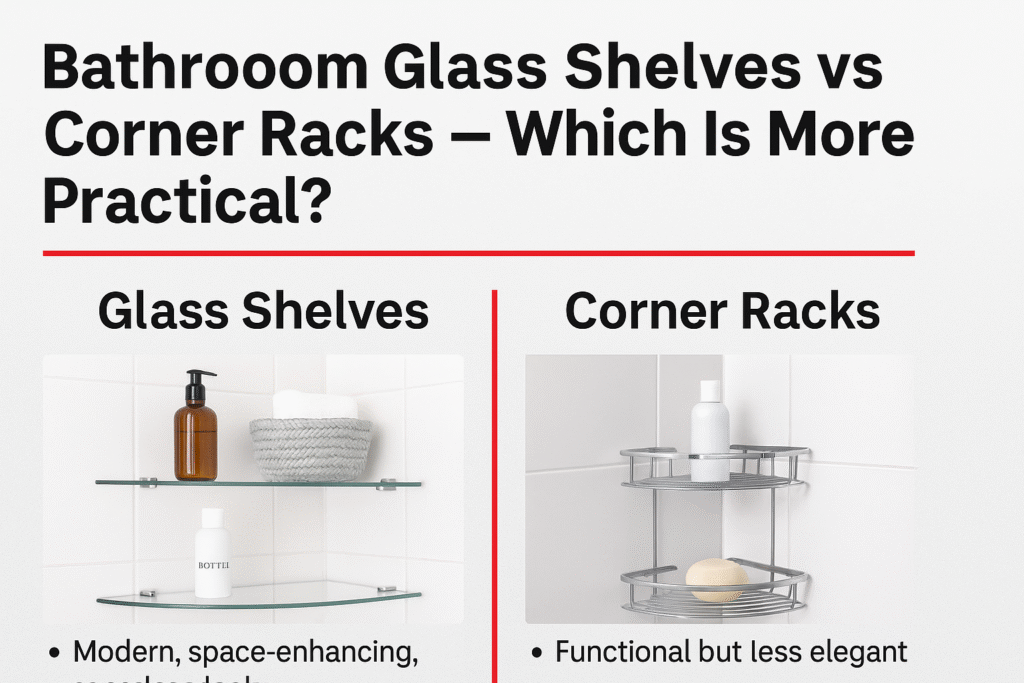
Bathroom Glass Shelves vs Corner Racks — Which Is More Practical?

Oct 25, 2025

Bathroom Glass Shelves vs Corner Racks — Which Is More Practical?

Updated · Bathroom Design Insights by Glass Helper UK

Every bathroom needs practical storage that doesn’t compromise style. While corner racks have been a common solution for decades, sleek glass shelves are now redefining how modern UK bathrooms combine function and aesthetics.
Let’s compare these two options side by side to see which suits your needs best — and when it’s worth upgrading to
custom glass shelves.

1) Design & Aesthetic Appeal

Corner racks are often made from chrome or plastic, designed primarily for function. They can look bulky, especially in small bathrooms.
In contrast, glass shelves deliver a floating, minimalist feel that complements any décor style — from luxury spa-inspired spaces to compact en-suites.

According to Houzz UK, clear glass shelving reflects light and makes small bathrooms appear larger, while traditional metal racks can visually clutter the corners.

  • ✅ Glass Shelves: Modern, space-enhancing, seamless look
  • ✅ Corner Racks: Functional but less elegant

2) Space Utilisation

Corner racks maximise unused corner areas but often limit accessibility — especially when reaching lower tiers.
Flat wall-mounted glass shelves, however, utilise vertical wall space efficiently, offering a cleaner and more flexible layout.

  • ✅ Corner racks: Great for tight corners but limited capacity
  • ✅ Glass shelves: Better for linear wall storage and display

3) Durability & Maintenance

Plastic and low-cost metal racks tend to rust or discolour in humid conditions.
Tempered glass shelves are moisture-resistant, easy to clean, and maintain their shine for years.

Pilkington Toughened Glass is five times stronger than regular glass, making it a reliable choice for humid bathroom environments.

  • ✅ Glass shelves: Rust-proof and easy to wipe clean
  • ✅ Corner racks: Can corrode or trap soap scum in joints

4) Installation & Customisation

Corner racks typically rely on suction cups or adhesive pads, which can fail over time.
Professionally mounted glass shelves use secure stainless-steel brackets and can be customised in size, finish, and edge style to fit your bathroom perfectly.

  • ✅ Corner racks: Easy to install but often unstable long-term
  • ✅ Glass shelves: Custom-fit options, secure mounting, tailored edges

5) Hygiene & Cleaning

In humid spaces, trapped moisture and grime accumulate quickly in rack corners.
Glass shelves have smooth surfaces and minimal joints, making them far easier to sanitise and maintain in a mould-free condition.

The NHS recommends wiping down bathroom surfaces regularly to reduce mould growth — something simpler to do on flat glass shelves than on wire or plastic racks.

6) Safety Factors

When made from tempered glass, modern bathroom shelves are extremely safe — if they ever break, they crumble into small blunt pieces instead of sharp shards.
Corner racks, particularly metal ones, can develop sharp rusted edges over time, posing a safety risk.

7) Cost & Long-Term Value

While corner racks are cheaper upfront, they often need replacing every few years.
Custom glass shelves offer far greater longevity and a timeless aesthetic that enhances property value and user satisfaction.

Feature Glass Shelves Corner Racks
Durability High – tempered, corrosion-resistant Low – prone to rust or adhesive failure
Aesthetic Minimalist and elegant Functional but dated
Maintenance Easy to clean, mould-resistant Collects soap scum and mildew
Verdict: For most modern bathrooms, glass shelves win in every category — they’re stronger, cleaner, more stylish, and built to last. Corner racks may still suit rental flats or temporary setups, but glass offers lasting quality and value.

Order Custom Glass Shelves

Tempered · Water-resistant · Made-to-measure UK-wide
Sources & References
Tips

How to Maintain Sparkling Glass Shelves in Humid Bathrooms

Oct 25, 2025

How to Maintain Sparkling Glass Shelves in Humid Bathrooms

Updated · Bathroom Care Guide by Glass Helper UK

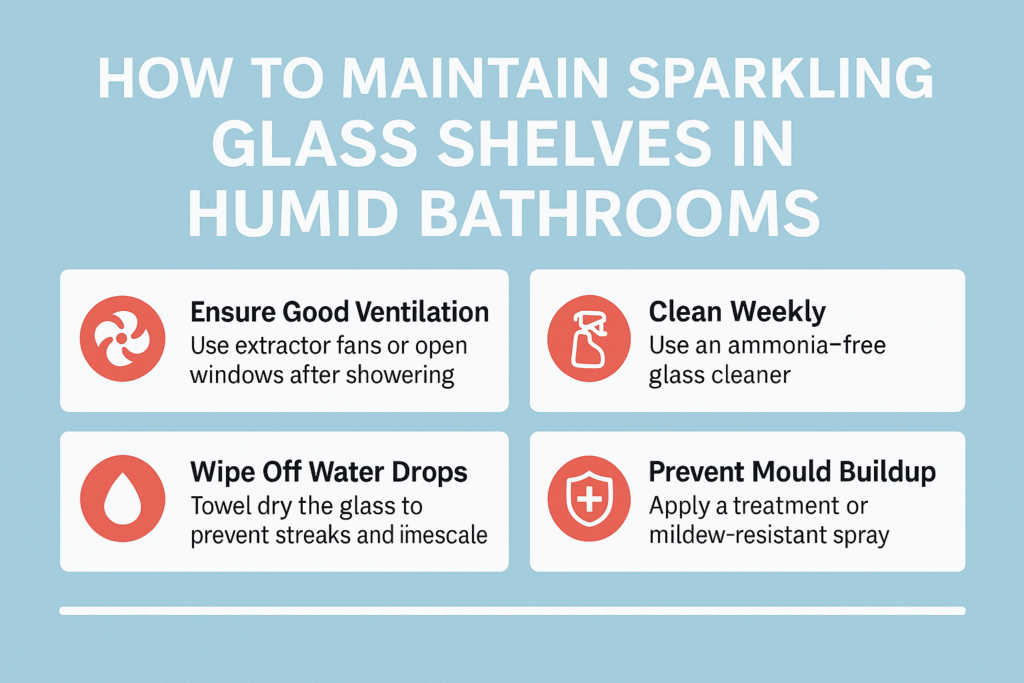
Bathrooms are humid by design — steam, splashes and hard water can leave glass shelves spotted, streaked or even prone to mould on surrounding walls. The good news: with the right routine, your shelves will stay crystal-clear and safe for years. Use this practical checklist (backed by UK guidance) and, when you’re ready to upgrade or add more storage, order made-to-measure
glass shelves from Glass Help UK.

1) Control Humidity First

High humidity drives condensation, limescale and mould. After showering, run the extractor fan and keep the door slightly open to vent moisture. For broader damp/mould advice, see GOV.UK’s guidance for households and landlords.

  • ✅ Run the extractor fan for 20–30 minutes after showers
  • ✅ Open a window where safe to do so
  • ✅ Keep heated towel rails on low to help dry the room

2) Weekly Clean: Ammonia-Free Glass Cleaner

Wipe shelves weekly with an ammonia-free glass cleaner and a soft microfibre cloth. Spray onto the cloth (not directly near edges/brackets) to avoid seepage into fixings or walls. For frosted/acid-etched glass, follow manufacturer guidance and avoid abrasives.

3) Daily Habit: Towel-Dry Water Drops

If your bathroom has hard water, towel-dry shelves after use. This prevents mineral spots that can build into cloudy marks. A quick squeegee pass also helps keep glass streak-free.

4) De-scale Gently (When Needed)

For stubborn limescale, use a mild, non-abrasive descaler safe for glass. Apply to a cloth, work in small areas, then rinse and dry. Never use scouring pads or powders — they can scratch tempered glass and dull polished edges.

5) Prevent Mould on Nearby Surfaces

Glass itself doesn’t feed mould, but sealant lines, grout and walls can. Keep these dry and clean. If mould appears on adjacent surfaces, clean promptly following NHS/UK guidance and improve ventilation to stop it returning.

6) Protect Edges & Hardware

  • ✅ Choose polished or pencil-polished edges to minimise chipping
  • ✅ Check brackets twice a year; tighten gently if needed
  • ✅ Prefer stainless-steel or corrosion-resistant fixings in bathrooms

7) Specify Tempered (Toughened) Glass

In busy households and humid rooms, tempered (toughened) glass is the safe choice. It’s several times stronger than standard float glass and, if broken, crumbles into small, blunt granules rather than sharp shards.

8) Care for Frosted & Tinted Finishes

Frosted (acid-etched) glass hides fingerprints and diffuses light — perfect for vanity areas. Clean with a soft cloth and non-abrasive cleaner; avoid waxy polishes that can leave sheen patches. Tinted glass cleans the same as clear glass.

9) Simple Monthly Checklist

  • 🗹 Wipe brackets and under-sides
  • 🗹 Inspect edges for chips; stop loading if damage is seen
  • 🗹 Re-seal any failing silicone around wall junctions
Pro Tip: Add a discreet LED strip under a floating glass shelf — light reduces the “damp corner” feel and makes daily wipe-downs effortless.

Order Custom Glass Shelves

Tempered · Polished edges · Made to measure UK-wide
Sources & References
Tips

Top 10 Mistakes to Avoid When Installing Glass Shelves at Home

Oct 25, 2025

Top 10 Mistakes to Avoid When Installing Glass Shelves at Home

Updated · Home Improvement Tips by Glass Helper UK

Installing glass shelves is a stylish way to enhance your space — but small mistakes can lead to cracks, poor alignment, or even safety risks.
Whether you’re upgrading a bathroom, kitchen, or living room, here are the 10 most common installation errors to avoid when fitting your
custom glass shelves.

1) Using Non-Tempered (Regular) Glass

Ordinary float glass can shatter dangerously under pressure or impact.
Always choose tempered (toughened) glass, which is four to five times stronger and meets UK safety standards.
Pilkington Toughened Glass is one reliable option used in modern shelving.

2) Ignoring Wall Type Before Mounting

Not all walls are equal — plasterboard, brick, or tile require different anchors.
Using the wrong fixing can lead to shelf collapse or cracked tiles.
Tip: use wall plugs rated for your wall type, and stainless-steel screws for humid spaces like bathrooms.

3) Skipping Bracket Alignment Checks

A single millimetre off-level can make your shelves look crooked and put stress on the glass.
Always use a spirit level and pre-mark drill points before installing brackets.
Laser levels offer even greater precision for multiple shelves.

4) Choosing Incorrect Glass Thickness

Thin glass (under 6 mm) can flex or bow under moderate weight.
Most domestic shelves should use **8–10 mm tempered glass**, and thicker for spans over 800 mm.
If unsure, consult your supplier for load guidance based on shelf size and bracket spacing.

5) Overloading the Shelf

Even toughened glass has limits. Avoid stacking heavy books or appliances beyond recommended load capacity.
ToughGlaze UK advises distributing weight evenly and keeping objects away from unsupported edges.

6) Forgetting Edge Protection

Sharp or unfinished glass edges can chip easily.
Always request polished or pencil-polished edges when ordering shelves. They’re safer to handle and look more refined, especially for open living spaces.

7) Using the Wrong Adhesive or Mounting Tape

Avoid DIY adhesives or double-sided tape for structural support. These can fail under humidity or heat.
Use professional-grade silicone or mechanical brackets rated for glass installations.
Refer to Geocel Trade Mate Silicone for safe bathroom-grade bonding.

8) Neglecting Safety Gloves During Installation

Handling glass without gloves increases the risk of fingerprints, scratches, or injury.
Always use cut-resistant gloves and avoid resting the glass edge directly on hard floors.

9) Installing Near Heat Sources

Never mount glass shelves directly above radiators or under heat lamps — temperature changes cause thermal stress that may crack even tempered glass.
Maintain at least 300 mm clearance from direct heat.

10) Forgetting Regular Maintenance

Once installed, keep your shelves clean with non-abrasive glass cleaner and soft cloths.
Check bracket screws twice a year to ensure no loosening due to vibration or humidity.
Learn full care tips in our Glass Shelves Maintenance Guide.

Pro Tip: Always install tempered glass with the etched safety mark visible — it’s your assurance that the panel meets BS EN 12150 safety standards.

Order Custom Glass Shelves

Tempered · Polished Edges · Made-to-Measure UK-Wide
Sources & References
Tips

Creative Ways to Use Glass Shelves in Modern UK Homes

Oct 25, 2025

Creative Ways to Use Glass Shelves in Modern UK Homes

Updated · Home Décor Ideas by Glass Helper UK

In 2025, glass shelves are no longer limited to bathrooms and display cabinets — they’re a design statement for every part of the home. Their light-reflecting, clutter-free look makes them perfect for modern UK interiors that value openness, natural light, and sleek finishes.
Here are some creative ways to style and use custom glass shelves across your living space.

1) Floating Glass Shelves for Living Rooms

Replace bulky wooden units with floating glass shelves to achieve a lighter, airier living room. They’re perfect for displaying décor, photo frames, or plants without interrupting wall texture or paint colour.

According to Houzz UK, glass shelving can visually expand smaller living rooms by reflecting both daylight and artificial light.

  • ✅ Use LED lighting under the shelves for ambient glow
  • ✅ Combine clear and frosted glass for visual contrast
  • ✅ Choose polished edges for a premium, frameless look

2) Elegant Bathroom Storage

Bathrooms are a natural fit for glass shelving. The non-porous surface resists water and stains, and tempered safety glass ensures durability even in humid environments.

Products like Saint-Gobain SATINOVO® MATT glass add a smooth frosted finish that hides fingerprints while diffusing light beautifully.

  • ✅ Place near mirrors for symmetry and balance
  • ✅ Ideal for toiletries, perfumes, and towel storage
  • ✅ Pair with chrome or matte black brackets for modern style

3) Kitchen Displays & Open Storage

Instead of closed wooden cupboards, glass shelving brings a premium “open kitchen” feel. Use them to display glassware, dishes, or plants — it keeps the space feeling bright and clean.

deVOL Kitchens suggests combining low-iron glass with brushed brass fixings for a timeless blend of transparency and warmth.

4) Bedroom & Dressing Area Displays

Transform your dressing space with wall-mounted glass shelves for accessories, shoes, or collectibles. Frosted or tinted glass adds a luxurious boutique-like vibe.

  • ✅ Add a mirrored wall behind the shelves for extra depth
  • ✅ Use clear toughened glass for jewelry or handbags
  • ✅ Combine multiple shelves vertically for a designer feature wall

5) Hallway or Entrance Statement Shelves

In narrow UK hallways, glass shelves are space-saving heroes. They provide storage without visually shrinking the area. Pair them with LED strip lighting or a vase for an elegant entrance display.

  • ✅ Minimal footprint, maximum brightness
  • ✅ Use 8–10 mm thick tempered glass for safety
  • ✅ Try curved-edge glass to prevent sharp corners

6) Mix & Match: Glass with Wood or Metal

Combining glass with other materials creates depth and balance. Glass shelves on oak brackets or steel frames merge durability with warmth, bridging modern and classic design elements. This hybrid approach is trending across UK interior projects in 2025.

Inspiration can be seen in Architectural Digest projects showcasing glass shelving framed in dark bronze or walnut.

Pro Tip: Use clear glass shelves on light-coloured walls for an “invisible” floating look — ideal for minimalist homes or apartments where space and light are at a premium.

Design Your Custom Glass Shelves

Custom sizes · Tempered safety glass · UK-wide shipping
Sources & References
Tips

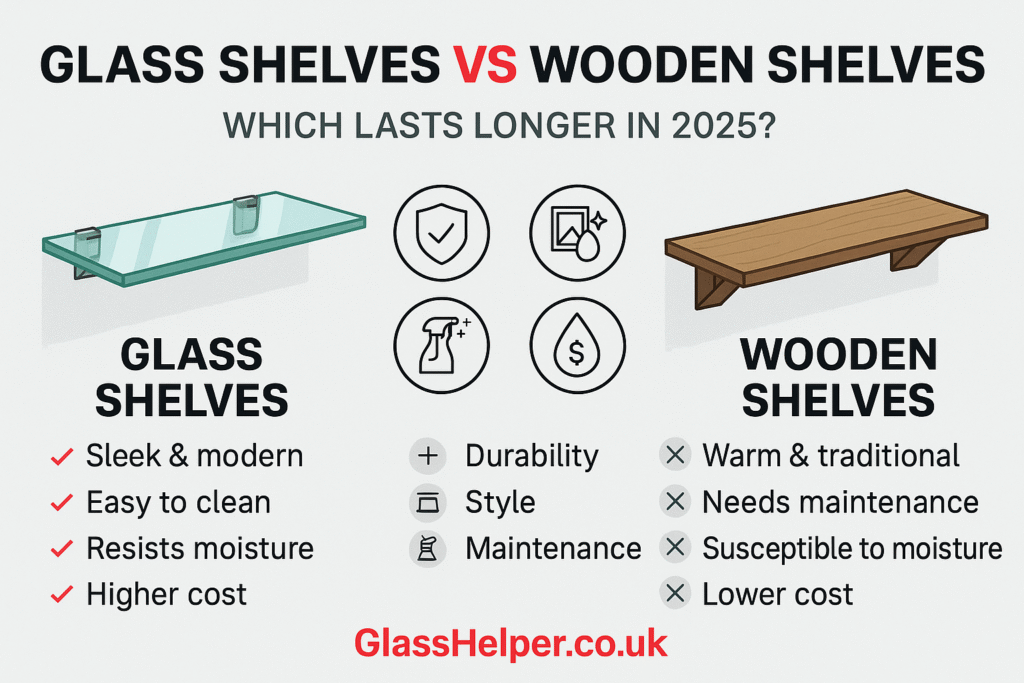
Glass Shelves vs Wooden Shelves — A Comparison of Style & Durability

Oct 25, 2025

Glass Shelves vs Wooden Shelves — A Comparison of Style & Durability

Updated · Home & Design Insights by Glass Helper UK

When planning your home interior, shelving plays a big role in both function and aesthetics. Two of the most popular materials are glass and wood — but how do they compare in 2025 when it comes to style, strength, and long-term durability? Let’s find out which suits your space best and when to choose each option through our
custom glass shelves service.

1) Design Aesthetic — Modern vs Traditional Appeal

Glass shelves offer a sleek, minimalist look that complements modern interiors, while wooden shelves bring warmth and texture to traditional or rustic spaces.
According to Houzz UK, floating glass shelves help small rooms feel open and airy, reflecting light naturally — something wooden shelves can’t replicate as effectively.

  • ✅ Glass: Modern, reflective, seamless appearance
  • ✅ Wood: Warm, natural, tactile charm
  • ✅ Hybrid idea: Combine wood brackets with glass panels for a balanced design

2) Durability & Maintenance

While wood is strong, it’s vulnerable to moisture, warping, and insect damage over time. Glass, on the other hand, doesn’t absorb water, won’t rot, and is incredibly easy to clean. For high-humidity areas like bathrooms, tempered glass shelves are the smarter, safer choice.

Pilkington Toughened Glass is up to five times stronger than standard float glass, making it perfect for heavy loads and daily use.

  • ✅ Glass: Scratch-resistant, non-porous, unaffected by humidity
  • ✅ Wood: Requires regular sealing or varnish; can swell or fade

3) Safety & Strength Considerations

Tempered glass shelves are engineered for safety. If broken, they crumble into small blunt pieces instead of sharp shards. Wooden shelves, while solid, can fail at brackets or joints under excessive weight or moisture exposure.

A study by ToughGlaze UK highlights that tempered glass shelves can safely support similar or greater weights than wooden shelves of equal thickness — especially when mounted using stainless-steel brackets.

4) Environmental & Longevity Factors

Modern glass is recyclable and maintains its clarity for decades with minimal maintenance. Wooden shelves, especially untreated ones, can degrade faster if exposed to fluctuating temperatures or moisture.
Sustainable woods such as oak or bamboo are environmentally friendly but still require care to prevent cracking or mold.

  • 🌿 Glass: 100% recyclable, long-lasting finish
  • 🌿 Wood: Renewable resource but needs upkeep

5) Cost & Value Over Time

While glass shelves have a higher upfront cost, they often outlast wooden ones in humid conditions. Over time, their maintenance-free nature and timeless aesthetic make them cost-effective. Wooden shelves may be cheaper initially but can require sanding, sealing, or replacement due to wear and tear.

Feature Glass Shelves Wooden Shelves
Durability Excellent, long-term stability Prone to warping or cracking
Maintenance Low – simple wipe clean High – needs varnish & care
Aesthetic Modern, reflective, light-enhancing Warm, rustic, traditional charm

6) Best Use Cases

  • ✅ Use glass shelves in bathrooms, living rooms, and kitchens where humidity and light reflection are key.
  • ✅ Choose wooden shelves in bedrooms, libraries, or lounges for cozy, traditional aesthetics.
  • ✅ Mix both for a modern hybrid approach — glass display shelves with wooden framing or supports.
Pro Tip: In 2025, hybrid shelving — glass shelves mounted on wooden brackets — is trending for its contrast of materials and balance between minimalism and warmth.

Explore Custom Glass Shelves

Durable · Hygienic · Made to Measure UK-Wide
Sources & References