Tips

Tips

Tempered vs Non-Tempered Glass Shelves — Which Is Better for Safety in 2025

Oct 25, 2025

Tempered vs Non-Tempered Glass Shelves — Which Is Better for Safety in 2025?

Updated · Design & Décor Insights by Glass Helper UK

When selecting a shelf made of glass for your bathroom or living room, safety and durability are just as important as style. This guide explains the key differences between **tempered (toughened) glass** and **non-tempered (annealed/standard) glass**, and helps you choose the right option via our custom glass shelves service.

1) What Is Tempered vs Non-Tempered Glass?

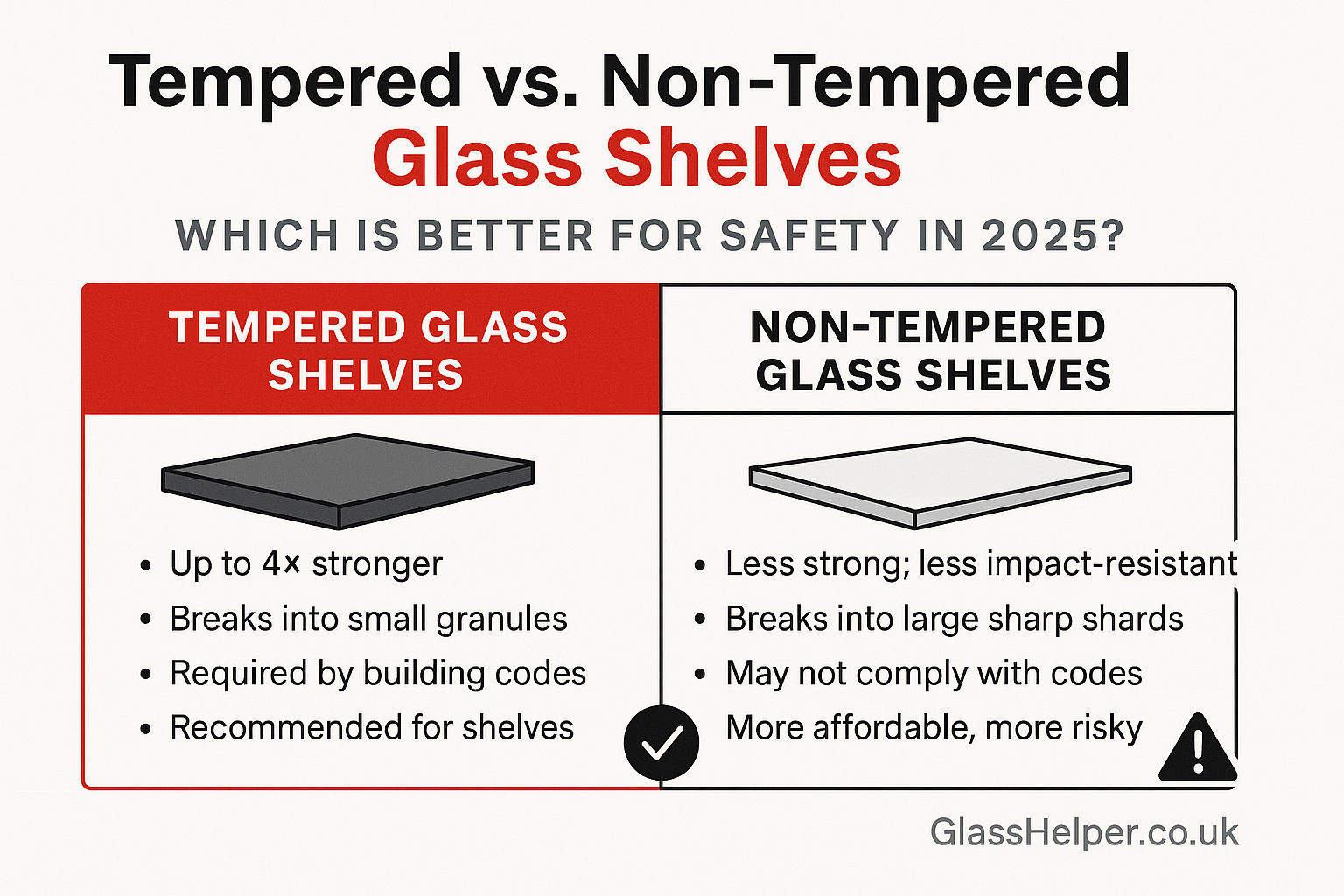
• **Tempered glass** is a safety glass made by heating standard glass then rapidly cooling it, creating internal stresses that make the glass stronger and cause it to shatter into small granular pieces instead of sharp shards. :contentReference[oaicite:1]{index=1}
• **Non-tempered (annealed/standard) glass** is the regular float glass that hasn’t been heat-treated; it breaks into large, jagged shards and is far less impact‐resistant. :contentReference[oaicite:2]{index=2}
• In basic terms: tempered glass = greater strength + safer break pattern; non-tempered glass = lower cost, more risk in high-impact or high-use situations.

2) Why Safety Matters for Glass Shelves

When choosing a shelf, particularly in zones like bathrooms or living rooms where people move about, knocks, humidity and load variances occur — safety becomes a critical concern.
• If a glass shelf is struck or overloaded, a non-tempered shelf may fail catastrophically, creating large sharp fragments.
• A tempered shelf offers far greater resilience and a safer failure mode.
• A UK-based glazier states tempered glass is “4 to 5 times stronger than annealed glass of the same thickness”. :contentReference[oaicite:3]{index=3}

3) Key Differences for Shelf Applications

  • 📌 **Strength**: Tempered is significantly stronger, meaning you can often use thinner glass or wider spans safely. :contentReference[oaicite:4]{index=4}
  • 📌 **Break pattern**: When tempered glass breaks it crumbles into small blunt pieces; when non-tempered breaks it splits into large shards. :contentReference[oaicite:5]{index=5}
  • 📌 **Modifications**: Non-tempered glass can be cut, drilled or processed after fabrication; tempered cannot be cut or drilled after tempering without shattering. :contentReference[oaicite:6]{index=6}
  • 📌 **Cost & practicality**: Non-tempered is cheaper and easier to fabricate; tempered has higher fabrication cost but delivers safety. :contentReference[oaicite:7]{index=7}
  • 📌 **Code & insurance**: In many jurisdictions, glass in critical zones (near floor level, high traffic, bathrooms) may be required to be safety glass (tempered or laminated). :contentReference[oaicite:8]{index=8}

4) When Is Non-Tempered Glass Acceptable?

While tempered glass is often safer, there are scenarios where non-tempered may still be used:

  • Lower-risk zones, e.g., high up shelving, low use display shelves where minimal load and no impact risk.
  • Tight budget limitations where maximum safety is less critical (though risk must be acknowledged).
  • If you need to cut or alter the glass post-fabrication (drilling, notching) which is only possible with non-tempered. But in such cases – consider laminated or thicker non-tempered glass for added safety.

However, for most residential shelving where there’s risk of accidental bumps, heavy objects or people moving close by, tempered is the safer pick.

5) Which Should You Choose for Your Glass Shelves in 2025?

Here’s a decision-matrix to help:

Use-Case Recommended Glass Type Reason
Bathroom shelf near bath/shower or low height Tempered glass Higher risk zone for impact &- humidity.
Living-room display shelf at eye-level with decorative items Tempered glass preferred; non-tempered acceptable if very low load & minimal risk Better safe than sorry; risk of people bumping it.
High shelf in quiet zone, minimal use, low cost focus Non-tempered may suffice Lower risk, less budget pressure.

6) Top Tips When Ordering Your Glass Shelf

  • ✅ Specify clearly: “tempered (toughened) safety glass shelf” if you want that safety standard.
  • ✅ Confirm the supplier’s break pattern and strength test data (e.g., “4× stronger than standard glass”).
  • ✅ Ask for a mark or certificate of tempering — many quality suppliers include etched label for identification. :contentReference[oaicite:9]{index=9}
  • ✅ Make sure the glass size, thickness, load rating and fixings are correct for your intended use (see our guide on custom glass shelves at glass-shelves).
  • ✅ Use quality polished or pencil-polished edges and appropriate support brackets; even tempered glass can fail if the edges are chipped or unsupported.
  • ✅ Ensure the area has appropriate clearance, avoid placing heavy loads in areas with high bump risk, and in humid zones verify fixings & movement allowances.

7) Summary & Final Word

In summary: for most bathroom and living‐room glass shelves in 2025, **tempered glass** is the better choice when safety, durability and future-proofing matter. Non-tempered glass may appear cheaper, but the safety trade-offs are real. By specifying tempered glass and ensuring correct installation, you’ll enjoy both peace of mind and a sleek, modern look.

When you’re ready to order your custom glass shelf, visit our dedicated service page at glass-shelves, choose your size, thickness, finish and we’ll guide you through fixings & safe installation UK-wide.


Order Your Custom Glass Shelf

Tempered or standard finishes · Load rated · UK wide installation support
Sources & References
Tips

How to Choose the Right Glass Shelves for Bathrooms and Living Rooms in 2025

Oct 25, 2025

How to Choose the Right Glass Shelves for Bathrooms and Living Rooms in 2025

Updated · Design & Décor Insights by Glass Helper UK

Whether you’re upgrading your bathroom shelving or creating a feature wall in your living room, the right choice of glass shelf can make all the difference. This guide will walk you through the key considerations to help you choose the perfect custom glass shelf via our custom glass shelves service.

1) Glass Material & Safety Standards

The first decision is the type of glass. For both bathrooms and living rooms, you’ll want a material that’s safe, durable and visually appropriate:

  • ✅ **Tempered glass** (also known as toughened) offers significantly higher strength and shatters into small blunt pieces for safety—ideal for humid bathrooms or living areas with high traffic.
  • ✅ **Laminated glass** adds extra safety by bonding layers together—useful in homes with children, pets or when the shelf is mounted above seating zones.
  • ✅ Always look for CE-marking or UK equivalent safety certification to ensure compliance with EU/UK glass standards.

Many UK glass fabricators list their compliance with standards such as EN 12150 for toughened glass and EN 14449 for laminated glass. Checking those specs gives peace of mind.

2) Size, Load Capacity & Fixings

The next step is to determine the correct size, thickness and fixing system for your shelf. A few key guidelines:

  • ✅ For a typical bathroom or living room shelf, glass thickness of **8 mm to 12 mm** is commonly used.
  • ✅ Ensure that the shelf fixing can support your expected load (e.g., toiletries, decorative objects, books). The wall substrate (tile, plasterboard, brick) matters too.
  • ✅ Use appropriate fixings (anchor bolts, wall plugs, brackets) rated for glass installations. Rust-proof finishes (such as stainless steel or chrome) are advisable in humid spaces like bathrooms.

If you are ordering through our custom service at glass-shelves, we’ll provide guidance on thickness/load and supply suitable fixings for UK installations.

3) Style & Finish Choices

Your glass shelf should not only perform well—it should look great. Consider these style options:

  • ✅ **Clear glass** gives a minimal, floating effect that works best in modern living rooms and open-plan bathrooms.
  • ✅ **Frosted or acid-etched glass** introduces privacy and hides smudges—ideal near sinks, baths or vanity zones.
  • ✅ **Tinted glass** (grey, bronze or green) adds warmth and contrast—suitable for richer décor schemes or feature installations.

Match the shelf edge finish too: polished edges emphasise premium styling, while flat ground edges offer a minimalist, seamless look.

4) Placement & Environmental Considerations

Where and how you install the shelf matters—both for durability and for how it blends into the room:

  • ✅ In bathrooms: ensure the shelf is mounted well clear of direct water spray from shower or bath. Use corrosion-resistant fixings.
  • ✅ In living rooms: consider mounting above furniture (sofas or side-tables) and allow for sufficient clearance so people don’t bump knees or heads.
  • ✅ Think about lighting: glass reflects and transmits light. A shelf placed near a window or under an LED strip can add depth and elegance.

Ventilation and temperature are also important: in steam-heavy bathrooms, avoid placing glass shelves directly behind radiators or towel-warmers to minimise thermal stress.

5) Maintenance & Long-Term Care

One of the advantages of glass shelves is how easy they are to maintain—but a few best practices help keep them looking new:

  • ✅ Use a mild glass-safe cleaner (non-abrasive) and a soft cloth. Avoid harsh scouring pads that can scratch surfaces.
  • ✅ Check fixings periodically (once or twice a year) especially in bathrooms where humidity can loosen anchors over time.
  • ✅ Consider adding rubber feet or silicone pads under heavier display objects to avoid scratching or micro-chipping the glass.

With proper care, a well-installed glass shelf from our service at glass-shelves will continue looking sharp and stable long into the future.

6) Summary & Next Steps

To recap: focus first on the right glass material and safety standard, then size & fixings, style & finish, placement & environment, and finally maintenance. By ticking each of those boxes, you’ll end up with a beautiful and functional glass shelf tailored for your bathroom or living room.

When you’re ready to order your custom shelf, visit our dedicated page at glass-shelves. You can specify size, thickness, finish, and we’ll support you with appropriate fixings and installation guidance across the UK.


Order Your Custom Glass Shelf

Choose size, finish, fixings · Made to measure UK-wide
Sources & References
Tips

Coloured, Frosted, or Clear — Which Glass Style Works Best for Tables in 2025

Oct 16, 2025

Coloured, Frosted, or Clear — Which Glass Style Works Best for Tables in 2025?

Updated · Design & Décor Insights by Glass Helper UK

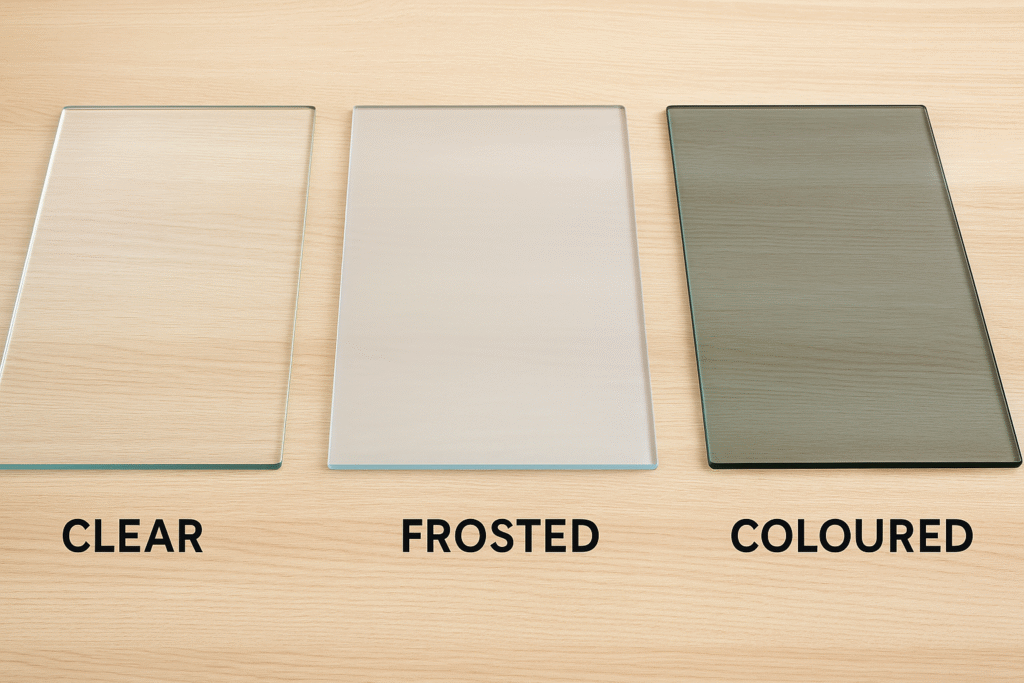
The glass finish you choose can completely transform how a room looks and feels. Whether you prefer the minimalist clarity of clear glass, the privacy of frosted, or the ambience of tinted colour, understanding the differences will help you design the perfect
glass table top for your home or office in 2025.

1) Clear Glass — Timeless Elegance & Light Reflection

Clear glass remains the most popular choice for table tops thanks to its clean transparency and ability to make any space look larger.
It enhances lighting, works well with all base materials, and blends seamlessly with both classic and contemporary interiors.

  • ✅ Best for modern, open spaces
  • ✅ Maximises natural light and room depth
  • ✅ Pairs well with chrome, oak and steel bases

According to Pilkington UK, Optiwhite low-iron glass is a premium clear option that reduces green tint for a true crystal finish.

2) Frosted Glass — Soft Privacy & Diffused Light

Frosted glass is created by acid etching or sandblasting one surface of clear glass to create a smooth, translucent appearance.
It offers subtle privacy and a softer light glow, ideal for workspaces or bathroom vanity tables.

  • ✅ Reduces glare and fingerprints
  • ✅ Adds texture and warmth to minimalist rooms
  • ✅ Perfect for home offices and frosted dining tops

SATINOVO® MATT is a popular choice for frosted surfaces due to its uniform finish and easy-clean coating.

3) Coloured / Tinted Glass — Stylish and Mood-Enhancing

Tinted glass introduces colour throughout the glass body rather than a surface film, making it fade-resistant and sophisticated. Popular shades include grey, bronze, and blue tints — each adding a different tone to a room.

  • ✅ Adds luxury and contrast to light interiors
  • ✅ Reduces glare and sun exposure on table surfaces
  • ✅ Excellent for hotel and retail furniture

See examples of modern tinted glass styles on ToughGlaze UK, which offers grey, bronze, and green toughened glass options for table tops and splashbacks.

4) Quick Comparison Chart

Glass Type Best For Advantages
Clear Bright and open spaces Enhances light, minimalist look
Frosted Private or soft-lit areas Diffused light, hides marks
Tinted Bold and decorative spaces UV protection, rich colour tones
Pro Tip: Combine tinted glass with a polished edge for extra depth — the light passing through the edge creates a premium halo effect.

Order Your Custom Glass Table Top

Choose clear, frosted or tinted finishes · Toughened · Made to measure UK-wide
Sources & References
Tips

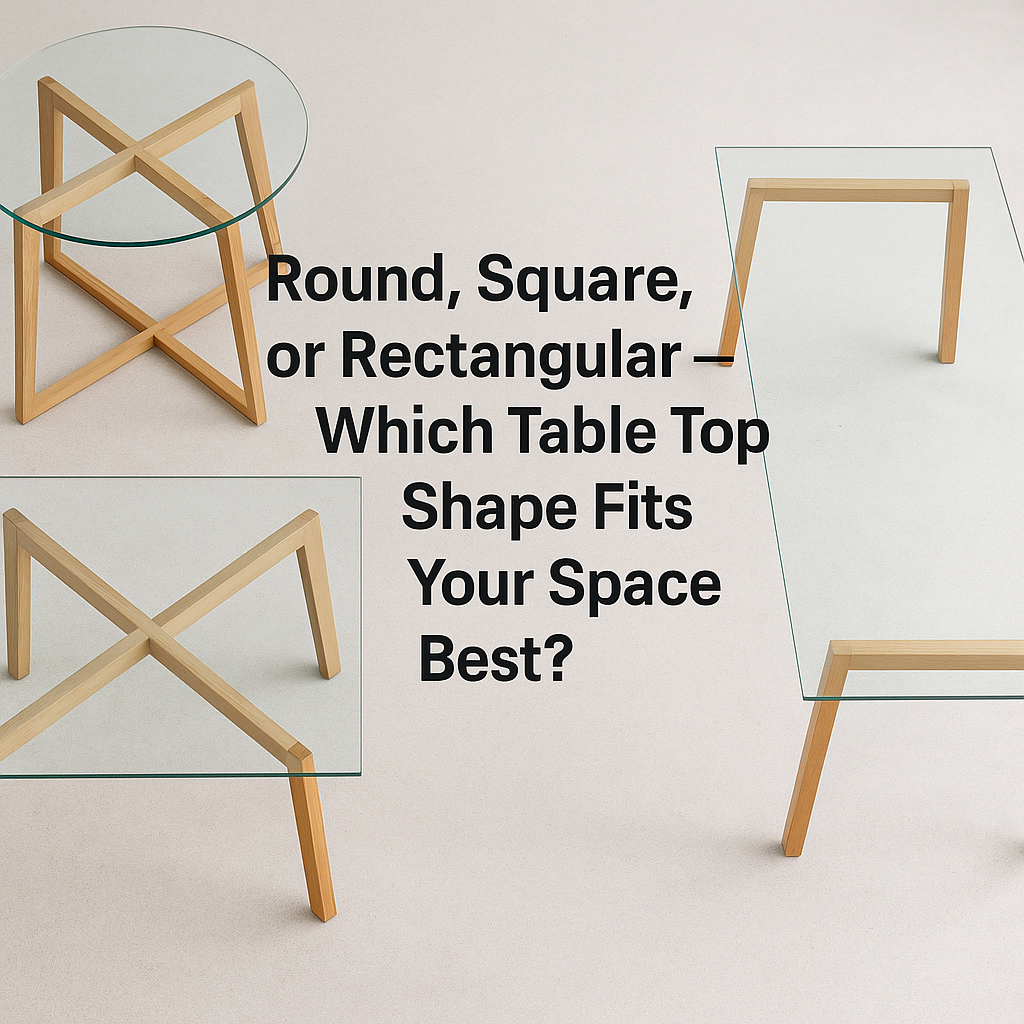
Round, Square, or Rectangular — Which Table Top Shape Fits Your Space Best?

Oct 16, 2025

Round, Square, or Rectangular — Which Table Top Shape Fits Your Space Best?

Updated · Interior Design & Furniture Trends by Glass Helper UK

Choosing the perfect glass table top shape isn’t just about style — it’s about how your furniture interacts with your space.
Each shape has its own visual flow, functionality, and safety profile. Whether you live in a compact London flat or a spacious suburban home, this guide will help you choose between round, square, and rectangular glass table tops with confidence.

1) Round Glass Table Tops — Ideal for Social Flow & Safety

Round glass tables promote easy conversation and create smooth movement in smaller spaces. They are excellent for families and open-plan dining areas where you want to avoid sharp corners.
Their symmetrical design also helps balance a room visually.

  • ✅ Best for small dining rooms or breakfast nooks
  • ✅ No sharp edges — safer for kids and pets
  • ✅ Works beautifully with pedestal or central bases

Interior designers at House Beautiful UK note that round tables help soften angular spaces and improve the sense of flow in tight layouts.

2) Square Glass Table Tops — Compact and Balanced

Square glass tables bring perfect visual balance and symmetry to modern interiors. They fit well in smaller rooms and are great for two to four people.
A square top looks best when paired with square or cross-frame bases for geometric harmony.

  • ✅ Excellent for small dining or office spaces
  • ✅ Creates a modern, structured aesthetic
  • ✅ Perfect for corner setups or square rooms

Architectural Digest suggests square glass furniture as a minimalist way to maximize symmetry and visual calm.

3) Rectangular Glass Table Tops — The Classic All-Rounder

The rectangular glass table top is a timeless favorite — offering ample surface area for dining, work, or display.
It’s the best choice for long or narrow rooms and can be customized to suit both domestic and commercial interiors.

  • ✅ Seats more people without crowding
  • ✅ Great for open-plan layouts and large dining rooms
  • ✅ Compatible with both trestle and four-leg frames

According to Ideal Home UK,
rectangular tables remain the top pick for family dining spaces due to their versatility and easy placement alongside walls or windows.

4) A Quick Comparison Chart

Shape Best For Pros
Round Small rooms, family spaces No corners, smooth traffic flow
Square Compact or symmetrical layouts Modern and balanced appearance
Rectangular Large dining areas or offices Seats more people, timeless look

5) Safety and Edge Choices

Whichever shape you select, opt for toughened safety glass (BS EN 12150) and smooth pencil-polished edges.
These finishes reduce the risk of injury while adding elegance.

Pro Tip: For tight dining areas, choose a round or oval shape — it saves space while promoting smoother movement around the table.

Design Your Custom Glass Table Top

Choose your shape, edge, and thickness · UK delivery
Sources & References
Tips

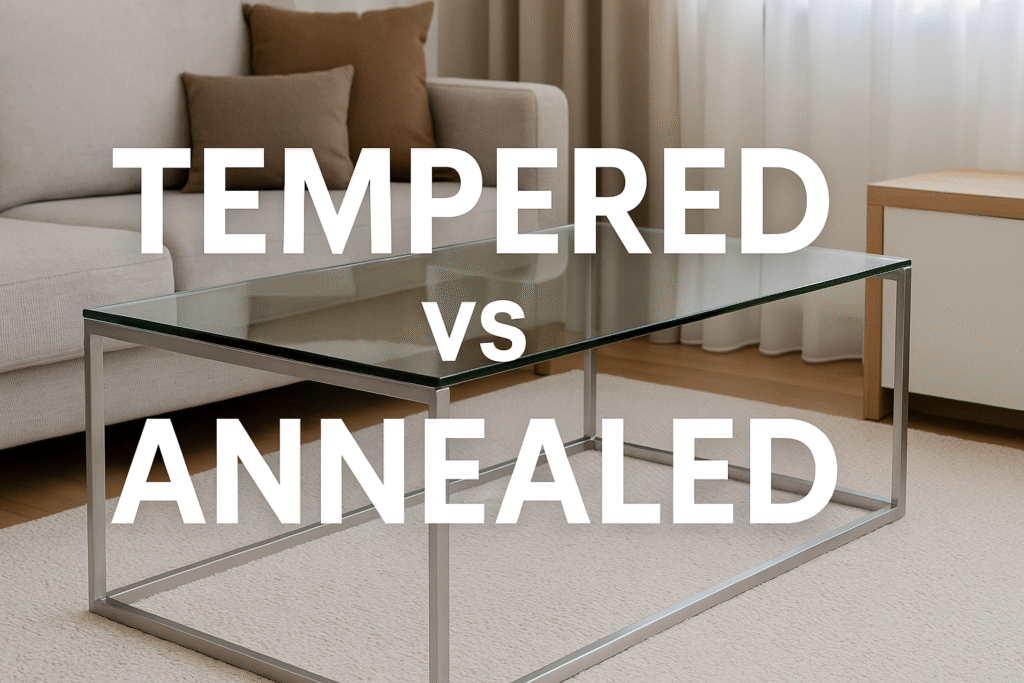
Tempered vs Annealed Glass Table Tops — Which Is Safer and More Durable?

Oct 16, 2025

Tempered vs Annealed Glass Table Tops — Which Is Safer and More Durable?

Updated · Safety & Design Guide by Glass Helper UK

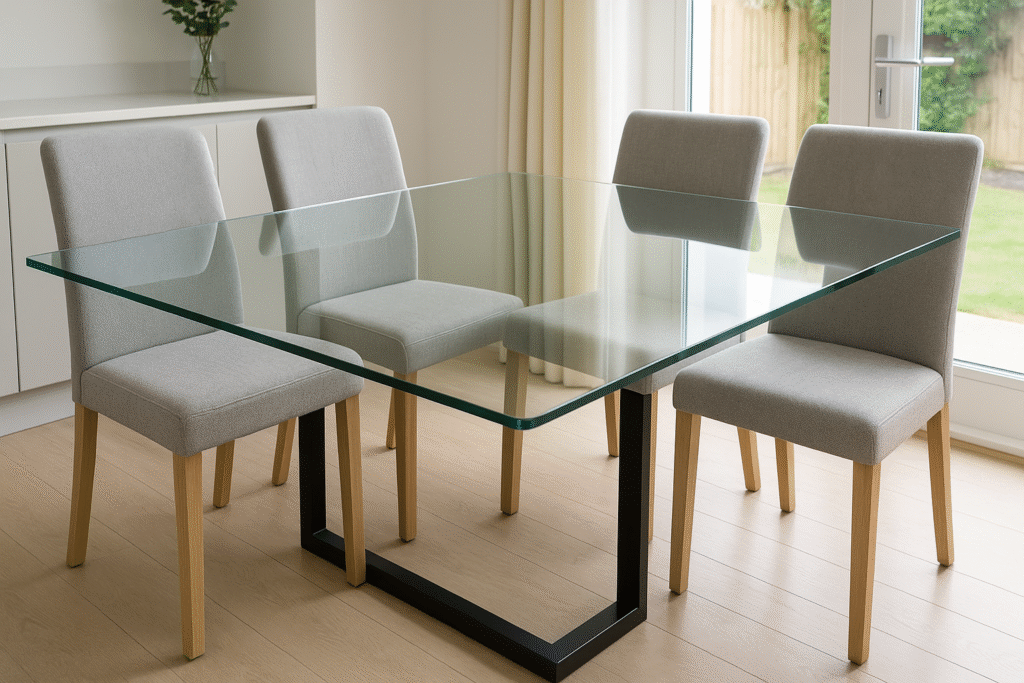
When choosing a custom glass table top,
understanding the difference between tempered and annealed glass is essential for safety and performance.
Both have unique properties, but one clearly outperforms the other in strength and durability.

1) What Is Annealed Glass?

Annealed glass is the most basic form of float glass — slowly cooled during production to remove internal stresses.
It’s clear, affordable, and easy to cut, but it’s also fragile and breaks into large, sharp shards.
Pilkington UK
defines annealed glass as ideal for picture frames and low-risk applications, not furniture tops.

2) What Is Tempered (Toughened) Glass?

Tempered glass is produced by heating annealed glass to over 600°C and rapidly cooling it.
This process increases its strength by up to 5× and makes it much safer when broken — shattering into small, blunt fragments.
ToughGlaze UK
notes that tempered glass complies with BS EN 12150 standards for use in furniture and architectural applications.

3) Strength Comparison

Property Annealed Glass Tempered Glass
Strength Standard (baseline strength) Up to 5× stronger
Breakage Pattern Sharp, jagged shards Small, safe granules
Heat Resistance Up to 100°C Up to 250°C
Safety Standard No UK safety compliance BS EN 12150 Certified

Data Source: Guardian Glass Europe ·
SAVA UK

4) Safety & Applications

Tempered glass is required by UK law for all glass furniture, doors, and balustrades where human impact is possible.
It’s also recommended for dining tables, coffee tables, and shelves where durability matters.
Annealed glass, by contrast, should only be used as a protective overlay or in enclosed frames.

5) Edge Finishing and Polishing

Both types of glass can be customized with different edge finishes. However, tempered glass can only be polished or cut before the toughening process.
For families, pencil-polished edges and radius corners remain the safest options.

6) Cost Considerations

While tempered glass costs around 20–40% more than annealed, the investment pays off long-term.
Its durability, safety compliance, and resistance to thermal shock make it the standard for premium furniture.

Pro Tip: Always confirm your tabletop is marked with “BS EN 12150” — the certification code for genuine toughened glass in the UK.

Order a Toughened Glass Table Top

Custom cut · Safety certified · Delivered UK-wide.
Sources & References
Tips

The Best Edge and Corner Combinations for Safe Glass Tables in Family Homes

Oct 16, 2025

The Best Edge and Corner Combinations for Safe Glass Tables in Family Homes

Updated · Family Safety & Interior Design by Glass Helper UK

Glass tables can look stunning in modern homes, but for families with children or pets, safety and durability are top priorities.
The right combination of edge finish and corner design can prevent injuries while preserving style.
Here’s how to choose the best options for your custom glass table top in a family home.

1) Choose Rounded (Radius) Corners

Sharp 90° corners are a hazard for toddlers. Instead, opt for radius corners that gently curve.
Radius sizes typically range from 5 mm to 50 mm, depending on your design.
ToughGlaze UK recommends at least 10 mm radius corners for family dining or coffee tables.

2) Pair with a Pencil Polished Edge

A pencil polished edge features a smooth, rounded contour that softens the table’s perimeter.
It’s ideal for family homes because it’s tactile and safe without compromising elegance.
Glass Genius notes this finish is among the safest for households with young children.

3) Consider a Bullnose Edge for Extra Softness

The bullnose edge takes the pencil finish a step further by curving the glass into a semi-circle.
This full-rounded profile eliminates sharpness entirely, making it perfect for play areas and family rooms.

4) Avoid Beveled or Mitered Edges

While beveled and mitered edges look luxurious, they come to a thinner edge that’s not suitable for child-safe environments.
These finishes are better suited for decorative or formal areas with minimal contact.
You can view the difference in finish clarity on Pilkington UK.

5) Combine Toughened Glass for Safety

Always ensure your tabletop uses toughened (tempered) glass that meets BS EN 12150 standards.
If broken, it shatters into small blunt fragments instead of sharp shards — a critical feature for safety.
Learn more about this at SAVA UK.

6) Recommended Combinations for Family Homes

Table Type Edge Type Corner Radius
Dining Table Pencil Polished 15 mm
Coffee Table Bullnose Edge 20–25 mm
Side or Console Table Flat Polished 10 mm
Pro Tip: For homes with toddlers, add silicone bump guards on the corners during the early years. They can be removed later without damaging the glass.

Customize Your Safe Glass Table Top

Choose rounded corners and child-safe edges · UK-wide delivery.
Sources & References
Tips

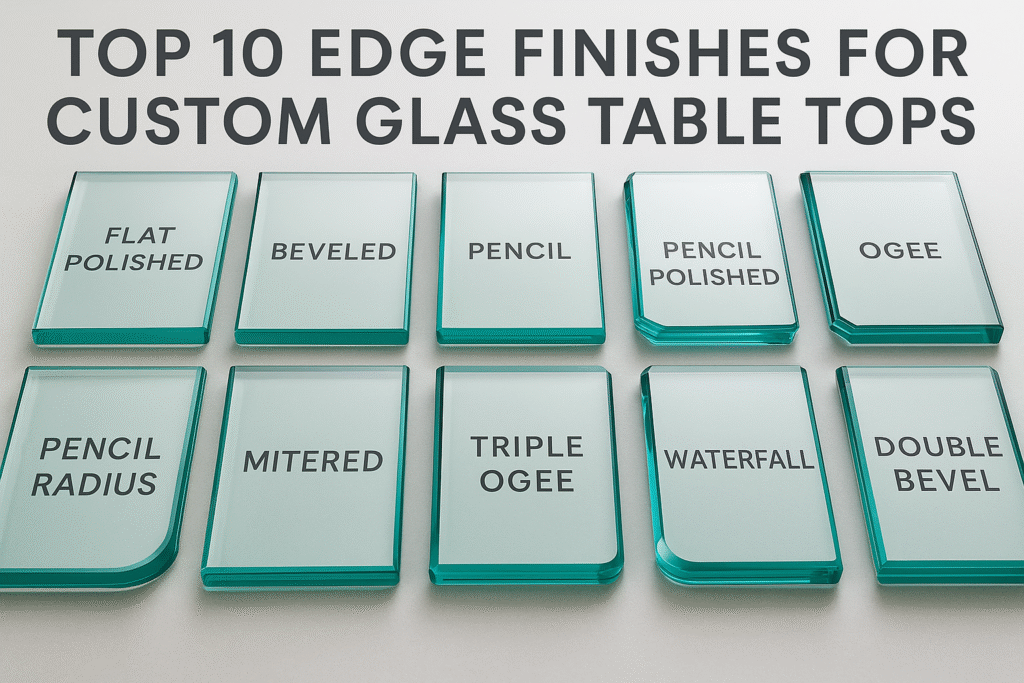
Top 10 Edge Finishes for Custom Glass Table Tops

Oct 16, 2025

Top 10 Edge Finishes for Custom Glass Table Tops

Updated · Design & Fabrication Insights by Glass Helper UK

When designing a custom glass table top,
the edge finish plays a major role in both aesthetics and safety. From sleek, modern lines to decorative bevels,
your edge style can completely change the feel of the table. Here are the top 10 edge finishes trending in the UK for 2025.

1) Flat Polished Edge

The most common finish, flat polished edges are ground smooth and glossy, creating a clean, mirror-like surface.
This style is ideal for contemporary dining and office tables. According to
ToughGlaze UK,
flat polished edges enhance clarity and complement minimalistic interiors.

2) Beveled Edge

A beveled edge tapers the top edge of the glass (usually at 10–45°), adding depth and a touch of luxury.
Commonly used in dining tables and decorative mirrors, it reflects light beautifully and works well in classic or transitional interiors.
Learn more at Pilkington UK.

3) Pencil Polished Edge

Named for its soft, rounded contour, the pencil edge gives glass a refined and safe finish without sharp corners.
It’s especially popular for coffee tables or areas with high traffic. The smooth curve diffuses reflections while maintaining elegance.

4) Double Beveled Edge

This decorative option features two bevels — one on the top and one on the bottom — for an enhanced sparkle.
Interior designers often pair double bevels with thick glass (10–12 mm) to highlight craftsmanship in dining or conference tables.

5) OG (Ogee) Edge

The OG edge has an “S”-shaped curve for a traditional, ornate appearance.
Commonly used in luxury homes, it mimics carved stone detailing. Though less common in modern spaces,
it’s a favourite for classical furniture restorations.

6) Mitered Edge

A mitered edge joins two glass panels at a 45° angle, creating seamless corners for waterfall tables and display cases.
This technique requires precision cutting and is often used by professional fabricators like
Guardian Glass Europe
partners for architectural furniture.

7) Seamed Edge

A simple yet essential finish, the seamed edge removes sharpness without polishing.
It’s the most cost-effective option for glass that fits within frames or isn’t directly exposed.
Used mostly for shelving or furniture inserts.

8) Bullnose Edge

The bullnose edge rounds the glass into a full semi-circle — smooth, tactile, and safe.
Great for child-friendly homes and workspaces. Similar to the pencil edge but more pronounced.
Learn more from Glass Genius.

9) Chamfered Edge

The chamfered edge cuts away a small 45° strip around the perimeter. It’s less reflective than a bevel but still adds subtle character.
Often chosen for desks and side tables where durability and style need balance.

10) Polished Radius Corners

To complement any of the finishes above, radius corners can be added — rounded edges that prevent chips and injuries.
Glass Helper’s custom table top builder allows you to specify corner radius sizes (5 mm to 50 mm) for a tailored look.

Pro Tip: For tabletops thicker than 10 mm, opt for a flat polished or beveled edge — it enhances light reflection and provides a premium aesthetic finish.

Design Your Custom Glass Table Top

Choose thickness, edge style, and corner radius — UK-wide delivery.
Sources & References
Tips

Choosing the Right Glass Thickness for Your Table Top

Oct 16, 2025

Choosing the Right Glass Thickness for Your Table Top (2025 Guide)

Updated · Expert Tips by Glass Helper UK

Picking the correct glass thickness for your table top is one of the most important safety and design choices.
Too thin, and the panel may flex under weight; too thick, and the look feels bulky or heavy.
This 2025 guide explains how to choose the right thickness for custom glass table tops that balance beauty, strength, and practicality.

1) Why Glass Thickness Matters

Thickness directly affects durability, weight capacity, and edge clarity. Thicker glass offers better rigidity and a deeper edge shine, while thinner glass looks lighter but requires proper support.
According to Pilkington UK, even minor thickness differences can change structural behaviour in furniture applications.

2) Recommended Thickness by Table Type

The table below shows the most common choices used by UK glass fabricators in 2025:

Table Type Recommended Glass Thickness Notes
Coffee Table Top 6 mm – 8 mm Toughened Glass Lightweight yet strong for small spans.
Dining Table Top 10 mm – 12 mm Toughened Glass Resists impacts and heat from serving dishes.
Office Desk or Work Table 10 mm Tempered or Laminated Glass Ensures stiffness and scratch resistance.
Glass Overlay (Protective Top) 4 mm – 6 mm Toughened Glass Ideal for protecting wooden surfaces.

Source: ToughGlaze UK ·
Guardian Glass Europe

3) Always Use Tempered or Laminated Safety Glass

For any glass table thicker than 6 mm, UK regulations recommend toughened (tempered) safety glass certified to
BS EN 12150 standard.
Laminated glass (BS EN 14449) is used where extra safety or sound control is needed.

4) Size, Support & Edge Design Factors

  • Span Width: Wider spans need thicker glass for stiffness.
  • Support Points: Tables with central bases require heavier glass to reduce flexing.
  • Edge Finish: Polished or bevelled edges reduce chipping risk and improve safety.

Learn more about edge styles in Glass Genius’s Edge Finish Guide.

5) Aesthetic and Weight Balance

Thicker glass (10 mm–12 mm) produces a premium, crystal-clear look and solid feel.
However, ultra-thick sheets add significant weight; ensure your table frame or base is rated for that load.
Glass Helper’s Custom Table Top Builder allows you to preview thickness and edge combinations before ordering.

Pro Tip: For dining tables larger than 1500 mm, always choose 10 mm toughened glass or thicker.
It provides the ideal balance of strength, clarity, and design elegance.

Design Your Custom Glass Table Top

Cut-to-size · Tempered · Polished Edges · UK Delivery
Sources & Further Reading
Tips

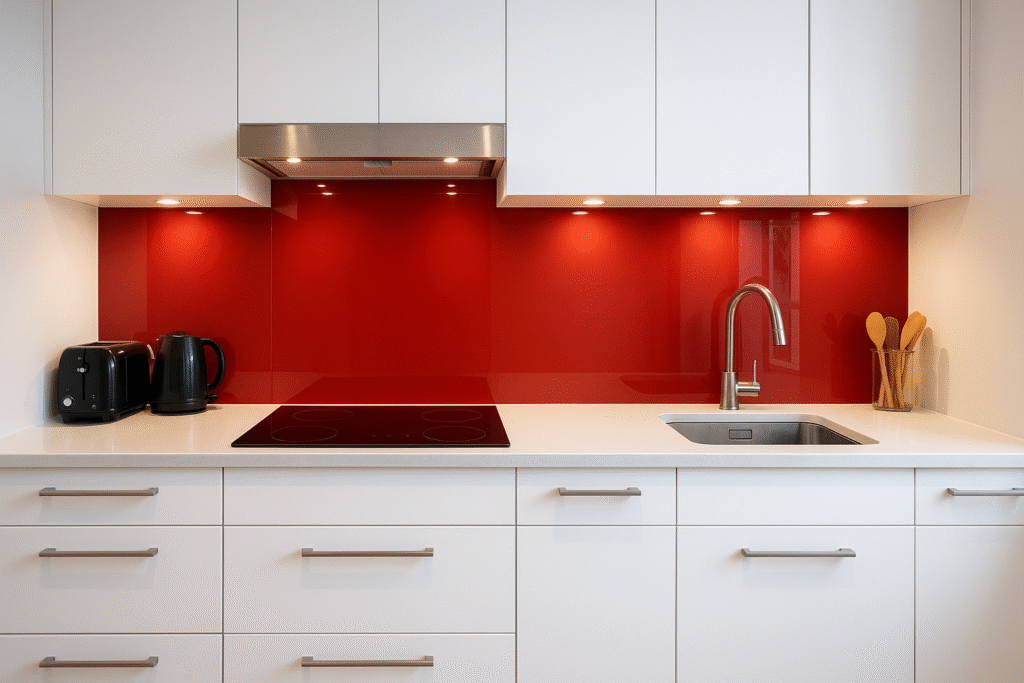
Why Glass Splash backs Are Replacing Tiles in Modern UK Kitchens

Oct 16, 2025

Why Glass Splashbacks Are Replacing Tiles in Modern UK Kitchens

Updated · Home & Kitchen Design by Glass Helper

Once a rare luxury, glass splashbacks have quickly become the modern standard for UK kitchens.
They’re stylish, easy to clean and available in endless colours — a perfect match for contemporary open-plan living.
Here’s why more homeowners are choosing glass over tiles in 2025.

1) Seamless & Hygienic Design

Unlike tiled walls that trap dirt in grout lines, a single glass panel provides a smooth, non-porous surface.
It’s simple to wipe clean and doesn’t absorb cooking stains or odours.

The Glass Warehouse UK
confirms that toughened splashbacks are the most hygienic wall-finish solution for kitchens.

2) Endless Colour & Finish Options

From matte neutrals to vibrant reds and metallics, glass splashbacks can be painted, printed or mirrored.

ToughGlaze UK
highlights coloured glass as a key 2025 interior trend, letting homeowners personalise their spaces far beyond traditional tiling.

3) Light Reflection & Visual Space

Glass reflects both natural and artificial light, making even compact kitchens feel larger and brighter.

Saint-Gobain Glass UK
notes that reflective finishes enhance spatial perception — ideal for small city apartments.

4) Heat & Impact Resistant

Modern splashbacks are made from 6 mm toughened safety glass that withstands heat from hobs up to 220 °C.
The tempered surface is also impact-resistant, ensuring long-term durability even in busy family kitchens.

Glass Help – Tempered Glass Guide

5) Fast Installation with Minimal Disruption

A bespoke glass panel is measured, cut to size and fitted directly onto the wall — no grout drying or complex alignment.
Installers like

Splashbacks UK
estimate most installations take under two hours once the glass is delivered.

6) Ideal for Modern Open-Plan Kitchens

Coloured or mirrored splashbacks blend seamlessly with living and dining areas, maintaining a sleek, continuous look.
Designers at

Houzz UK
show how glossy glass backsplashes complement minimalist cabinetry and integrated lighting.

7) Long-Term Value & Maintenance

Because glass is stain-proof and fade-resistant, it keeps its finish for decades with minimal upkeep.
While the initial cost can be slightly higher than tiles, its longevity and easy cleaning quickly offset the difference.

Pro Tip: Always choose toughened low-iron glass for true colour clarity — especially for light shades like white or cream.

Order Custom Glass Splashbacks

Cut to size · Colour matched · UK-wide delivery
Sources & Further Reading
Tips

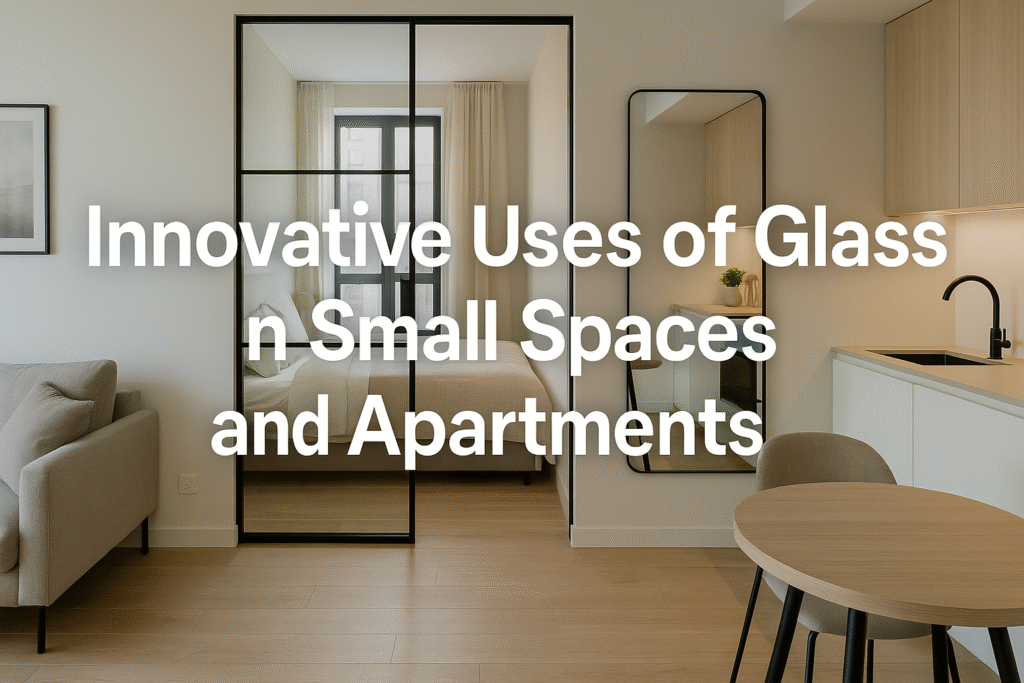
Innovative Uses of Glass in Small Spaces and Apartments

Oct 16, 2025

Innovative Uses of Glass in Small Spaces and Apartments

Updated · Design & Space Optimization by Glass Helper

Living in a small apartment doesn’t mean compromising on style or openness. With smart glass design, you can
maximize light, create spacious illusions, and maintain privacy — all while keeping your interiors sleek and modern.
Below are innovative ways designers are using glass to make small homes feel bigger in 2025.

1) Glass Partitions Instead of Solid Walls

Replacing solid partitions with glass divides rooms without blocking light.

Cantifix
reports that clear and frosted glass partitions are now a staple in modern apartments, offering both openness and sound control.

2) Sliding Glass Doors to Save Space

Sliding or pocket glass doors eliminate the need for swing clearance — perfect for narrow hallways and compact bathrooms.

Interior Panel
highlights that transparent doors help maintain visual flow between kitchen and lounge areas while keeping noise out.

3) Mirrors to Expand Visual Space

Large wall mirrors amplify light and double perceived room size. Designers use full-length or wall-mounted mirrors to visually extend depth.

Houzz UK
showcases several modern interiors using mirrors to open up compact flats dramatically.

4) Frosted & Tinted Glass for Privacy

Frosted and tinted glass allows privacy while maintaining brightness.

Saint-Gobain Glass UK
notes that frosted finishes are ideal for bathrooms or bedroom partitions in open-plan apartments.

5) Glass Balustrades on Staircases or Mezzanines

Glass balustrades maintain transparency and safety without visually dividing vertical spaces.

Tuffx Glass UK
highlights frameless balustrades as a 2025 design favourite for duplex flats and loft apartments.

6) Glass Kitchen Splashbacks

In tight kitchens, coloured glass splashbacks replace tiles for a cleaner, seamless look that reflects light.

The Glass Warehouse UK
reports that heat-resistant toughened glass splashbacks add both practicality and modern appeal.

7) Glass Table Tops & Floating Shelves

Using glass for tables or shelving keeps interiors airy and uncluttered.

Glass Help Ltd
recommends clear tempered glass for shelves and table tops to visually “disappear” within tight spaces.

8) Rooflights & Internal Windows

Bringing in borrowed light via rooflights or internal glass windows between rooms creates openness.

VELUX UK
explains that roof windows or internal glazing panels are effective even in terraced homes with limited exterior walls.

9) Smart Glass for Multi-Functional Areas

In small apartments, smart (switchable) glass partitions can instantly switch between transparent and opaque modes, transforming spaces.

Smart Glass International
features compact studios using PDLC glass to double bedrooms as offices without permanent barriers.

10) Minimal Black-Framed Glass Systems

Black or bronze-framed glazing adds definition without closing off rooms.

Steel Windows UK
confirms that slim steel-look frames remain a 2025 favourite for loft and studio aesthetics.

Pro Tip: Combining frosted, mirrored, and clear glass zones allows flexible layouts and natural light sharing in apartments under 50 m².

Explore Custom Glass Solutions

Cut-to-size, privacy, and decorative options — delivered UK-wide.
Sources & References