Tips

Tips

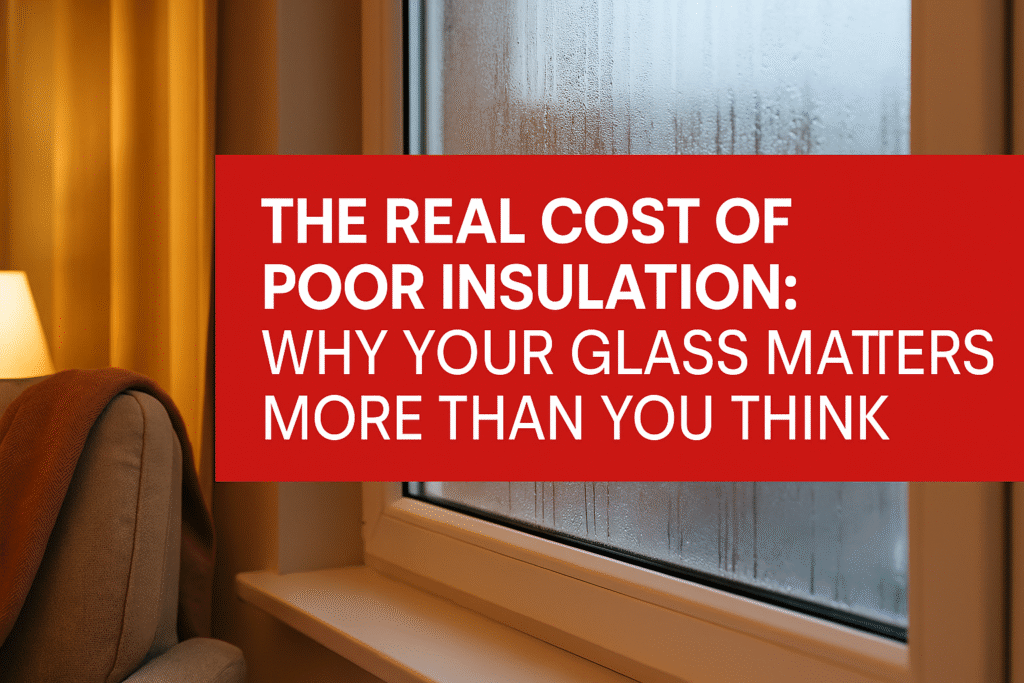
The Real Cost of Poor Insulation: Why Your Glass Matters More Than You Think

Oct 15, 2025

Home Energy · 2025

Read time: ~7 mins · Updated: 12 Oct 2025

If your home feels chilly even when the heating is on, or you’re constantly dealing with condensation on your windows,
poor insulation might be costing you more than you realise.
Glass is often the weakest point in your building’s thermal barrier, and old or inefficient glazing
can waste energy, increase your bills, and reduce comfort levels throughout the year.

How poor insulation affects your home

Windows are responsible for up to 30% of a home’s total heat loss.
When your glass doesn’t insulate properly, warm air escapes while cold air seeps in —
forcing your heating system to work harder and increasing your energy bills.
Over time, this not only wastes money but also contributes to dampness, mould, and discomfort.

  • Higher heating costs due to energy inefficiency
  • Cold spots and drafts near windows
  • Condensation and damp leading to property damage
  • Reduced indoor comfort and uneven room temperature

Common signs your glass is underperforming

Many homeowners overlook how much difference glazing makes to insulation.
You may not realise your windows are to blame until you notice these signs:

  • Condensation forming inside double-glazed panes (seal failure)
  • Cold air leaking around window edges
  • Visible mould or damp patches near frames
  • Persistent noise from outside despite closed windows
  • Rooms feeling colder than others, especially near windows

The hidden costs of energy loss

It’s not just comfort — poor glass insulation directly impacts your finances and your property’s health.
Inefficient glazing means you’re paying for heat that literally escapes through your windows.
It can also increase your carbon footprint and reduce the overall value of your home.

  • Energy waste: Up to 20–30% of heat can be lost through old single glazing.
  • Maintenance costs: Damp and condensation can damage paint, plaster, and frames.
  • Health impact: Persistent mould growth can affect indoor air quality and wellbeing.
  • Lower resale value: Homes with poor EPC ratings are harder to sell in the UK market.

How modern glass can fix the problem

Upgrading your glazing is one of the most effective home improvements you can make.
New glass technologies such as tempered glass, Low-E coatings, and laminated units can dramatically reduce heat loss, improve comfort, and even enhance safety.

  • Tempered glass: Up to 5× stronger than standard glass, offering durability and safety.
  • Low-E (low emissivity) glass: Reflects heat back into the room, keeping it warmer in winter and cooler in summer.
  • Double or triple glazing: Creates an insulating barrier that traps heat and reduces condensation.
  • Laminated glass: Blocks UV rays and reduces outside noise for a more comfortable home.

Thinking of upgrading your glazing?

Explore custom tempered glass options and modern solutions designed to improve insulation and comfort in your home.

Frequently Asked Questions

Will replacing my glass really lower my bills?
Yes. New energy-efficient glazing can reduce your heating costs by 20–30%, depending on window size and orientation.


How do I know if my current windows are energy-efficient?
Check for visible condensation, drafts, or cold glass surfaces — these are signs your glass isn’t insulating properly.


Is it cheaper to replace glass or the whole frame?
If your frames are in good condition, replacing just the glass with insulated or tempered glass is usually more affordable and effective.


Does glass type affect home comfort?
Absolutely. The right glazing keeps temperatures stable, reduces glare, and eliminates condensation — improving overall living conditions year-round.

References:
Energy Saving Trust,
GreenMatch UK,
Homebuilding & Renovating

Upgrade your glass — lower your bills and stay warm this winter

Get a Free Custom Quote

Made to measure · Energy-efficient · UK-wide delivery
Tips

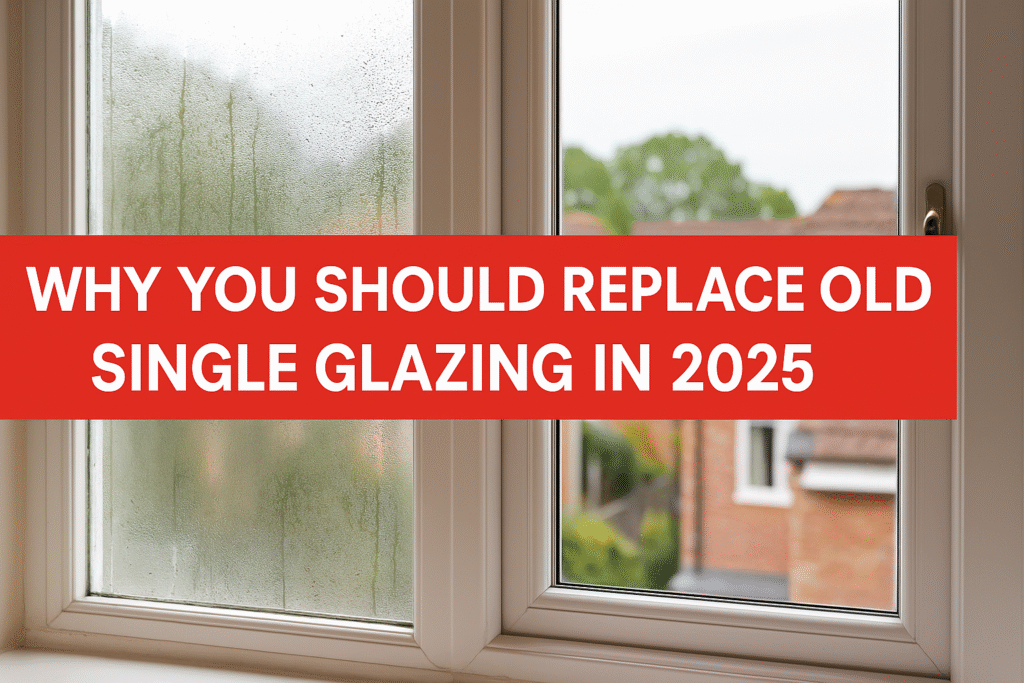
Why You Should Replace Old Single Glazing in 2025

Oct 15, 2025

Home Efficiency · 2025

Read time: ~7 mins · Updated: 12 Oct 2025

If your home still has single-glazed windows, 2025 might be the year to finally upgrade.
Rising energy costs, new building standards, and better technology mean that
old single glazing is now one of the biggest causes of heat loss and condensation in UK homes.
Replacing it with modern double or triple glazing – or toughened options like
tempered safety glass – offers comfort, safety, and long-term savings.

Why single glazing is outdated

Single-glazed windows only use one pane of glass, offering minimal insulation.
They allow heat to escape quickly in winter, leading to cold drafts, condensation, and higher heating costs.
They also provide poor noise insulation and less protection against break-ins or accidental impacts.

  • Up to 30% of household heat can escape through old single glazing
  • Higher energy bills due to poor insulation
  • Condensation and mould growth on window frames
  • Minimal soundproofing, especially near roads or railways

Benefits of replacing single glazing

Modern glazing systems are engineered for efficiency, comfort, and safety.
Upgrading to new insulated glass can improve both your daily comfort and property value.

  • Better energy performance: Modern double and triple glazing drastically reduce heat loss, keeping homes warmer for longer.
  • Lower condensation risk: Improved seals and warm-edge spacers prevent moisture build-up on cold glass.
  • Noise control: Acoustic or laminated glass can reduce outside noise by up to 40 dB.
  • Increased home security: Toughened and laminated glass resist impacts and forced entry.
  • Higher property value: Energy-efficient glazing can improve EPC ratings and resale appeal.

Best modern glass options

Depending on your goals, there are several superior alternatives to single glazing:

  • Double glazing: Two panes separated by a gas-filled gap – the standard choice for most UK homes.
  • Triple glazing: Three panes for maximum thermal efficiency and sound reduction.
  • Low-E glass: Reflects heat back indoors, improving insulation without reducing light.
  • Tempered glass: Five times stronger than normal glass – safer and ideal for doors or low-level windows. Learn more here.
  • Laminated glass: Combines layers for extra safety, UV blocking, and noise control.

Why 2025 is the right time to replace

With energy costs expected to rise again in 2025 and new UK building efficiency standards being introduced, upgrading outdated glazing is both a smart and timely investment.

  • Energy-efficient glass can reduce annual heating costs by 20–30%
  • Government incentives and grants may support home efficiency improvements
  • Improves sustainability and reduces your carbon footprint
  • Enhances comfort ahead of colder seasons

Ready to replace your old single glazing?

Discover modern, efficient, and safe glass options including custom tempered glass to upgrade your home in 2025.

Frequently Asked Questions

Is replacing single glazing worth the cost?
Yes — modern double glazing can pay for itself through lower energy bills and reduced maintenance. It also boosts comfort and home value.


Can I replace just the glass instead of the whole window?
In many cases, yes. If your window frames are in good condition, you can fit new insulated glass units without full replacement.


What’s the best glass type for energy savings?
Low-E double glazing or triple glazing with tempered safety glass provides excellent insulation and strength.


Will it reduce noise as well?
Yes. Modern glazing with varying pane thickness or acoustic laminates can block up to 90% of outside noise.

References:
Energy Saving Trust,
GreenMatch UK,
Homebuilding & Renovating

Upgrade your home’s efficiency in 2025


Get a Free Custom Glass Quote

Made to measure · Energy-efficient · UK-wide delivery
Tips

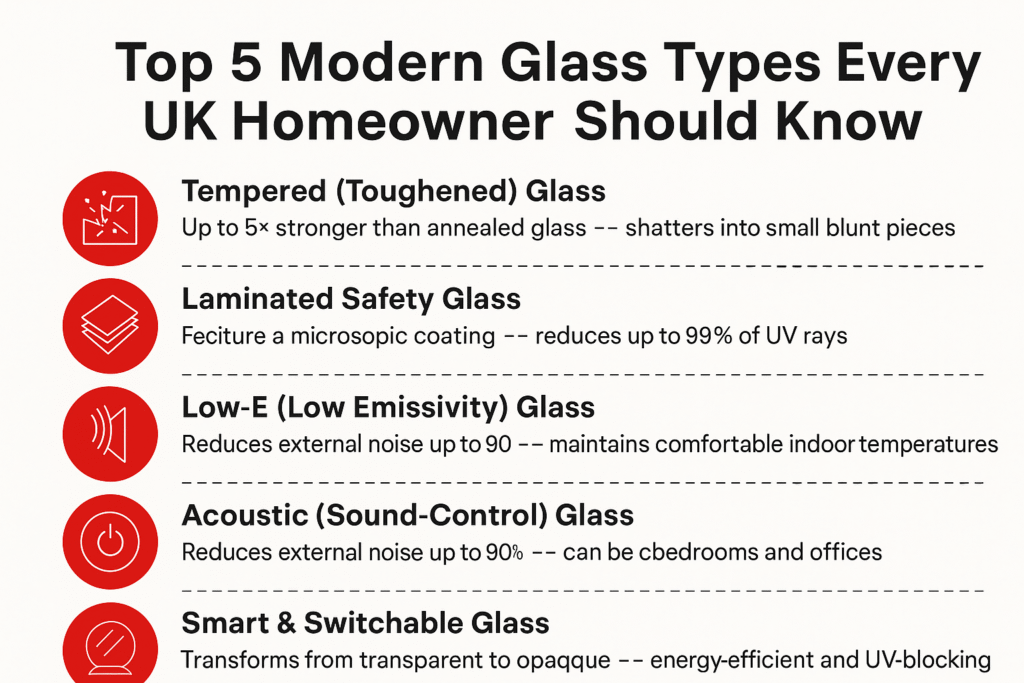
Top 5 Modern Glass Types Every UK Homeowner Should Know

Oct 12, 2025

Glass Insights · 2025

Read time: ~7 mins · Updated: 12 Oct 2025

From energy-saving windows to smart privacy glass, technology has transformed how we use glass at home.
Whether you’re planning a renovation, replacing windows, or upgrading interiors, understanding the different types of modern glass can help you make smarter decisions.
Below are the top five glass types that every UK homeowner should know — including when to choose
tempered safety glass for extra protection.

1. Tempered (Toughened) Glass

Tempered glass is heat-treated to make it up to five times stronger than standard glass. It’s designed to crumble into small, blunt pieces rather than sharp shards — making it ideal for areas where safety is a concern, such as doors, shower screens, and furniture tops.

  • Five times stronger than ordinary glass
  • Safe breakage pattern prevents injuries
  • Complies with UK Building Regulations for doors and low-level glazing

Learn more about tempered safety glass and its applications in homes and offices.

2. Laminated Safety Glass

Laminated glass contains two or more glass sheets bonded with a PVB or EVA interlayer. When impacted, the glass may crack but remains attached to the interlayer — reducing injury risk and improving security. It also blocks harmful UV rays and dampens outside noise.

  • Retains integrity even when cracked
  • Ideal for skylights, shopfronts, and balustrades
  • Provides UV and acoustic protection

3. Low-E (Low Emissivity) Glass

Low-E glass has an invisible metallic coating that reflects heat back inside the property. It keeps homes warmer in winter and cooler in summer while allowing plenty of natural light. It’s an essential upgrade for energy-efficient homes or those aiming for better EPC ratings.

  • Reduces heat loss through windows
  • Improves energy efficiency and comfort
  • Compatible with double or triple glazing

4. Acoustic (Sound-Control) Glass

Living near traffic or busy areas can make your home noisy. Acoustic glass solves this problem with varying pane thicknesses and special interlayers that disrupt sound vibrations. It’s perfect for bedrooms, home offices, and properties in urban locations.

  • Reduces external noise by up to 90%
  • Available in laminated or multi-pane builds
  • Works well with double glazing for extra insulation

5. Smart & Switchable Glass

Smart glass transforms from transparent to opaque at the touch of a button. Using PDLC or electrochromic technology, it provides instant privacy without blinds or curtains. It’s increasingly popular in bathrooms, offices, and luxury homes.

  • Instantly changes opacity for privacy
  • Energy-efficient and UV-blocking
  • Stylish modern upgrade for high-end interiors

Looking to upgrade your home with modern glass?

Explore custom tempered glass and other performance options for your next renovation or installation.

References:
GreenMatch UK,
Homebuilding & Renovating,
BSI Standards

Need expert advice on glass types?


Get a Free Custom Quote

Made to measure · Safety certified · UK-wide delivery
Tips

Double vs Triple Glazing: Which is Better for UK Homes?

Sep 27, 2025

Glazing Guide · 2025

Read time: ~7 mins · Updated: 29 Sep 2025

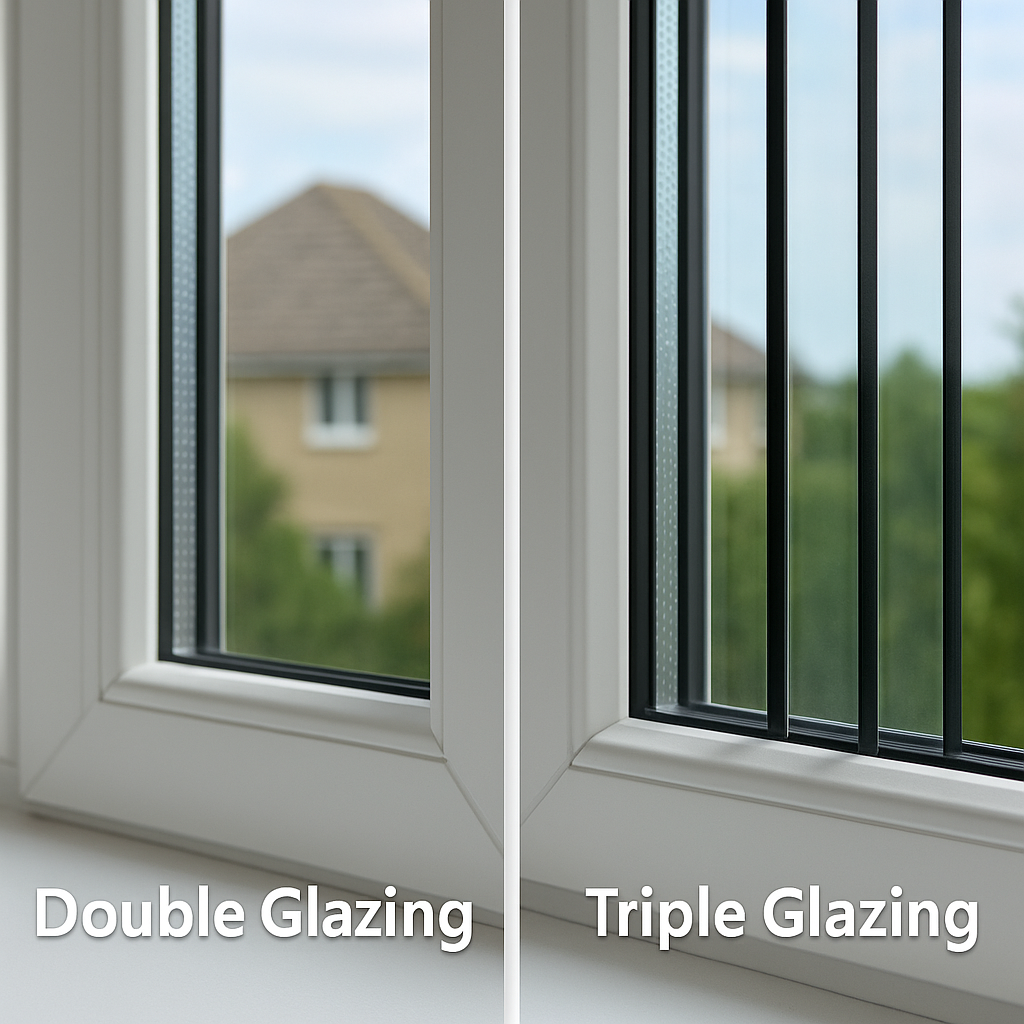
Energy bills, comfort, and noise control are top concerns for UK homeowners. Choosing between double glazing and triple glazing can have a big impact — and the right choice may also involve using tempered safety glass or laminated units depending on location and building rules.

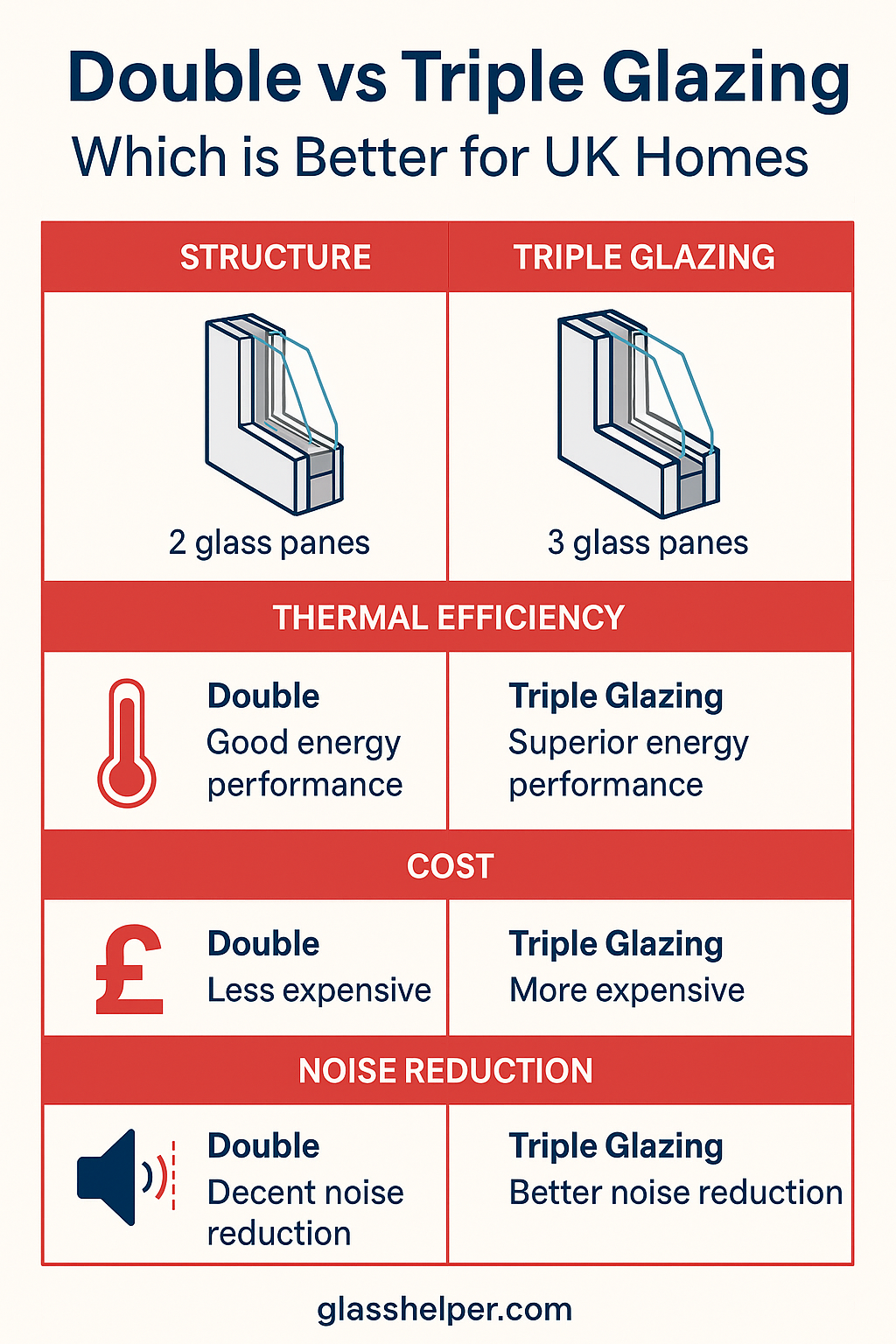
Infographic: Double vs Triple Glazing – Which is Better for UK Homes

What is double & triple glazing?

Double glazing uses two panes of glass separated by a spacer (air/argon) to reduce heat loss and improve insulation.
Triple glazing adds a third pane and spacer, delivering lower U-values (better thermal efficiency) and, with the right build-up, more sound insulation. For impact-prone or low-level areas, consider tempered glass or laminated options within the unit.

Performance comparison

Typical UK values (actual performance varies by spacer gas, coatings, and frame quality):

Feature Double Glazing Triple Glazing
U-value (heat loss) ~1.2–1.6 W/m²K ~0.8–1.0 W/m²K
Noise reduction ~25–35 dB ~30–40 dB
Cost (approx per window) £400–£600 £550–£850
Lifespan 20+ years 30+ years
Weight & frame demands Lighter; fits most frames Heavier; needs deeper, stronger frames

Key benefits of triple glazing

  • Lower U-values for superior thermal performance (reduced heat loss in winter).
  • Improved comfort — fewer cold spots and drafts near windows.
  • Better noise control in busy or urban locations (build-ups with laminated panes help most).
  • Reduced condensation thanks to warmer internal pane temperature.
  • May assist with EPC rating improvements and long-term value.

Trade-offs & drawbacks

  • Higher cost (often 30–50% more than double glazed units).
  • Heavier and thicker — may require new frames rather than retrofitting into old ones.
  • Slightly lower light transmission vs equivalent double glazed units.
  • Marginal efficiency gains in milder regions if you already have modern double glazing.

Ready to choose the right unit?

Explore custom glass options and learn about
tempered safety glass used in modern glazing systems.

References:
GreenMatch UK,
Everest Windows,
WindowWise

Need help deciding between double and triple glazing?


Get a Custom Glass Quote

Made to measure · Safety options · Expert guidance

Frequently Asked Questions

Does triple glazing always save more on heat bills?
If your current glazing is older or inefficient, yes—triple glazing reduces heat loss and can lower energy costs over time.


Is the extra cost justified?
It depends on climate, orientation, existing insulation and how long you’ll stay. In colder areas or noisy zones, the benefits are clearer.


Will triple glazing reduce natural light?
Slightly — there’s an extra pane. High-transmission coatings can minimise the effect.


Can I retrofit triple glazing to older frames?
Usually not. Most older frames lack the depth or strength; new frames are typically required.


How long do glazed units last?
Modern double glazing: ~20–25 years; triple glazing: ~30+ years with proper installation and sealing.

Tips

Acoustic Glass – How It Reduces Noise in Homes and Offices

Sep 20, 2025

Quiet Comfort · 2025

Read time: ~6 mins · Updated: 28 Sep 2025

Acoustic glass is a powerful way to reduce unwanted noise, improve comfort and wellbeing at home or in the office.
Whether it’s traffic, neighbours, or internal sound, acoustic-rated glass offers measurable sound reduction.
This article explains how it works, where to use it, and what to consider when choosing acoustic glass.

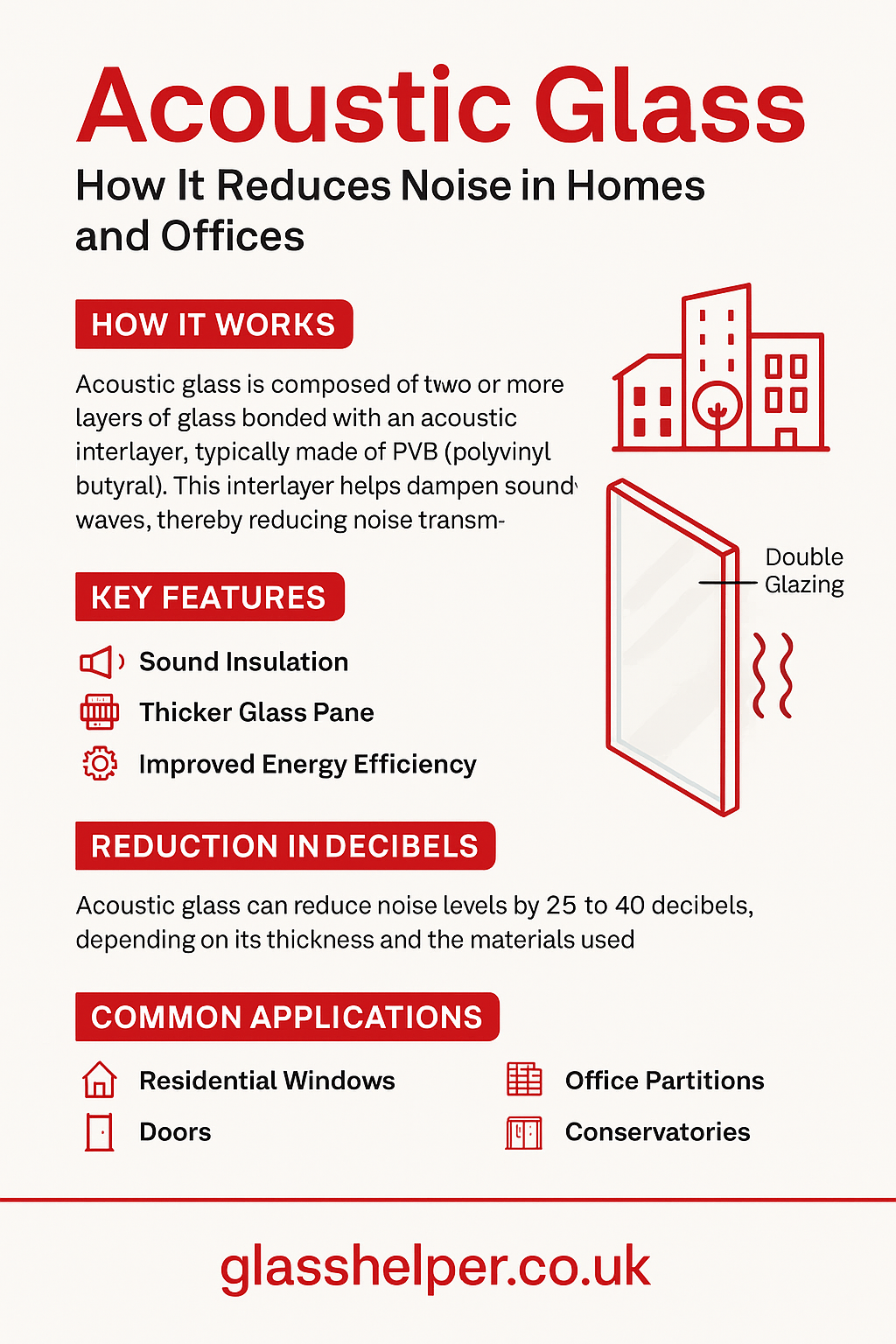
Infographic: Acoustic Glass – How It Reduces Noise in Homes and Offices

How acoustic glass works

Acoustic glass typically consists of two or more layers of glass with a special interlayer, often PVB (Polyvinyl Butyral) or other acoustic PVB, sandwiched between. This interlayer dampens vibration from sound waves, reducing how much of the noise passes through.

  • Multi-layer laminated glass construction with acoustic interlayers.
  • Different thickness combinations and interlayer types give different sound reduction ratings (Rw dB).
  • Seal quality, frame type, and installation strongly affect overall noise reduction.

Key benefits

  • Reduces traffic, airport, or street noise entering living spaces.
  • Improved privacy in office partitions or conference rooms.
  • Better sleep quality with quieter bedrooms.
  • Enhanced concentration and productivity in workspaces.

Where to use acoustic glass

  • Homes near busy roads or noisy external environments.
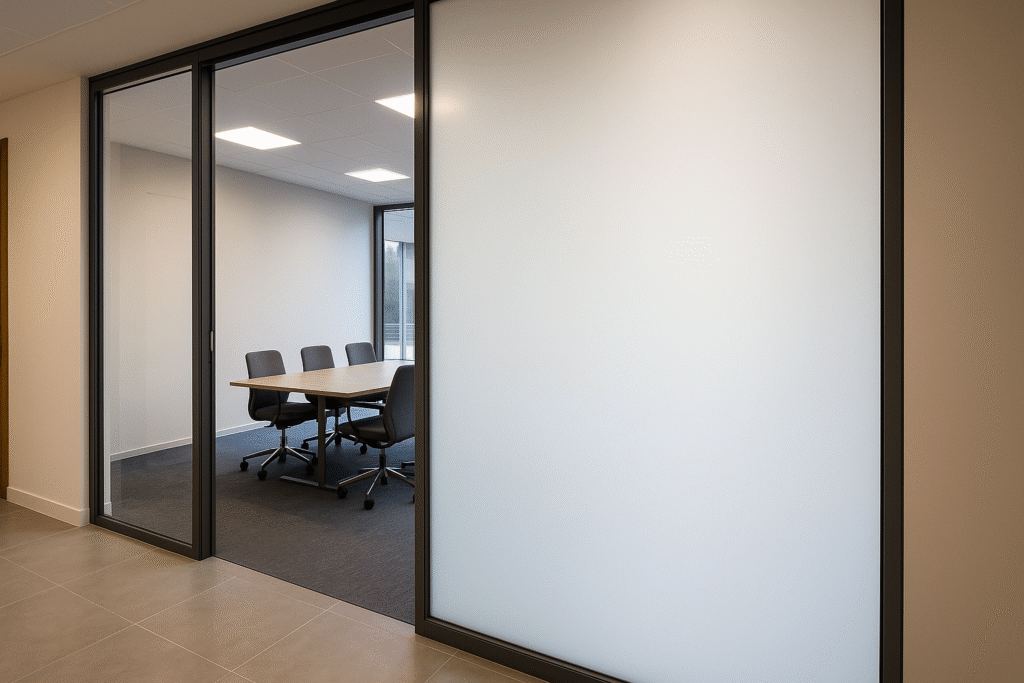
  • Offices and meeting rooms where speech privacy is needed.
  • Schools, hospitals or public buildings needing quiet zones.
  • Bedrooms, shared walls, media rooms, or nurseries.

What to check before purchase

  • Look for an acoustic rating (Rw or STC) to understand how many decibels reduction you get.
  • Check interlayer type and thickness—different interlayers perform differently.
  • Ensure the glass is properly sealed in the frame; gaps or poor seals reduce effectiveness.
  • Consider toughened or laminated safety glass if safety or code regulations apply.

For high quality acoustic glass, see tempered glass options for safety-certified panels.

References & further reading:
Pilkington Acoustic Glass Technical,
Glass & Glazing Federation sound insulation guidelines,
UK Building Regulations Approved Document E

Looking to reduce noise in your space?


Explore Acoustic Glass Products

Tested panels · Decibel ratings · Installation support

Frequently asked questions

What is the typical decibel reduction I can expect?
Good quality acoustic glass can reduce external noise by approximately **30-50 dB** depending on thickness, interlayer quality, sealing, and frame type.


Does laminated glass always reduce noise?
Yes—but the degree depends on interlayer thickness/quality. Acoustic PVB interlayers are specifically designed to damp sound better than standard ones.


Is acoustic glass more expensive?
Typically yes—due to extra interlayer, lamination, better sealing and thicker glass. But the benefits in comfort often outweigh the costs in noisy environments.


Can standard glass provide any noise reduction?
Standard clear glass provides minimal noise insulation. Multiple panes, double-glazing and acoustic interlayers are far more effective.

Tips

Switchable Smart Glass How It Works and Where to Use It

Sep 20, 2025

Innovation Feature · 2025

Read time: ~6-7 mins · Updated: 27 Sep 2025

Smart glass that switches from opaque to clear with the flip of a switch or app is fast becoming a premium design and privacy solution.
“Switchable smart glass” offers modern aesthetics, variable privacy, and control — ideal for homes, offices, medical settings and more.
Here’s how it works, what it costs, and where it shines.

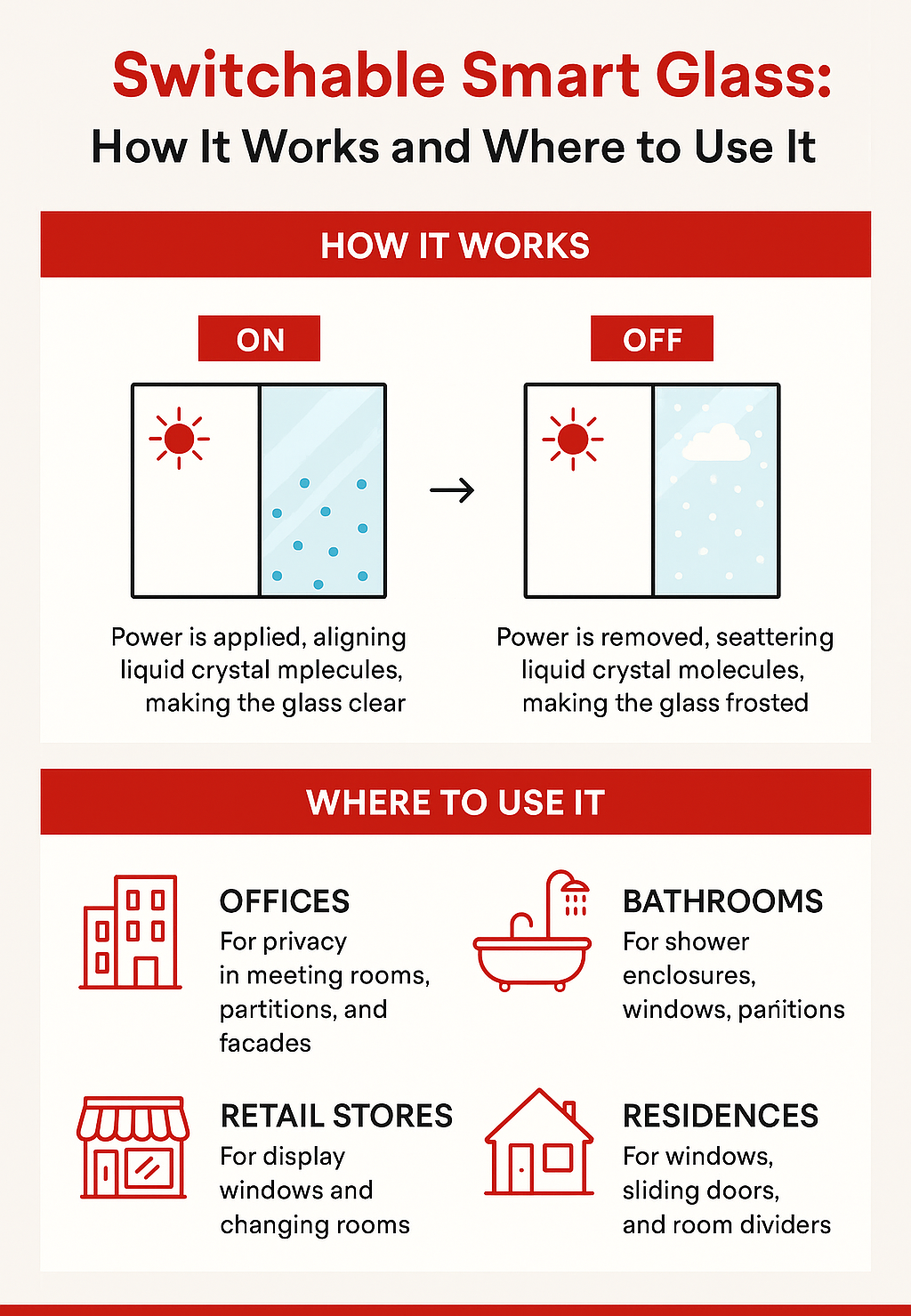
Infographic: Switchable Smart Glass – How It Works & Where to Use It

How the technology works

Switchable smart glass typically uses **PDLC (Polymer Dispersed Liquid Crystal)** film sandwiched between panes of glass. When an electrical current is applied, the PDLC aligns the liquid crystals, making the pane transparent. Remove the current, and the crystals scatter, turning it opaque.

  • Layers: two glass panes, the PDLC film, and sometimes a protective laminated or toughened outer layer.
  • Power source: typically low voltage, wired small controllers or smart switch integration.
  • Speed: transitions in less than a second.
  • Light control: opaque mode diffuses light; clear mode allows full visibility.

Key benefits

  • Privacy on demand — great for meeting rooms, bathrooms, or street-facing windows without needing blinds or curtains.
  • Sleek, modern look with minimal hardware.
  • Potential energy savings by reducing need for additional shading or decorative elements.
  • Flexibility — control via wall switch, remote, or smart home integration.

Where to use switchable smart glass

  • Office partitions and meeting rooms for privacy and openness as needed.
  • Homes: bathrooms, bedrooms, and street-facing windows.
  • Healthcare: patient room privacy, operating theatres, or waiting areas.
  • Retail and hospitality: display windows, bars, restaurants, or conference spaces.

Things to consider

  • Cost is higher than static glass because of the PDLC film and electrical components.
  • Installation requires wiring and switch/inverter access.
  • Some light leakage in opaque mode—may need film finish or frame design to reduce halo effect.
  • Maintenance: ensure controller and power supply are protected and correctly sourced.

If you’re considering this technology, then check custom glass solutions and tempered / safety glass which can be combined with smart glass layers.

References & further reading:
The Guardian: Smart Glass Explained,
ScienceDirect: PDLC Technology,
Cogglas Smart Glass Products

Ready to upgrade with smart glass?


Shop Switchable Glass Options

Privacy on demand · Modern design · Expert specs

Frequently asked questions

How long does switchable glass last?
Typical PDLC film lifespan is 10-15 years depending on usage, environment, and quality of electrical components.


Is switchable glass energy efficient?
It helps reduce need for shading and blinds, and in opaque mode can reduce solar gain. However, the energy to power the film must be considered.


Does it require safety glass?
Yes—if the glass is in a door or low window, safety classifications (toughened or laminated) are often legally required.


Can the glass be retrofitted?
In many cases yes—film-based PDLC layers or retrofit panels exist, but wiring and edge sealing must be properly done.

Tips

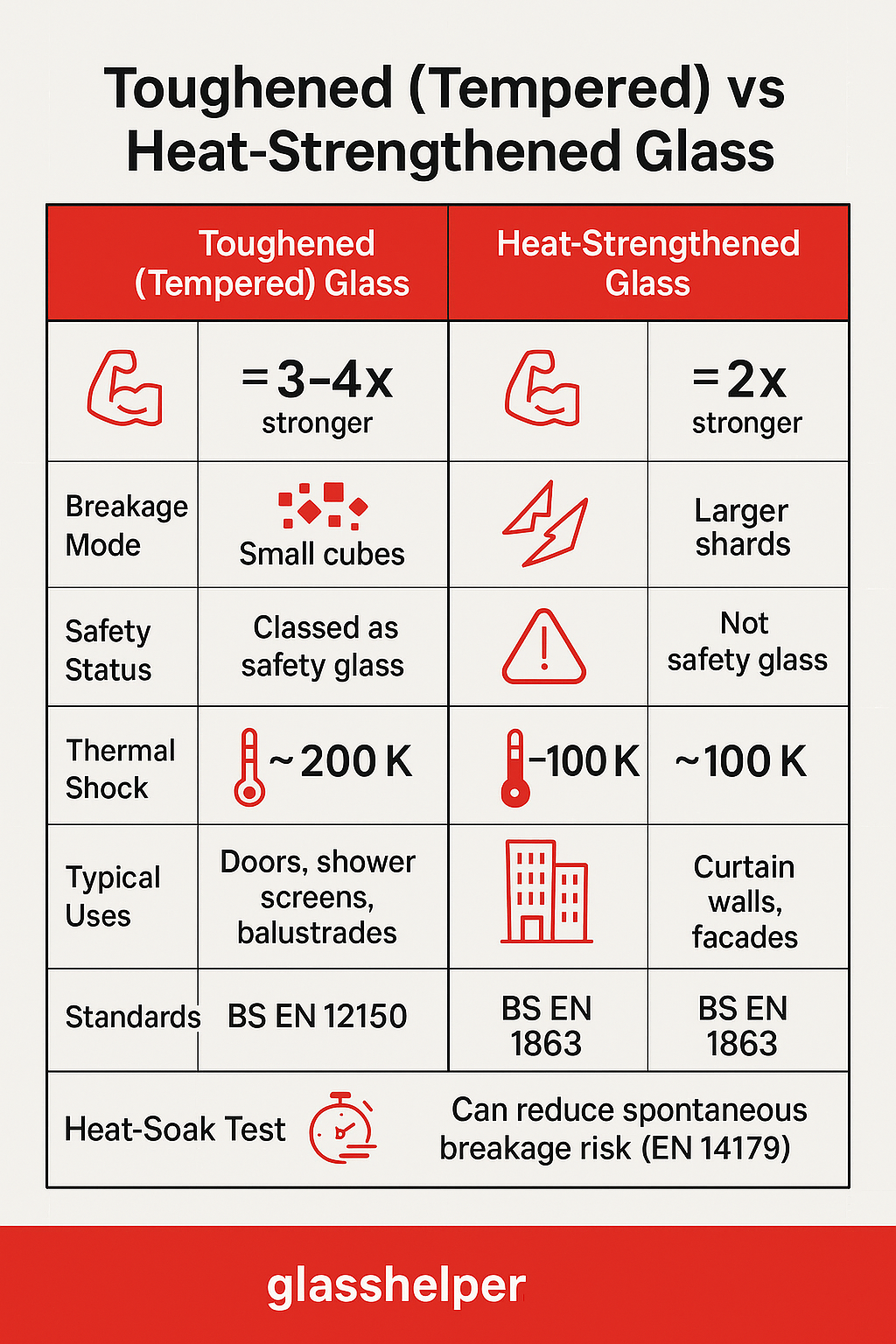
Toughened vs Heat-Strengthened Glass: What’s the Difference

Sep 20, 2025

Glass Knowledge · 2025

Read time: ~7 mins · Updated: 25 Sep 2025

When choosing safety glass for windows, facades or interiors, two common heat-treated types come up:
toughened (tempered) and heat-strengthened.
They may sound similar but their strength, breakage pattern and safety classification are quite different.
This guide explains the key differences and where each is best used.

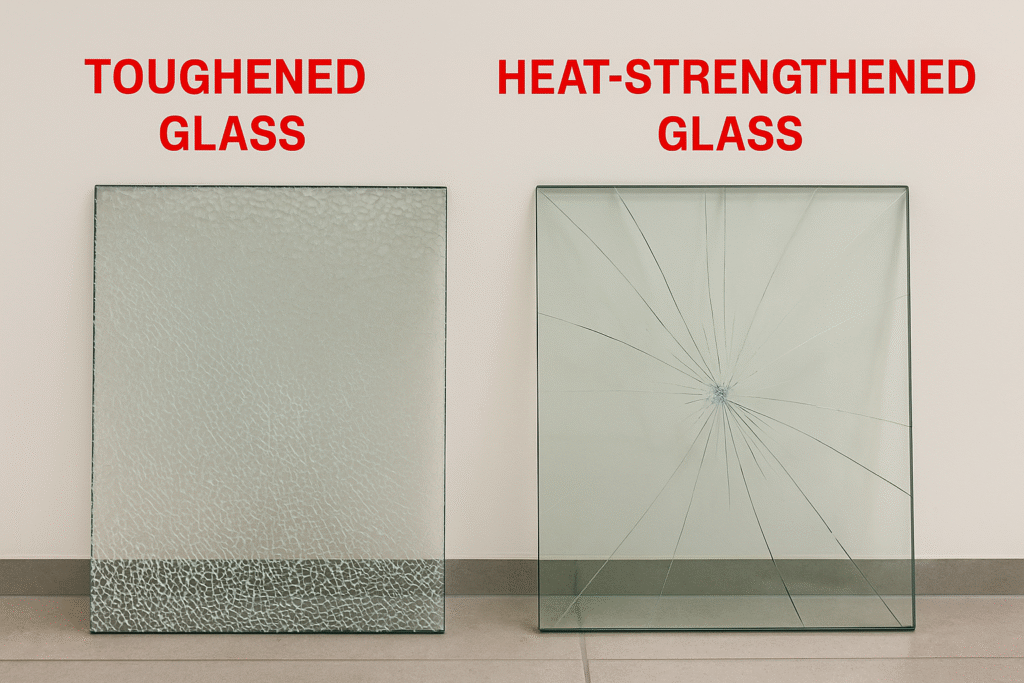
Infographic: Toughened vs Heat-Strengthened Glass - What’s the Difference

What is toughened (tempered) glass?

Toughened glass is standard float glass heated to ~620°C and then rapidly cooled. The rapid quench puts the outer surfaces into compression and the inner core into tension, making it significantly stronger.

  • ~4–5× stronger than ordinary annealed glass.
  • Breaks into small blunt granules — safer for people nearby.
  • Recognised as safety glass under BS EN 12150.
  • Common in doors, shower screens, balustrades, furniture and partitions.

What is heat-strengthened glass?

Heat-strengthened glass is produced in a similar way but cooled more slowly. This gives it a lower surface compression than fully toughened glass, with different performance outcomes.

  • ~2× stronger than ordinary annealed glass.
  • Breaks into larger shard-like pieces (not safety glass alone).
  • Recognised under BS EN 1863.
  • Often laminated to provide safety — suitable for curtain walls and structural glazing.

Detailed comparison

Toughened vs Heat-Strengthened Glass
Property Toughened (Tempered) Heat-Strengthened
Strength vs annealed ≈4–5× ≈2×
Breakage pattern Small blunt granules (safe) Large shards (unsafe unless laminated)
Safety status Classed as safety glass Not safety glass (unless laminated)
Thermal shock resistance High (~200 K) Moderate (~100 K)
Optical distortion More risk (roller wave) Generally lower
Typical uses Doors, shower screens, balustrades, partitions Curtain walls, structural glazing, laminated facades

Where each type is used

  • Toughened: Best for areas with human impact risk — shower enclosures, doors, balustrades, partitions.
  • Heat-strengthened: Favoured in architectural glazing (curtain walls, facades) where glass is laminated and distortion must be minimized.

Learn more about tempered glass options
or explore custom cut glass solutions for your project.

References & further reading:
BSI: BS EN 12150 Toughened Glass Standard,
BSI: BS EN 1863 Heat-Strengthened Glass Standard,
ASTM C1048-21: Heat-Treated Flat Glass

Need the right safety glass for your project?


Shop Safety Glass at GlassHelp

Toughened · Laminated · Custom cut options

Frequently asked questions

Is heat-strengthened glass considered safety glass?
No. Unlike toughened, it does not meet the breakage pattern requirements to be classed as safety glass unless laminated.


Which is stronger, toughened or heat-strengthened?
Toughened (tempered) glass is around 4–5× stronger than annealed, while heat-strengthened is about 2× stronger.


Why would someone choose heat-strengthened glass?
It offers lower optical distortion than toughened, making it better for laminated curtain wall glazing where aesthetics matter.


Can either type be cut after treatment?
No. Cutting, drilling or edge finishing must be done before heat treatment. Post-treatment modification will cause breakage.


Which has better thermal resistance?
Toughened glass resists temperature differences up to ~200 K, compared to ~100 K for heat-strengthened.

Tips

Frosted vs Clear Glass Which is Right for Your Windows and Partitions featured

Sep 20, 2025

Glass Comparison · 2025

Read time: ~5-6 mins · Updated: 24 Sep 2025

Choosing between frosted and clear glass can make a big difference in privacy, lighting, style and cost.
Whether for windows, bathroom partitions or office dividers, understanding the pros and cons of each will help you make the right choice for your project.

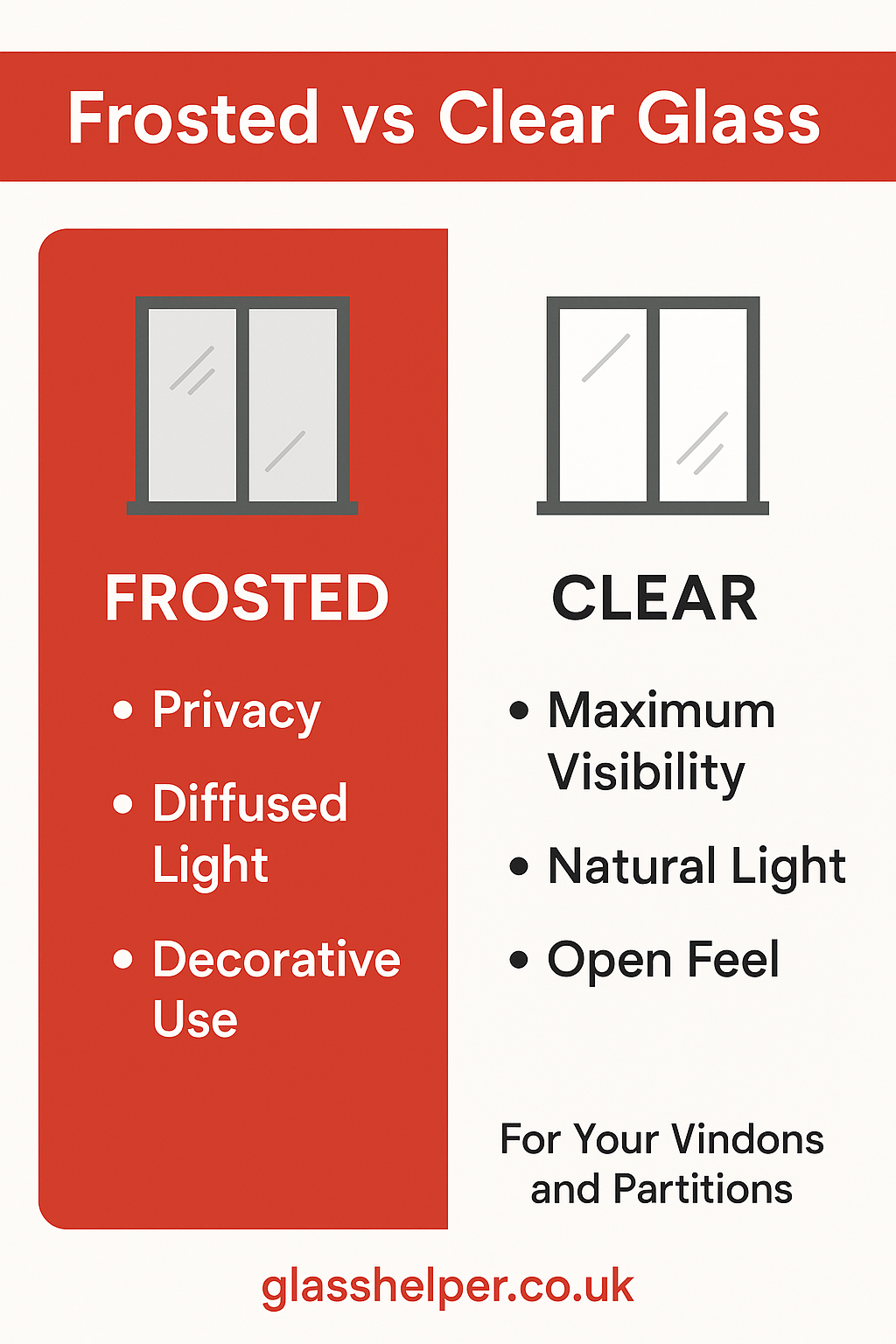
Infographic: Frosted vs Clear Glass - Which is Right for Your Windows and Partitions

What is frosted glass?

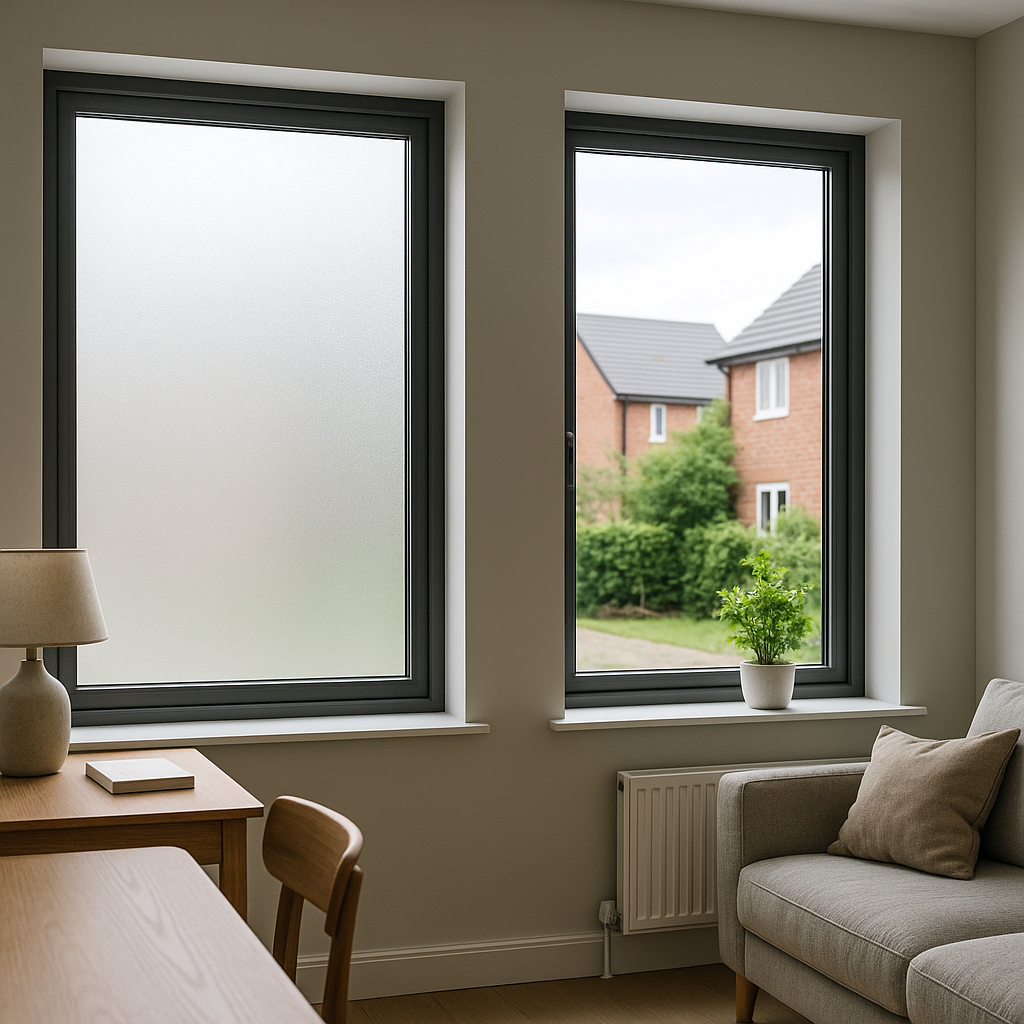
Frosted glass is created through sandblasting, acid etching, or applying a frosted film to clear glass. The process diffuses light and obscures visibility, providing privacy while keeping spaces bright.

  • Delivers privacy without blocking natural light.
  • Reduces glare and harsh sunlight—popular for bathrooms, shower screens and office partitions.
  • Available in decorative designs (patterns, gradients, custom textures).
  • Costs slightly more due to extra processing.

What is clear glass?

Clear glass is unaltered transparent glass, allowing full visibility and maximum daylight. It’s the most common type of glass for windows, doors and partitions.

  • Unobstructed views and bright natural light.
  • More affordable compared to frosted or decorative glass.
  • Ideal for living rooms, shopfronts, and modern open-plan designs.
  • Lacks privacy—usually paired with blinds or curtains.

Side-by-side comparison

Privacy & Light

  • Frosted: high privacy, diffused light
  • Clear: full visibility, maximum daylight

Cost & Processing

  • Frosted: slightly higher due to etching/film
  • Clear: lowest cost option

Common Uses

  • Frosted: bathrooms, office partitions, decorative walls
  • Clear: living rooms, shopfronts, facades

Which glass fits which situation best?

  • Bathrooms & showers: Frosted glass ensures privacy.
  • Office partitions: Frosted for discretion, or a mix of clear and frosted for balance.
  • Living rooms & shopfronts: Clear glass maximizes light and visibility.
  • Street-facing windows: Frosted or clear with privacy film depending on need.
  • For added safety, consider tempered glass or specialty finishes like satin glass for a softer frosted look.

References & further reading:
Saint-Gobain Glass UK,
NSG Group (Nippon Sheet Glass)

Still unsure which glass is right for you?


Compare Glass Types

Explore clear, frosted, satin & tempered options · Made to measure

Frequently asked questions

Is frosted glass more expensive?
Yes, because it requires additional processing like etching, sandblasting or film application. Clear glass is generally cheaper.


Does frosted glass block light?
No, it diffuses light—making it softer and reducing glare without fully blocking it.


Where is clear glass best used?
In living rooms, commercial facades, or anywhere you want maximum transparency and daylight.


What’s the difference between frosted and satin glass?
Satin glass has a smoother, silk-like finish compared to traditional frosted, giving a modern aesthetic with the same privacy benefits.


Do building codes matter for glass choice?
Yes—low-level windows, partitions in wet areas, or doors often need safety-certified glass under BS EN standards. Always check local building regulations.

Tips

Shower Screen Designs in the UK Frameless, Semi-Frameless, and Sliding Compared

Sep 20, 2025

Design Guide · 2025

Read time: ~7 mins · Updated: 22 Sep 2025

Choosing the right shower screen design can transform both the look and function of your bathroom.
In the UK, the three main styles—frameless, semi-frameless, and sliding—each bring unique advantages and trade-offs.
This guide compares them to help you pick what’s best for your space, budget, and aesthetic, while staying compliant with Glass & Glazing Federation guidelines and FENSA regulations.

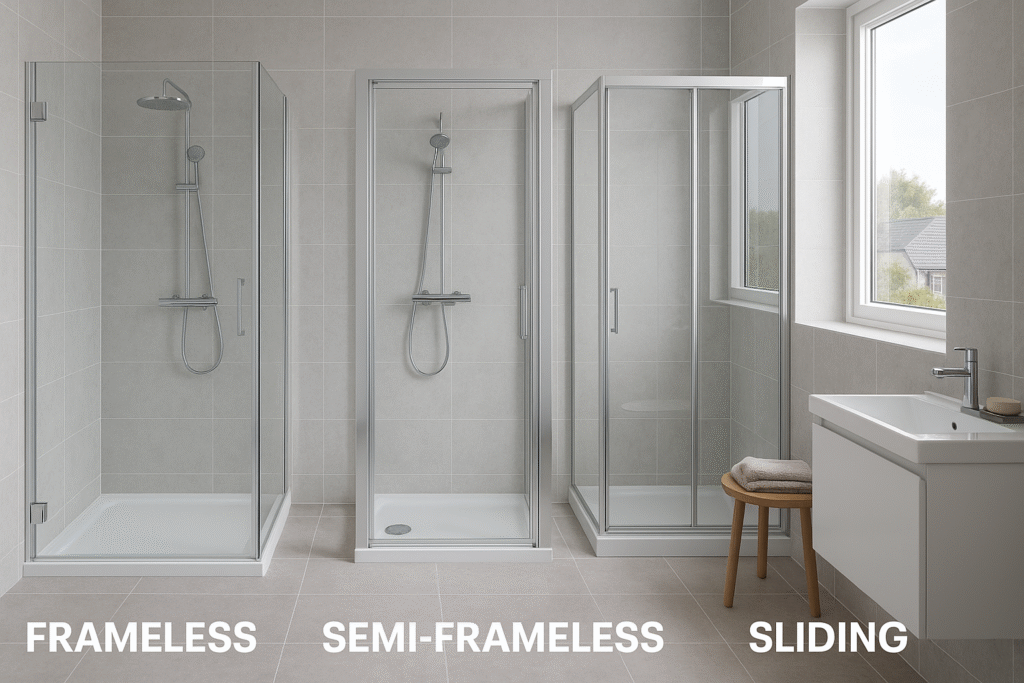
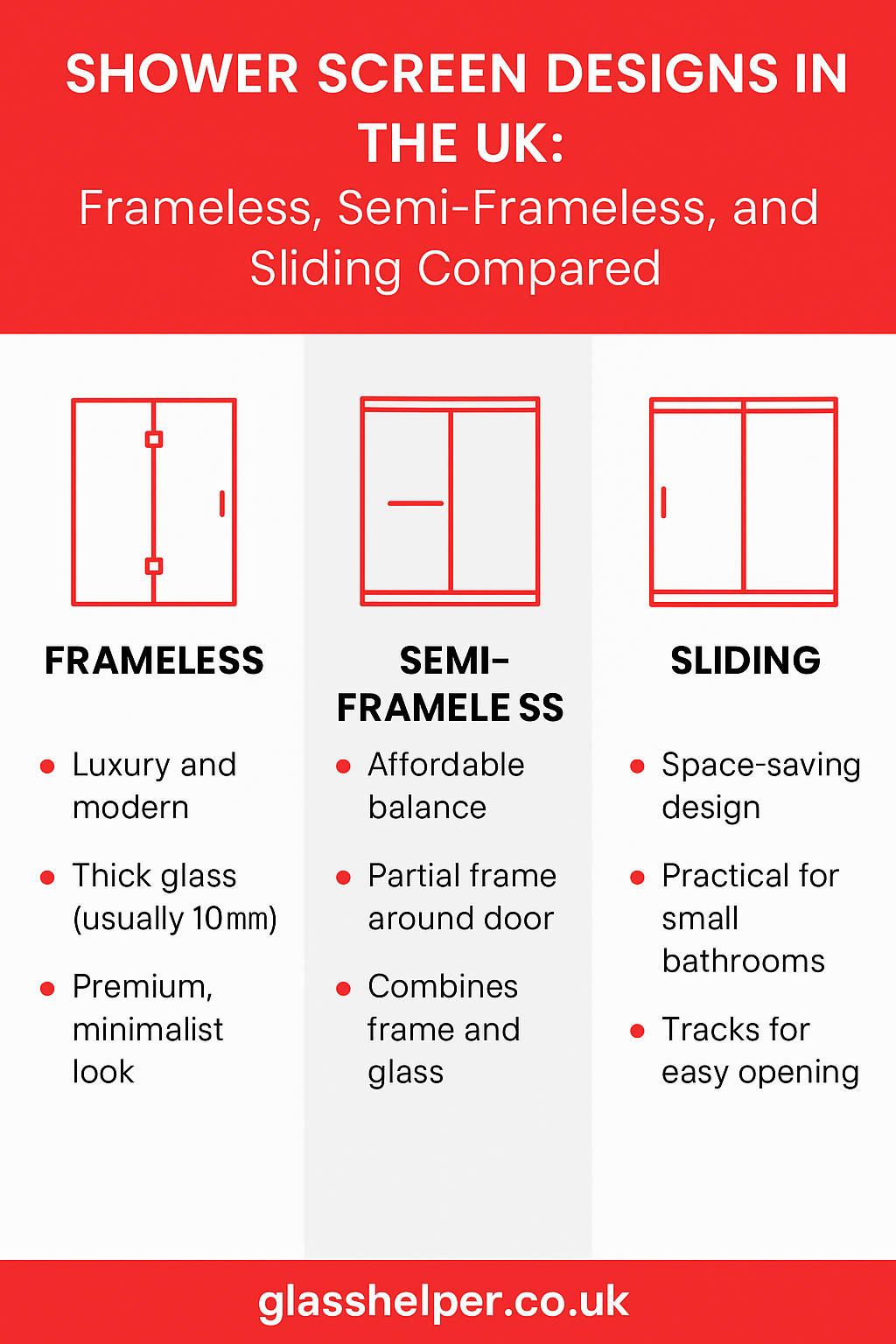
Infographic: Shower Screen Designs in the UK – Frameless, Semi-Frameless, Sliding Compared

Frameless

Frameless shower screens are minimalist and modern. They don’t have any metal frame around the edges of the glass, giving a seamless, clean look. Key features include:

  • Usually 10mm toughened glass or thicker — strong enough to stay rigid without a frame.
  • Minimal hardware (hinges, clips) to support the glass; often high quality stainless steel or chrome finishes.
  • Wide open feel — ideal for walk-in showers or bathrooms with glass as a design feature.
  • More expensive, heavier glass, and requires careful installation for drainage and sealing.

Semi-Frameless

Semi-frameless screens are a compromise between frameless and framed designs. They include small frame parts (typically around glass edges) and can offer good value and flexibility. Highlights:

  • Glass usually 6-8mm thick; small frame parts offer extra support without the full cost of a full frame.
  • Good for standard bathroom layouts, offering a more premium appearance without the full expense of frameless screens.
  • Hardware and profile frames (for example, along the top or edges) help support and reduce flex or movement.
  • Lower cost and easier to install than frameless, but slightly less aesthetic purity and more frequent cleaning of frame edges.

Sliding

Sliding shower screens are excellent for maximizing space, especially in smaller bathrooms where swinging doors aren’t practical. Key points:

  • Glass panels slide on tracks (top and/or bottom), sometimes semi-framed for added stability.
  • Thickness typically 6-10mm depending on design; thicker glass needed for larger panels.
  • Great for compact bathrooms since sliding doors don’t require clearance to swing open.
  • Requires track maintenance and periodic cleaning to ensure smooth operation.

Head-to-Head Comparison

Style & Aesthetic

  • Frameless: sleek, minimal, luxury look
  • Semi-Frameless: modern with subtle framing
  • Sliding: practical, depends on visible tracks

Cost & Installation

  • Frameless: highest cost, precise fit, premium hardware
  • Semi-Frameless: moderate cost, straightforward install
  • Sliding: mid-range, cost varies by track/hardware

Maintenance & Durability

  • Frameless: minimal cleaning, fewer crevices
  • Semi-Frameless: frames collect soap, need upkeep
  • Sliding: tracks require regular cleaning & lubrication

Thinking of upgrading your shower screen?


Explore Shower Screens at GlassHelp

Premium glass · Made to measure · Trusted quality

Frequently asked questions

Is frameless always better?
Not necessarily—it looks sleek but needs thicker tempered glass, premium hardware, and careful sealing. Budget and space should guide your choice.


What thickness do semi-frameless screens usually use?
Typically 6-8mm safety glass. Reinforced options may allow larger panels.


Are sliding shower doors safe?
Yes—if the glass is BS EN safety certified and hardware is properly installed. They’re ideal for small spaces.


Which design offers the best balance of cost and style?
Semi-frameless often provides the sweet spot—modern look with reasonable cost and simpler installation.

Tips

Top 5 Common Mistakes When Ordering Custom Cut Glass Online

Sep 20, 2025

Buyer’s Guide · 2025

Read time: ~6 mins · Updated: 21 Sep 2025

Ordering custom cut glass online can save time and money—but mistakes in the process can lead to wasted orders and costly replacements.
Here are the top 5 mistakes homeowners make when ordering glass online, and how you can avoid them.

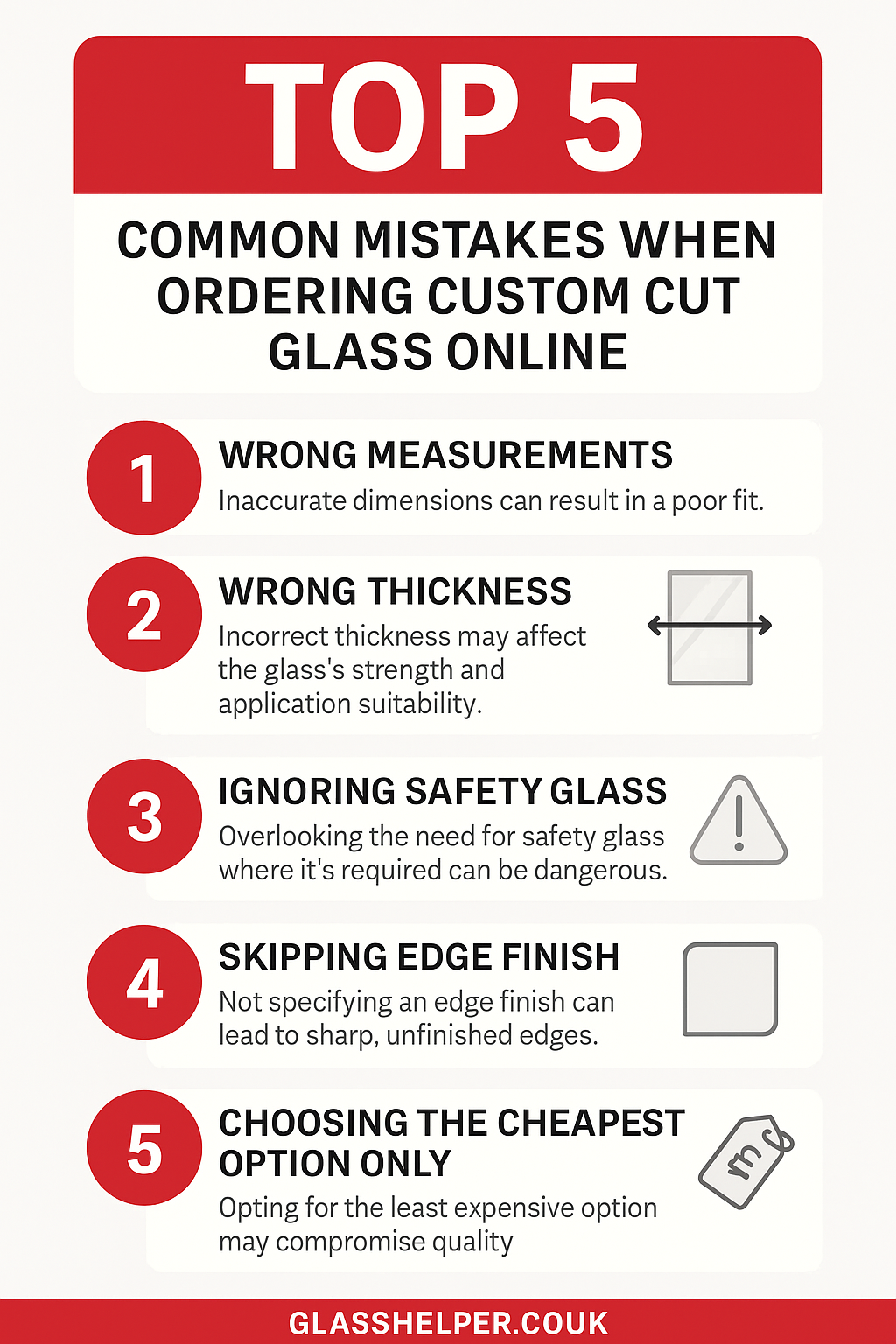
Infographic: Top 5 Common Mistakes When Ordering Custom Cut Glass Online

Mistake 1: Wrong measurements

Many customers measure their old glass instead of the actual frame opening. This can result in panels that are too large or too small.
Always measure the frame opening in multiple places (top, middle, bottom for width; left, centre, right for height) and use the smallest measurement with a fitting tolerance (2–3 mm).

Pro tip: See guidance from FENSA on correct measuring for compliance.

Mistake 2: Choosing the wrong thickness

Glass that is too thin may flex or break, while unnecessarily thick glass adds cost and requires stronger hardware.
For most shower doors, 8 mm toughened is ideal; for balustrades, 10–12 mm may be required. Always match thickness to application.

Mistake 3: Ignoring safety glass rules

UK Building Regulations require safety glass (toughened or laminated) in “critical locations” like doors, side panels, or low-level glazing under 800 mm.
Ordering standard float glass for these locations is dangerous and non-compliant.

For reference, check Glass & Glazing Federation (GGF) safety guidance.

Mistake 4: Skipping edge finishing

Unfinished edges can be sharp and unsafe. Specifying polished edges or bevels not only improves safety but also appearance, especially for visible edges on shelves, table tops, or doors.

Mistake 5: Choosing only the cheapest option

Going with the lowest price can mean cutting corners on quality, certification, or after-sales service.
Look for suppliers who provide BS EN 12150 certified toughened glass or laminated glass, and clear warranty terms, even if it costs a little more.

Want to avoid these mistakes?


Order Custom Cut Glass from GlassHelp

Made-to-measure · Safety certified · Expert support

Frequently asked questions

Can I measure old broken glass instead of the frame?
No—always measure the frame opening. Old glass may not represent the correct size and can result in errors.


Do I always need toughened glass?
Yes in critical locations like doors, low-level glazing, or bathrooms. Toughened glass is 5× stronger and safer than float glass.


What’s the best edge finish for shelves or table tops?
Polished edges are best for visibility and safety. Bevelled edges add decorative style but increase cost slightly.


Is laminated glass better than toughened?
Each has advantages. Laminated holds together on impact (best for security/balustrades), while toughened is stronger against sudden force. Sometimes they are combined.


Should I always pick the cheapest supplier?
Not always—low prices can mean poor aftercare or non-certified glass. Always check reviews, compliance stamps, and guarantees.