Tips

Tips

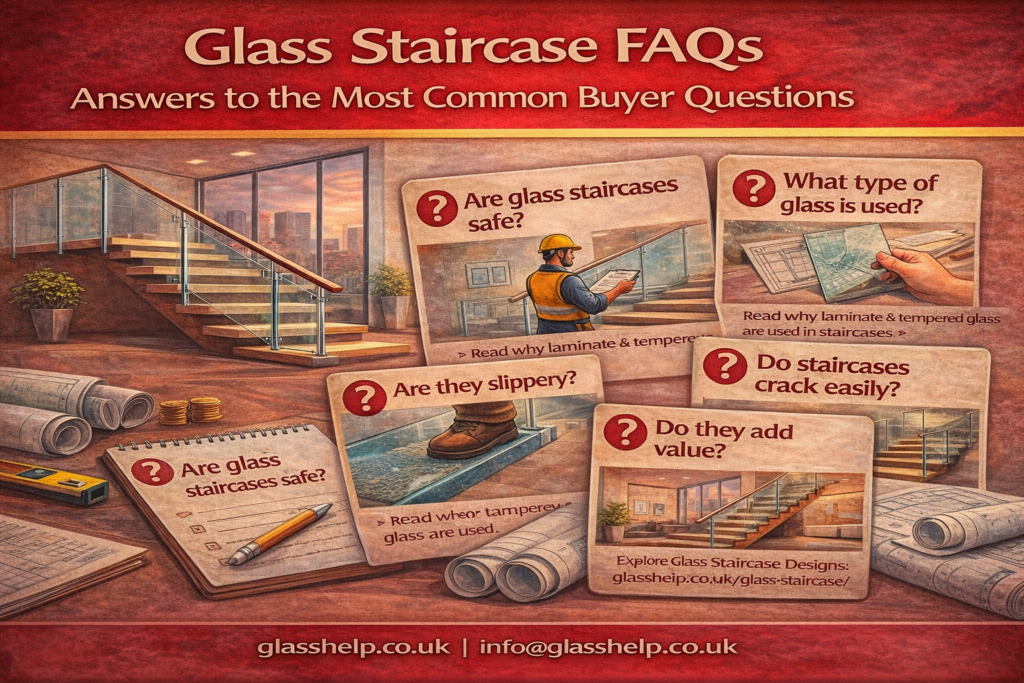
Glass Staircase FAQs: Answers to the Most Common Buyer Questions

Dec 19, 2025

Glass staircases are one of the most searched-for modern home upgrades — and also one of the most misunderstood. Buyers often love the look but hesitate because of questions around safety, cost, maintenance, and regulations.

This FAQ guide answers the most common questions buyers ask before choosing a glass staircase, using clear explanations and real-world considerations. Whether you’re renovating a home or planning a new build, this article will help you make confident, informed decisions.
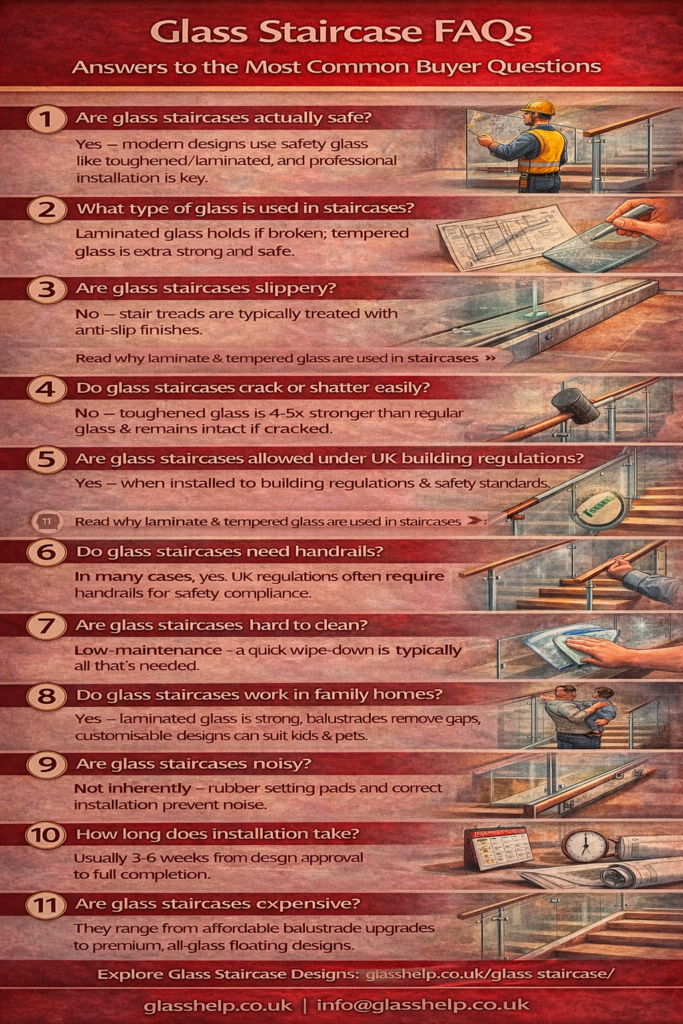

1. Are glass staircases actually safe?

Yes — when designed and installed correctly, glass staircases are extremely safe.

Modern glass staircases use safety glass, typically:

  • Toughened (tempered) glass
  • Laminated safety glass
  • Or a combination of both

These glass types are engineered to handle impact, daily use, and structural loads. Laminated glass in particular is designed to stay intact even if cracked, preventing falls.

Safety issues usually arise not from the glass itself, but from:

  • Incorrect glass specification
  • Poor installation
  • Weak supporting structures

2. What type of glass is used in staircases?

Staircases never use ordinary window glass.

The most common options are:

  • Tempered (toughened) glass – very strong, breaks into small blunt pieces
  • Laminated glass – multiple glass layers bonded together, holds in place if damaged

In many staircases, laminated safety glass is preferred for balustrades and areas where fall protection is critical.

If you want a deeper explanation of how these glass types behave and where each is used, this internal guide explains it clearly:
👉 https://www.glasshelper.co.uk/what-type-of-glass-is-used-in-staircases/


3. Are glass staircases slippery?

This is a very common concern — and a valid one.

The truth:

  • Glass balustrades (side panels) are not slippery because you don’t walk on them.
  • Glass stair treads (steps themselves) are treated with anti-slip finishes such as:
    • Etched surfaces
    • Ceramic frit patterns
    • Anti-slip coatings

When specified properly, glass steps meet slip-resistance standards similar to wood or stone.

Most homes choose glass balustrades with solid steps (wood or metal), which removes this concern entirely.


4. Do glass staircases crack or shatter easily?

No — safety glass is far stronger than most people expect.

  • Toughened glass is up to 4–5 times stronger than standard glass.
  • Laminated glass remains in place even if cracked.

Cracking usually occurs only when:

  • Edges are damaged during handling
  • Glass is forced into misaligned fixings
  • Structural movement wasn’t accounted for

With professional installation and correct specification, glass staircases are designed to last decades.


5. Are glass staircases allowed under UK building regulations?

Yes, glass staircases are fully permitted in the UK — provided they meet building regulations.

Key compliance areas include:

  • Use of safety glass
  • Minimum balustrade height
  • Load resistance
  • Handrail requirements (in many cases)

A reputable installer will design the staircase to meet UK Building Regulations and relevant British Standards.

Never choose a supplier who cannot explain compliance clearly.


6. Do glass staircases need handrails?

In many cases, yes.

Even with glass balustrades, building regulations often require:

  • A continuous handrail
  • Correct handrail height
  • Secure fixing

Handrails don’t have to be bulky — slim metal or timber handrails can be integrated cleanly without ruining the look.

Skipping handrails to “keep it minimal” often leads to failed inspections or expensive retrofits.


7. Are glass staircases hard to clean?

Glass staircases are low-maintenance, but not maintenance-free.

Typical upkeep:

  • Regular wipe-down with a non-abrasive glass cleaner
  • Occasional cleaning of handrails and fixings
  • Annual visual inspection of fixings

Clear glass shows fingerprints more than frosted or tinted finishes, but cleaning is straightforward and quick.

Many homeowners find glass easier to maintain than painted wood, which shows scuffs and wear.


8. Do glass staircases work in family homes with children or pets?

Yes — with the right design choices.

For family homes:

  • Laminated glass is strongly recommended
  • Frosted or lightly tinted glass can reduce visible marks
  • Framed or semi-framed systems may feel more reassuring

Glass balustrades also eliminate gaps between spindles, which can actually improve child safety compared to traditional railings.


9. Are glass staircases noisy?

No — glass staircases are not inherently noisy.

Noise issues usually come from:

  • Poor fixing methods
  • Movement between components
  • Incorrect setting blocks

Proper installation includes:

  • Rubber isolation pads
  • Correct tolerances
  • Secure fixings

When installed correctly, glass staircases are no noisier than wood or steel stairs.


10. How long does installation take?

For most homes:

  • On-site installation: 1–3 days
  • Complex or bespoke staircases: up to a week

However, total project time includes:

  • Design and approvals
  • Fabrication of glass
  • Scheduling installation

A full project typically runs 3–6 weeks from final measurement to completion.

For a clear overview of how the installation process works step by step, this internal guide is useful:
👉 https://www.glasshelper.co.uk/how-glass-staircases-are-installed/


11. Are glass staircases expensive?

Glass staircases are a premium feature, but they come in a wide range of budgets.

Costs vary depending on:

  • Size and layout
  • Frameless vs framed systems
  • Glass thickness and finish
  • Installation complexity

Some homeowners start with a glass balustrade upgrade rather than a full staircase replacement, which is far more affordable and still delivers a modern look.


12. Will a glass staircase add value to my home?

In many cases, yes.

Glass staircases:

  • Increase natural light
  • Make spaces feel larger
  • Create a strong “wow factor” for buyers

They are particularly attractive in:

  • Modern homes
  • Renovated properties
  • Architect-designed spaces

While value depends on the market, glass staircases often enhance saleability and first impressions.


13. What’s the difference between frameless and framed glass staircases?

  • Frameless: Minimal visible supports, cleaner look, higher cost, higher precision required
  • Framed: Posts or rails support the glass, slightly more visible structure, often more budget-friendly

Both can be safe and stylish — the choice depends on budget, structure, and aesthetic preference.


14. Can glass staircases be customised?

Absolutely.

Custom options include:

  • Clear, frosted, or tinted glass
  • Low-iron (ultra-clear) glass
  • Custom handrails
  • Integrated lighting
  • Curved or angled panels

Almost all glass staircases are made to measure, not off-the-shelf products.


15. Where should I start if I’m planning a glass staircase?

The best starting point is understanding design options, layouts, and safety considerations before requesting quotes.

A good overview of modern glass staircase types and configurations can be found here:
👉 Glass staircase design options and buyer guidance
https://www.glasshelp.co.uk/glass-staircase/

This helps you speak confidently with suppliers and avoid unsuitable designs early on.


Final Thoughts

Glass staircases are no longer experimental or risky — they are a well-established, safe, and stylish choice when designed properly.

Most buyer concerns come down to:

  • Safety glass selection
  • Professional installation
  • Regulatory compliance

Once those are handled correctly, glass staircases offer durability, low maintenance, and timeless modern appeal.
Tips

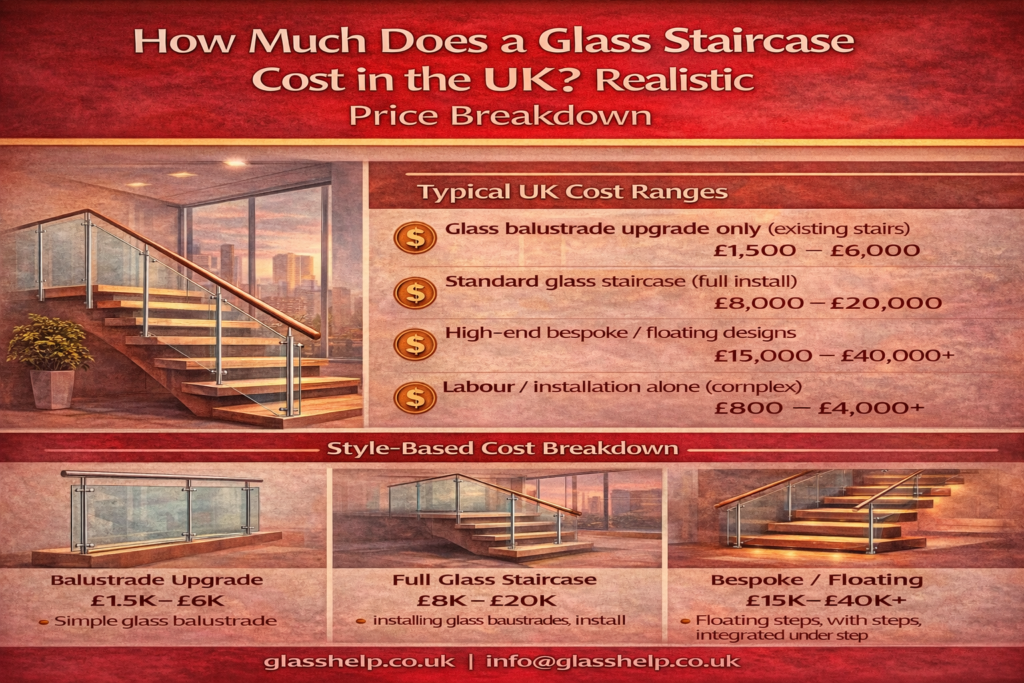
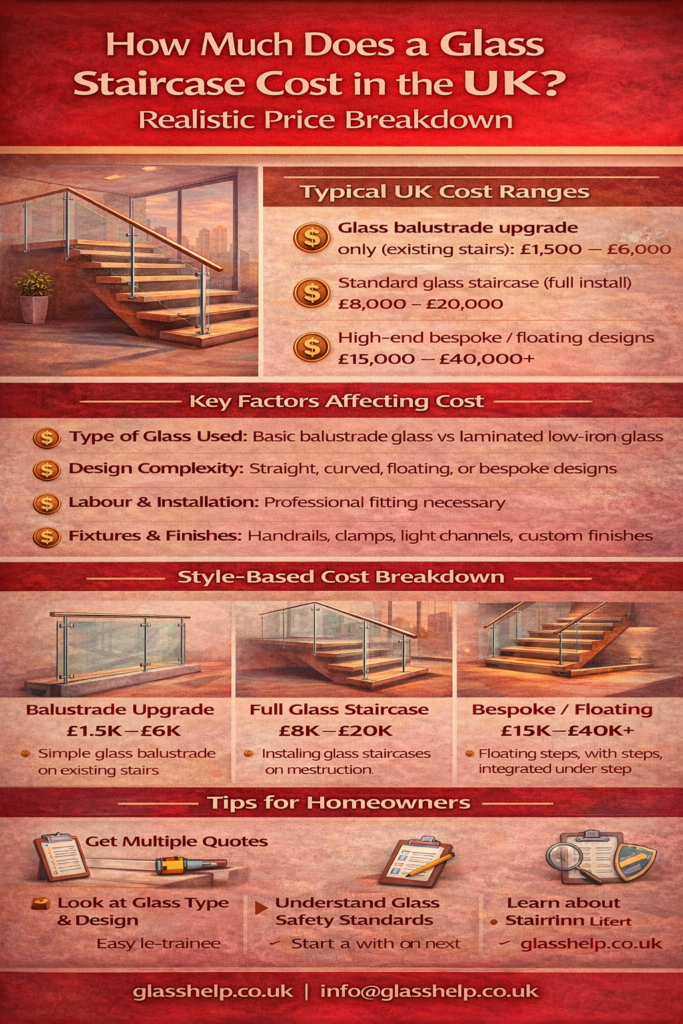
How Much Does a Glass Staircase Cost in the UK? (Realistic Price Breakdown)

Dec 19, 2025

Glass staircases are one of the most eye-catching interior upgrades you can make in a home — they flood light into your hallway, open up spaces, and instantly uplift interiors. But beautiful design comes with a price. Whether you’re renovating your home or planning a full redesign, understanding how much a glass staircase will cost in the UK — with all the realistic price factors involved — is critical before you get quotes.

In this detailed guide, we’ll break down:

  • Typical UK price ranges
  • What influences the cost
  • Material, design and labour factors
  • A sensible budgeting framework
  • Practical tips to manage and reduce cost

Glass Staircase Cost Overview — UK 2025

The price of a glass staircase in the UK varies widely based on type, size, and design complexity:

Typical Cost Ranges

  • Basic straight glass staircase: ~£3,000–£6,000 (simple balustrade or panel upgrade) MyJobQuote
  • Standard full glass staircase install: ~£8,000 on average, including materials and labour High Level Glazing
  • Custom or high-end bespoke designs: £15,000–£40,000+ — depending on frameless systems, floating steps, curves, and finishes Checkatrade

💡 For comparison, a new bespoke staircase with complex design elements (including wood or metal) often sits around similar high-end price points, showing that glass staircases are premium but not unaffordable when compared to other architectural features. Checkatrade


1. What You Get for Your Money

Glass staircase pricing usually includes three main components:

a) Materials

  • Safety glass panels (tempered or laminated)
  • Handrails
  • Base channels, clamps, fixings
  • Optional lighting or finishes

b) Fabrication

Glass is custom-cut, polished, heat-treated, and drilled in factory conditions to precise measurements.

c) Installation/Labour

Professional fitting is essential for safety, compliance with building regulations, and a perfect finish.


2. Breakdown of Glass Staircase Costs

Understanding what drives the numbers can help you budget more accurately.

🧱 Glass Panels

The heart of the staircase — glass panels vary by thickness, finish, and type:

  • Basic tempered glass panels: lower end of cost
  • Laminated safety glass (higher thickness): more expensive
  • Low-iron or bespoke finishes: upmarket pricing

Glass panel pricing in the UK can start from around typical balustrade glass rates, and bespoke stair panels vary by supplier. Balconette

🛠 Handrails & Fixings

Handrails, brackets, channels, and hardware usually add £5–£25 per linear foot (or more) depending on material and finish. Bespoke Frameless Glass

👷 Labour & Installation

Professional installation varies by staircase type and complexity:

  • Simple straight run: 1–2 days
  • Curved or multi-level: 3–5 days
    Labour alone typically ranges from a few hundred to over £2,000 depending on expertise needed. Class Glass Limited

3. Cost by Staircase Style

Here’s what you might expect depending on what you choose:

Basic Glass Balustrade Upgrade

If you already have a staircase and want to replace old spindles and rails with glass panels, costs are often lower:

  • Glass panels + clamp system: ~£200–£500 per metre installed Class Glass Limited
  • Total installed cost: £1,500–£6,000

This is a popular middle-range choice for modernising without a full staircase replacement.


Full Glass Staircase (Standard)

A full staircase replacement with glass balustrades and quality rails usually ranges:

This includes:

  • Glass panels and balustrades
  • Handrails
  • Professional installation
  • Standard safety glass

Premium Bespoke & Floating Staircases

Architectural floating staircases where glass may also be used in structural treads and support are at the top end:

High price is driven by:

  • Complex engineering
  • Structural reinforcements
  • Frame supports
  • Integrated lighting

4. Design Factors That Affect Cost

The cost of your glass staircase is not fixed — several design elements play a big role:

A. Straight vs Curved

Straight staircases are simpler and cheaper to fabricate/install. Curves and multi-direction designs increase time and material costs.

B. Frameless vs Framed

  • Frameless systems use thicker glass and hidden channels — premium cost
  • Framed or semi-framed systems offer a modern look at lower cost

Getting clarity on these options early helps budget planning.


5. Quality & Safety Considerations

Cheap quotes are attractive — but with glass stairs, safety and compliance must remain non-negotiable. Toughened and laminated glass is essential to meet safety and building regulation standards (e.g., BS standards in the UK), and must be matched with correct fixing and installation.

Internal guides that explain the importance of safety glass and correct staircase selection can help make sure you’re choosing right for your home. For example, understanding different glass uses in stair components and their safety roles is key:
👉 https://www.glasshelper.co.uk/what-type-of-glass-is-used-in-staircases/


6. Installation & Labour Costs: What to Expect

Glass staircase installation is a specialized trade:

  • Professional staircase installers often charge £250–£600+ per day depending on location, complexity, and skill required. Checkatrade
  • Complex jobs that involve curved sections or bespoke floating steps require more time and therefore more labour cost. Class Glass Limited

Aim for upfront, fixed labour quotes rather than day rates where possible.


7. Budgeting Tips for Homeowners

Here are practical ways to plan realistically:

📊 1. Get Multiple Quotes

Differences between suppliers can be significant — always get 3+ quotes.

📅 2. Plan Early

Ordering glass after all finishes are complete prevents measurement errors and additional fabrication costs.

🪶 3. Consider Glass Type vs Design

Sometimes lowering glass thickness (while maintaining safety standards) and simplifying design can shave thousands off the cost.


8. How Glass Staircases Add Value

While glass staircases can be expensive, they often add visual appeal and property value beyond their cost. UK renovation specialists note that modern staircase upgrades — especially glass installations — often produce disproportionate visual impact and can increase appeal in the housing market.

A well-specified glass staircase can transform hallways and living spaces, making them appear larger, brighter, and more contemporary.


9. Realistic Cost Summary

Scope of WorkTypical UK Cost Range
Glass balustrade upgrade only (existing stairs)£1,500 – £6,000 Class Glass Limited
Standard glass staircase (full install)£8,000 – £20,000 High Level Glazing
High-end bespoke / floating designs£15,000 – £40,000+ Checkatrade
Labour/installation alone (complex)£800 – £4,000+ Checkatrade

10. Where to Start Your Project

If you’re contemplating a glass staircase project, start by exploring the glass staircase design and options available. This helps you decide what style suits your home best and gives context before ordering quotes:

👉 Glass staircase inspiration, types, and design tipshttps://www.glasshelp.co.uk/glass-staircase/


Conclusion

Glass staircases in the UK can cost from £1,500 for a simple balustrade upgrade to £40,000+ for a fully bespoke architectural staircase — with most homeowners landing somewhere between £8,000 and £20,000 depending on design and materials.

Costs vary naturally by how custom the project is, the type of glass and hardware you choose, installation complexity, and finishing details. But with careful planning, accurate measurements, and clear quotes, you can align your budget to your aesthetic and functional goals.

DIY Guide

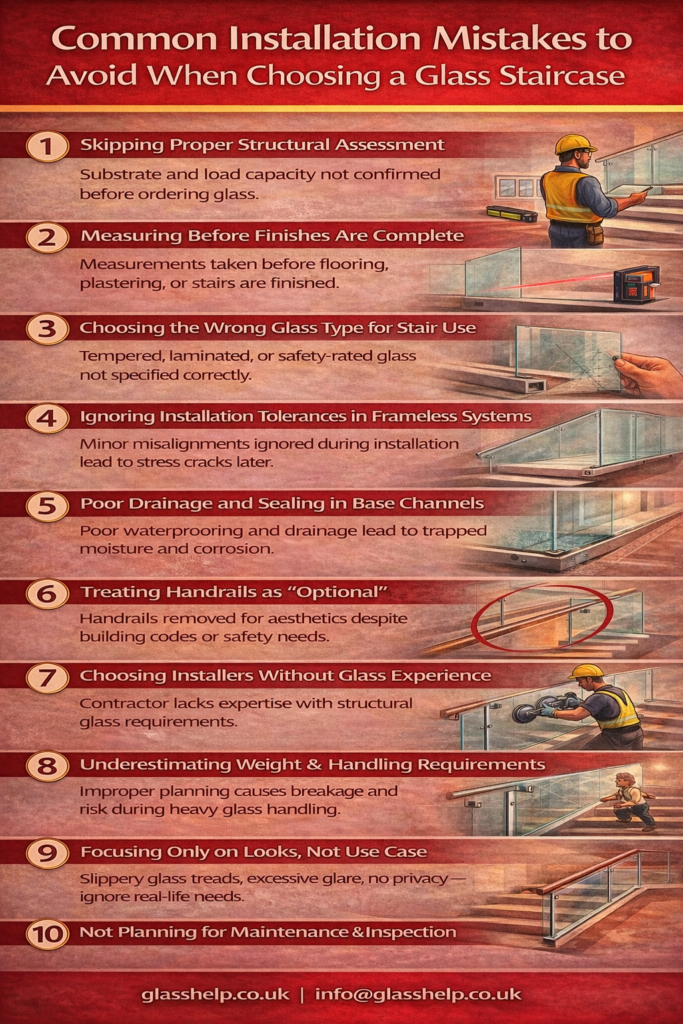
Common Installation Mistakes to Avoid When Choosing a Glass Staircase

Dec 19, 2025

Glass staircases can completely transform a space — adding light, openness, and a modern architectural feel. But while the finished result often looks effortless, the installation process is highly technical, and small mistakes can lead to serious safety issues, visual flaws, or costly rework.

Many problems people experience with glass staircases aren’t due to poor materials — they happen because of installation oversights, incorrect planning, or choosing the wrong system for the structure.

This guide highlights the most common installation mistakes to avoid when choosing a glass staircase, so you can make informed decisions and protect your investment from day one.


1. Skipping Proper Structural Assessment

Why this is a major mistake

Glass staircases — especially frameless designs — rely entirely on what they are fixed into. If the supporting structure is weak, uneven, or poorly prepared, even the strongest glass will fail to perform correctly.

Common issues caused:

  • Glass panels leaning or deflecting
  • Fixings loosening over time
  • Cracking due to movement or load transfer

What should be done instead:

  • Confirm whether the substrate is concrete, steel, or timber
  • Ensure load paths are suitable for glass balustrades
  • Get structural confirmation before ordering glass

A glass staircase should never be treated as a decorative add-on — it is a structural safety system.


2. Measuring Before Finishes Are Complete

Why this causes expensive delays

One of the most frequent (and costly) mistakes is taking final measurements before flooring, plastering, or stair finishes are completed.

Glass cannot be trimmed or adjusted on site. If measurements are off by even a few millimeters, panels may:

  • Not fit into base channels
  • Leave visible gaps
  • Require complete re-fabrication

Best practice:

  • Measure only after final finishes are installed
  • Use digital laser measuring tools
  • Template complex angles and stair transitions

If you want to understand why precision measuring is critical, this installation overview explains the process clearly:
👉 https://www.glasshelper.co.uk/how-glass-staircases-are-installed/


3. Choosing the Wrong Glass Type for Stair Use

Not all glass is suitable for staircases

Using the wrong type of glass is a serious safety risk. Standard annealed glass must never be used for staircases.

Common mistakes include:

  • Using tempered glass where laminated is required
  • Using thin glass to reduce cost
  • Ignoring fall-protection requirements

Correct approach:

  • Tempered glass for balustrades with secondary support
  • Laminated safety glass where fall protection is critical
  • Thicker glass for frameless systems

Glass staircases are governed by safety standards, not aesthetics alone.

For a deeper explanation of glass safety in stair applications, this internal guide is helpful:
👉 https://www.glasshelper.co.uk/what-type-of-glass-is-used-in-staircases/


4. Ignoring Installation Tolerances in Frameless Systems

Frameless ≠ forgiving

Frameless glass staircases look clean and minimal — but they are far less forgiving than framed systems.

Common problems:

  • Visible glass lean due to uneven base channels
  • Misaligned panels that can’t be adjusted later
  • Stress buildup at fixings

Why it happens:

  • Base channels not levelled correctly
  • Substrate irregularities ignored
  • Rushing the installation process

How to avoid it:

  • Ensure base channels are installed and levelled first
  • Allow installers time for alignment and setting
  • Never “force” glass into position

Frameless systems demand precision, patience, and experience.


5. Poor Drainage and Sealing in Base Channels

A hidden long-term issue

This mistake often doesn’t show immediately — but it can cause serious long-term damage.

What goes wrong:

  • Water gets trapped inside base channels
  • Moisture corrodes fixings
  • Glass starts to loosen or stain at the base

This is especially common near:

  • Bathrooms
  • Exterior doors
  • Coastal or humid environments

Correct approach:

  • Use base channels with drainage provisions
  • Seal correctly without blocking drainage paths
  • Choose corrosion-resistant hardware

Water management is just as important as structural strength.


6. Treating Handrails as “Optional”

A costly compliance mistake

Some homeowners remove handrails for aesthetic reasons — assuming glass alone is enough. In many regions, handrails are legally required, even when glass balustrades are used.

Risks of skipping handrails:

  • Failing building inspections
  • Reduced user safety
  • Forced retrofitting later (often expensive)

Best practice:

  • Confirm local building regulations early
  • Use slim or recessed handrail designs if minimalism is important
  • Integrate handrails into the design from the start

A well-designed handrail can enhance safety without ruining the visual appeal.


7. Choosing Installers Without Glass-Specific Experience

Glass stairs are not a general trade job

A major mistake is hiring installers who:

  • Specialize in wood or metal stairs only
  • Have limited experience with structural glass
  • Treat glass like a decorative panel

Glass staircases require:

  • Specialized handling equipment
  • Knowledge of load behavior
  • Experience with safety tolerances

What to check before hiring:

  • Previous glass staircase projects
  • Familiarity with laminated safety glass
  • Understanding of alignment and base fixing systems

The right installer matters as much as the right materials.


8. Underestimating Weight and Handling Requirements

Glass is heavy — very heavy

Large glass panels and laminated treads can weigh hundreds of kilograms.

Common oversights:

  • No access planning for lifting
  • Inadequate manpower
  • Damage during handling

Correct planning includes:

  • Clear delivery routes
  • Use of suction lifters and handling frames
  • Adequate site access for installation day

Improper handling can cause chips, edge damage, or breakage — even before installation begins.


9. Focusing Only on Looks, Not Use Case

A design-driven mistake

A glass staircase that looks stunning in photos may not suit:

  • Homes with children
  • High-traffic areas
  • Pets or elderly users

Examples:

  • Clear glass where privacy is needed
  • Slippery glass treads without anti-slip treatment
  • Excessive glare from untreated glass

Smarter approach:

  • Choose finishes based on how the space is used
  • Add anti-slip treatments where required
  • Balance transparency with practicality

Function should always guide design.


10. Not Planning for Maintenance and Inspection

Glass staircases still need care

While glass is low-maintenance, it’s not maintenance-free.

Common oversights:

  • No access for cleaning inside channels
  • Ignoring annual fixing inspections
  • Using harsh cleaning chemicals

Best practice:

  • Inspect fixings annually
  • Clean using non-abrasive products
  • Address chips or cracks immediately

Preventive care avoids long-term issues and keeps the staircase looking premium.


Where to Start if You’re Planning a Glass Staircase

If you’re still comparing systems, finishes, and configurations, start with a complete overview of modern glass staircase options and requirements:

👉 Glass staircase types, design options, and safety considerations
https://www.glasshelp.co.uk/glass-staircase/

This will help you align design goals with safe, installable solutions.


Final Thoughts

Most glass staircase problems aren’t caused by glass — they’re caused by poor planning, rushed installation, or incorrect assumptions.

By avoiding these common mistakes, you can ensure your staircase is:

  • Safe
  • Code-compliant
  • Visually flawless
  • Long-lasting

A glass staircase is a premium architectural feature. Treating installation as a technical process — not just a visual upgrade — is the key to getting it right.

DIY Guide

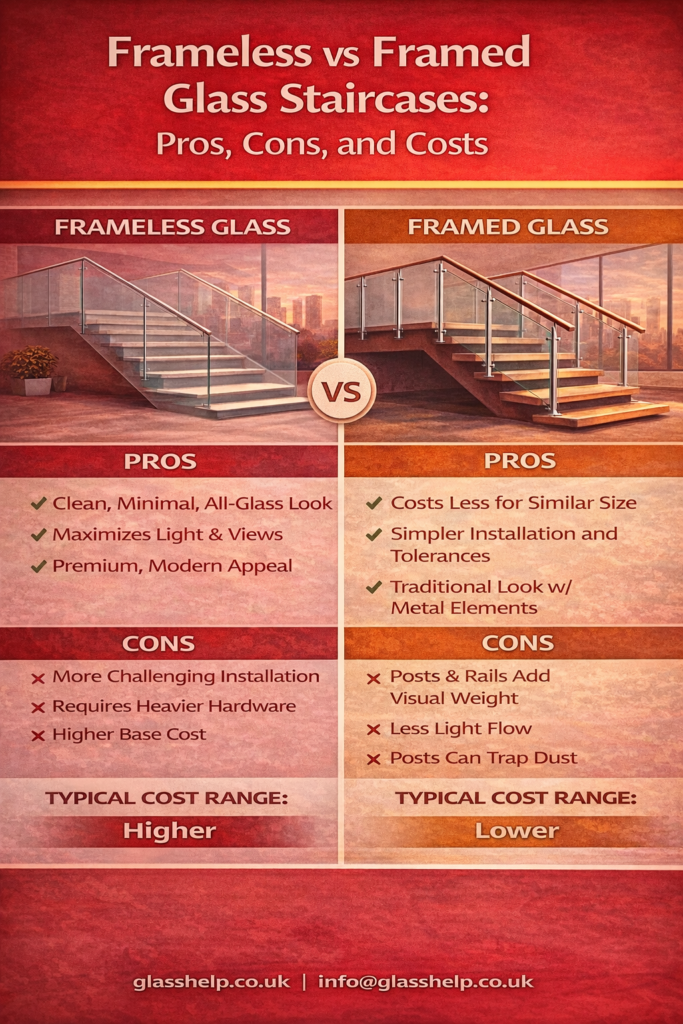
Frameless vs Framed Glass Staircases: Pros, Cons, and Costs

Dec 19, 2025

Glass staircases instantly modernize a space. They brighten interiors, open up sightlines, and create a “floating” feel that traditional spindles and bulky rails can’t match. But when you start planning a real project, the biggest decision usually isn’t “glass or not”—it’s frameless vs framed.

Both options can be safe, strong, and building-code compliant when specified correctly. The difference is how the glass is supported, how it looks day-to-day, how much it costs, and what you’ll maintain over the years.

This buyer-friendly guide explains the differences in plain English, including practical pros/cons, realistic cost drivers, and what to ask before you order.


What “frameless” and “framed” mean in real staircase builds

Frameless glass staircase (rail/balustrade)

A frameless glass staircase usually means the glass panels have minimal visible support—no chunky posts every few inches. The glass is typically held in place by:

  • Base channels (base shoe) fixed into the stair/landing structure
  • Spigots / clamps / concealed fixings, depending on the design

This delivers the cleanest “all-glass” look, but it relies on precision installation and often heavier-duty hardware. whitemetal.co.uk+1

Framed glass staircase (rail/balustrade)

A framed glass staircase has a visible supporting structure—usually:

  • Metal posts (uprights)
  • A top rail and/or side framing
  • Glass used as infill panels inside the frame

It’s still modern and premium, but the frame adds visible lines and support.


Visual impact: which looks better?

Choose frameless if you want:

  • The most open, uninterrupted view
  • Maximum light flow (especially in tight hallways)
  • A true “luxury minimal” style

Frameless is the look most people imagine when they say “glass staircase.”

Choose framed if you want:

  • A modern look with more visible structure
  • A staircase that visually “matches” other metal elements (handrails, industrial features)
  • Slightly more traditional proportions (posts can make a space feel grounded)

Safety and strength: which is safer?

When built correctly, both can be safe. The bigger difference is how they behave and what they rely on:

Frameless safety realities

  • Relies heavily on the base/channel/fixings and what they’re anchored into
  • Demands accurate alignment; small errors can show and can reduce performance
  • Often needs higher-grade hardware choices (especially outdoors)

A key point from installation guidance is that a balustrade is only as strong as what it’s fixed into—structure matters as much as glass. whitemetal.co.uk

Framed safety realities

  • The frame provides additional mechanical support and may feel sturdier to some users
  • Generally more forgiving if the building substrate isn’t perfectly flat
  • Posts/rails can simplify load transfer and installation

Bottom line: neither is “automatically safer.” Safety comes from:

  • correct glass specification (toughened/laminated where needed),
  • correct fixing system,
  • correct installation to the right loads for your location.

Maintenance: cleaning and long-term upkeep

Frameless maintenance

Pros

  • No posts to trap dust every few inches
  • The “glass wall” is easy to wipe in long runs

Cons

  • Any misalignment or unevenness is more noticeable
  • Base channels and exposed fixings need occasional inspection
  • Outdoors: you must be careful about corrosion-resistant hardware selection

Framed maintenance

Pros

  • Rails and posts can hide minor imperfections and alignment tolerances
  • Some framed systems allow easier panel replacement in modular sections

Cons

  • More surfaces to clean (posts, rails, corners)
  • If painted/powder-coated, you may eventually touch up chips/scratches

Costs: what you can realistically expect (and what drives price)

Pricing varies by layout, glass height, hardware choice, and site conditions—but it’s still useful to understand typical patterns.

A UK price guide comparing glass balustrade systems notes that framed options are typically cheaper per linear metre than frameless, while frameless systems cost more due to premium hardware and installation demands. Class Glass Limited

Typical cost pattern (UK-style guidance)

  • Framed glass balustrades: usually lower cost range
  • Frameless glass balustrades: typically higher cost range Class Glass Limited

Why frameless costs more:

  1. More expensive mounting systems (base channels, precision clamps, concealed fixings)
  2. More demanding labour/installation
  3. Higher “fit and finish” expectations (because everything is visible)

Why framed can cost less:

  1. Posts/rails can reduce reliance on heavy base channels
  2. Install tolerances are often more forgiving
  3. Simpler site conditions can reduce labour time

Practical tip: If your staircase run is complex (turns, winders, landings, angled transitions), the labour portion can rise quickly for frameless systems because alignment is everything.


Which one is best for your staircase?

Pick frameless if:

  • Your priority is the cleanest possible look
  • You have a solid substrate (concrete or properly reinforced structure)
  • You want a premium “architectural” finish and you’re okay paying more
  • You’re working with an experienced installer who does frameless systems regularly whitemetal.co.uk+1

Pick framed if:

  • You want glass + modern style but with better cost control
  • You want extra visible structure (especially for family homes or high-traffic stairs)
  • You expect simpler installation and easier future modifications
  • Your design suits posts/rails (industrial, mixed materials, classic-modern)

What to ask before you buy (avoid expensive surprises)

Use these questions when comparing quotes:

  1. What fixing system is included? (base channel, spigots, clamps, posts)
  2. What is the substrate and how will it be reinforced? (critical for frameless) whitemetal.co.uk
  3. Is the quote supply-only or supply + install?
  4. What’s included in finishing? (end caps, trims, cover plates, rail finish)
  5. What’s the plan for corners, turns, and stair angles?
  6. What warranty covers hardware corrosion and installation movement?
  7. How will the installer handle tolerances and leveling? (especially frameless)

A helpful starting point for your design choices

If you’re still comparing layouts, glass styles, and staircase configurations, start here and shortlist the look you want first. It’ll also make supplier conversations much easier:

👉 Explore glass staircase options here (use it for style + configuration planning):
https://www.glasshelp.co.uk/glass-staircase/ Glass Help


Conclusion

Frameless glass staircases deliver the cleanest, most high-end look—but they usually cost more and demand more precision in structure and installation. Framed glass staircases are often more budget-friendly, can be simpler to install, and still look modern and premium—just with visible posts/rails.

Tips

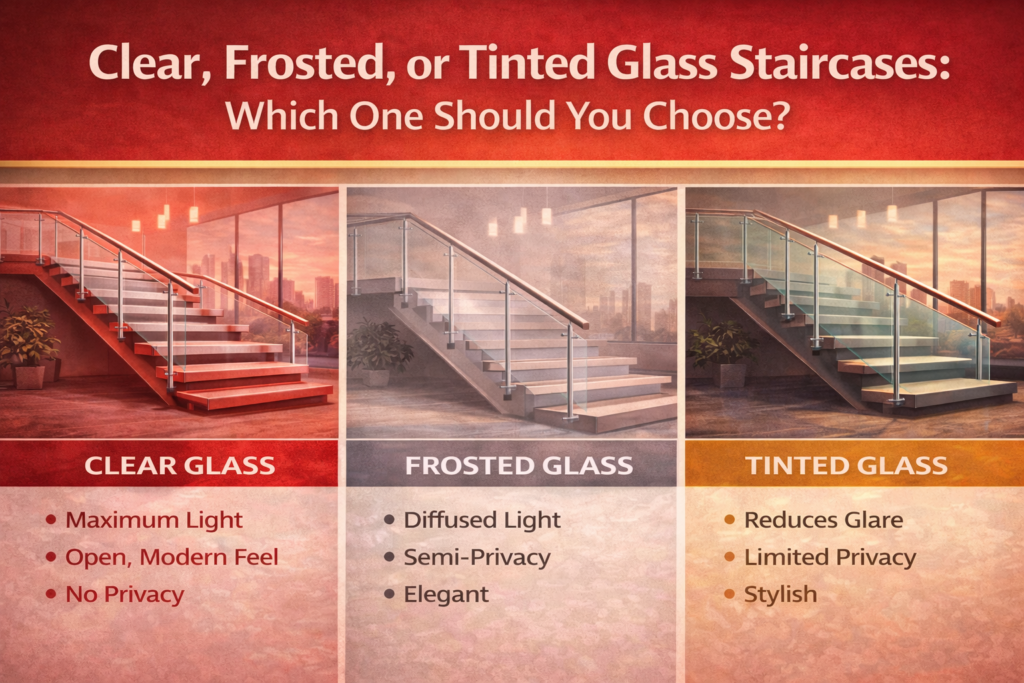
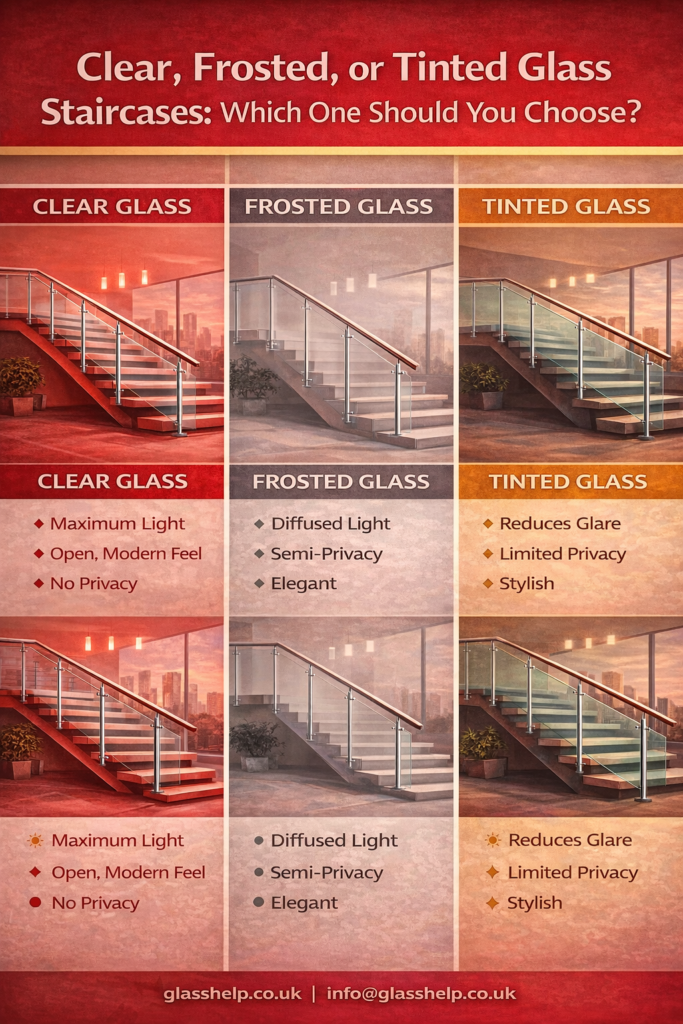
Clear, Frosted, or Tinted Glass Staircases: Which One Should You Choose?

Dec 19, 2025

Glass staircases have become one of the most popular elements in modern interior design — bringing light, openness, and architectural elegance to homes and commercial spaces. But beyond materials and safety types (like tempered or laminated glass), one of the key decisions you’ll make as a homeowner or designer is what finish of glass to choose.

Do you want crystal-clear transparency? A frosted, diffused look? Or a tinted version that adds color and reduces glare?

Each style has unique benefits and trade-offs — and the right choice depends on your functional needs, aesthetic goals, privacy requirements, and lighting conditions.

In this in-depth guide, we’ll break down everything you need to know about clear, frosted, and tinted glass staircases so you can make an informed decision for your build or renovation.


🔹 What Types of Glass Finishes Are Common in Staircases?

Before we dive into pros and cons, it’s important to understand what these finishes actually mean.

According to custom staircase and railing design experts, glass stair systems can be made using a variety of glass types including clear, frosted/etched, tinted, low-iron, and laminated glass — all of which can be safety-treated (e.g., tempered). Glass Help

Here’s how the main finishes differ:

Clear Glass

  • Transparent and unobstructed.
  • Maximizes light flow and visual openness.
  • Most common choice for minimalist, modern staircases.

Frosted Glass

  • Has a matte or translucent surface caused by sandblasting or etching. Wikipedia
  • Offers diffused light with reduced visibility.
  • Great for semi-privacy while maintaining brightness.

Tinted Glass

  • Contains colored pigments that add subtle shading or tone. kavifencing.com
  • Reduces glare and can lower heat gain.
  • Ideal for spaces with strong sunlight or where colored style is desired.

All three can be installed as part of a staircase system, whether it’s a frameless glass balustrade, a glass infill panel, or a rail system integrated with metal or timber. Glass Help


🌟 Clear Glass Staircases: Bright, Open, and Timeless

Pros of Clear Glass

  1. Maximum Natural Light
    Clear glass provides the least obstruction to daylight, making interior spaces feel larger and brighter. aisglass.com
  2. Unobstructed Views
    If you have beautiful interior architecture, outdoor scenery, or artwork, clear glass lets it shine without interruption.
  3. Modern Aesthetic
    The transparent effect supports minimalist, sleek designs — a key trend in contemporary interiors.
  4. Versatility
    Clear glass works with almost any material (wood treads, steel stringers, etc.) without adding visual weight. The Glass Railing Store

Cons of Clear Glass

  1. Visibility of Smudges & Fingerprints
    Clear panels show dust, fingerprints, and streaks more visibly than other finishes.
  2. No Privacy or Light Diffusion
    In spaces where you want a bit of discretion (e.g., staircases adjacent to busy rooms), clear glass may feel too exposed.
  3. Heat & Glare
    Without surface treatment or tint, clear glass can amplify glare under strong sunlight — which can be uncomfortable in some orientations.

Best For:

  • Open-plan living areas
  • Small spaces that need the illusion of openness
  • Modern or minimal interior styles

🌫 Frosted Glass Staircases: Subtle, Soft, and Stylish

What Is Frosted Glass?

Frosted glass gets its texture from sandblasting or chemical etching, creating a translucent surface that scatters light but obscures direct visibility. Wikipedia

This makes frosted glass an excellent choice when you want a balance between light transmission and privacy.

Pros of Frosted Glass

  1. Privacy Without Full Opacity
    Frosted glass diffuses visibility — perfect when your staircase sits adjacent to high-traffic areas. deventerprise.co.uk
  2. Soft Lighting Effects
    Light that passes through frosted glass is gentler and more evenly distributed, reducing harsh shadows or glare.
  3. Elegant Aesthetic
    The matte look adds a sophisticated, refined touch that pairs beautifully with wood, steel, or mixed-material stairs.
  4. Design Flexibility
    Frosted glass can be plain or patterned and even combined with other decorative details. TBK Metal Co., Ltd.

Cons of Frosted Glass

  1. Less Transparency
    If you want complete openness, frosted glass won’t provide the same visual continuity as clear glass.
  2. Cleaning Considerations
    The textured surface can show fingerprints and dust differently from smooth clear glass, requiring thoughtful cleaning techniques.

Best For:

  • Staircases near common areas (living rooms, kitchens)
  • Homes where privacy is important without reducing light
  • Decorative or themed interiors

🌈 Tinted Glass Staircases: Stylish, Comfortable, and Controlled

What Is Tinted Glass?

Tinted glass incorporates subtle hues — from gray to bronze, green, or even custom colors — that reduce glare and the amount of light passing through. betterglass.com

Tint isn’t just about aesthetics; it also influences thermal comfort and visual perception.

Pros of Tinted Glass

  1. Reduced Glare & Heat
    Tints minimize direct sunlight intensity, making interiors more comfortable in bright conditions. betterglass.com
  2. Added Privacy
    Tinted glass offers a degree of privacy while still keeping spaces light and open.
  3. Visual Style & Personality
    The color adds character and can tie into architectural themes or interior palettes.

Cons of Tinted Glass

  1. Reduced Light Transmission
    While tinted glass still transmits light, it doesn’t let in as much natural light as clear or frosted glass.
  2. Darkening Effect
    In rooms that already have limited light, tinted panels can make spaces feel smaller or darker.

Best For:

  • Staircases with heavy sunlight exposure
  • Interiors where glare control matters
  • Warm climates or east/west facing stair wells

🧩 How to Choose the Right Finish for Your Staircase

Choosing between clear, frosted, or tinted glass isn’t just about privacy or aesthetics — it’s about how the glass functions in your unique space. Here’s a step-by-step decision guide:

1. Assess Natural Light

  • Maximize light: Choose clear glass.
  • Diffuse intense light: Frosted glass.
  • Control glare/heat: Tinted glass.

2. Consider Privacy Needs

  • High privacy without room darkening → frosted
  • Moderate privacy with design impact → tinted
  • No privacy concerns → clear

3. Match Aesthetic Intent

  • Minimalist → clear
  • Classy & refined → frosted
  • Bold & contemporary → tinted

4. Safety First

Regardless of finish, safety glass like tempered or laminated safety glass is essential in stair applications. Choose a qualified supplier and installer to meet building codes and structural requirements.


🛠 Safety + Design: The Bigger Picture

Glass staircases do more than just look good.

They can maximize space, improve light flow, and contribute to a modern interior feel — whether it’s clear, frosted, or tinted. Combined with structural safety glass and proper installation, they also support practical everyday use without compromising on performance. Glass Help

If you’re planning or refining your staircase project, it helps to review different glass options, finishes, and configurations.

👉 For real case studies, style inspiration, and guidance on materials and installation, check out this detailed guide to glass staircase options and design considerations.
🔗 Glass staircase inspiration and typeshttps://www.glasshelp.co.uk/glass-staircase/


🏁 Final Thoughts

There’s no one “best” glass finish for every staircase — it depends on how you *use the space and what you want it to feel like.

Here’s a quick recap:

Finish TypeLightPrivacyStyleComfort
Clear Glass🌞🌞🌞🌞🌞✨ Modern, Endless LightGreat
Frosted Glass🌞🌞🌞🧿 Elegant, CalmGood
Tinted Glass🌞🌞🤝 Moderate🎨 Stylish, UniqueBest in Bright Areas

Choosing the right glass finish will enhance your staircase’s look and function — whether that’s creating a bright open space, a softly lit focal point, or a glare-controlled ascent between floors.

Tips

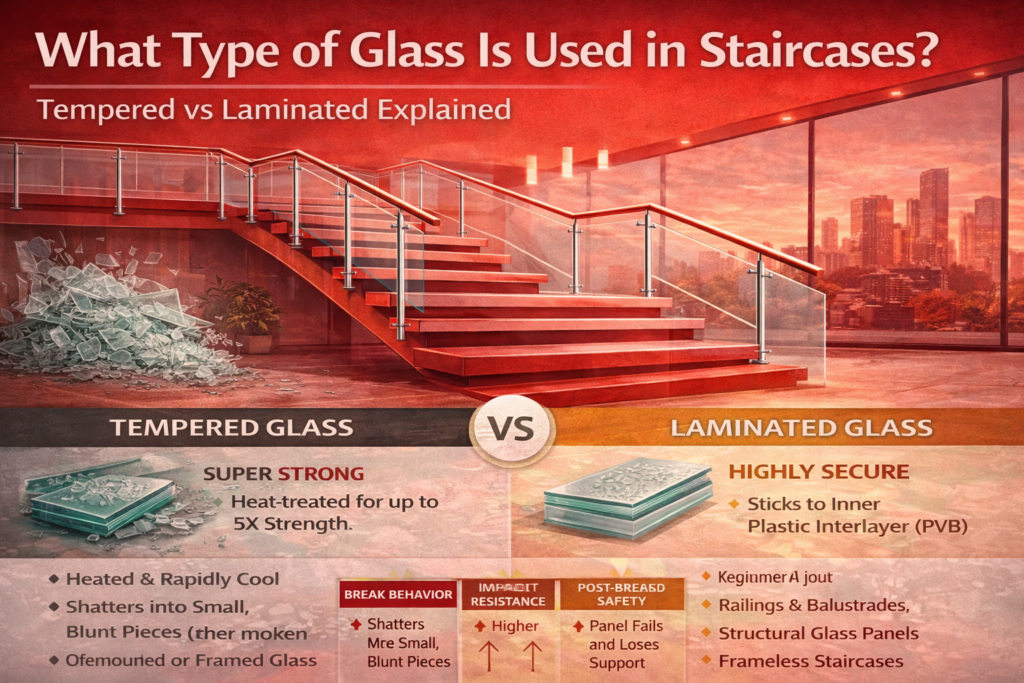
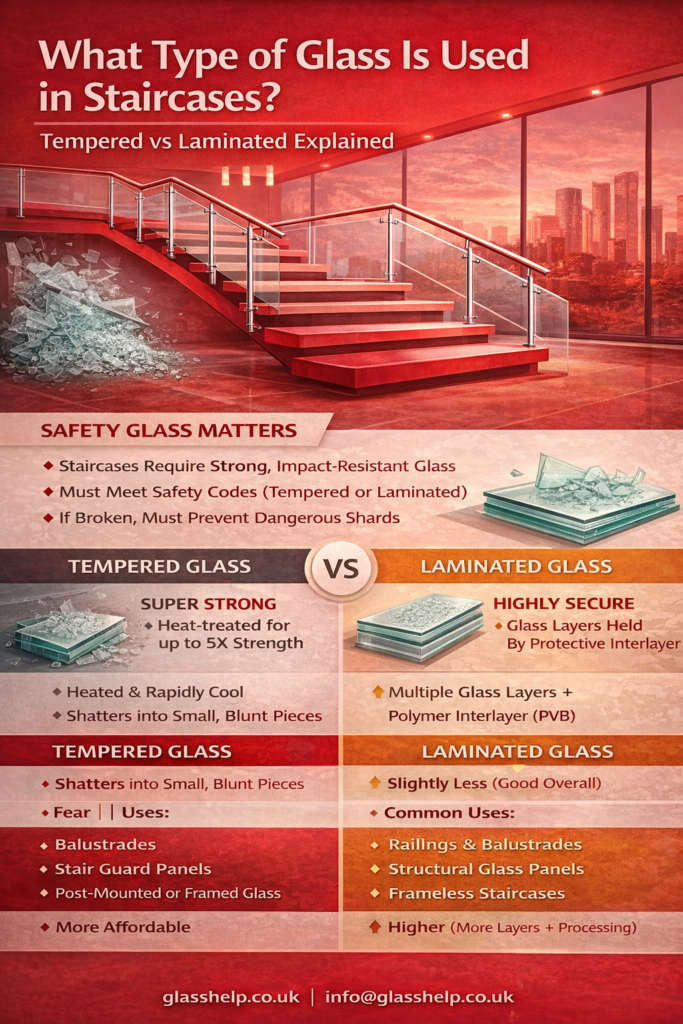
What Type of Glass Is Used in Staircases? Tempered vs Laminated Explained

Dec 19, 2025

Glass staircases are one of the most striking architectural features in contemporary interiors — offering light, openness, and a sleek sense of modernity. But when it comes to safety, performance, and longevity, the type of glass you choose matters just as much as the design itself. Staircases aren’t just decorative; they’re structural and must meet strict safety criteria. Selecting the right glass — especially between tempered and laminated options — ensures both beauty and peace of mind.

In this comprehensive guide, we explore what glass types are most commonly used in staircases, why they matter, how they differ, and when each is the best choice.


1. Why Safety Glass Is Essential in Staircases

Glass used in staircases isn’t regular glass. Regular annealed glass (the kind you find in picture frames or windows) can shatter into sharp shards that pose serious risk if broken. For staircases, safety glass is required by building codes because:

  • It must withstand repeated impact and daily use
  • It should resist cracking under stress
  • If it breaks, it must fail in a way that minimizes injury risk

The two main safety glass types used in staircases are tempered glass and laminated glass — both engineered to be far safer than ordinary glass. Wikipedia


2. Tempered Glass: Strength and Break-Safety

Tempered glass — also known as toughened glass — is a form of safety glass that has been heat-treated to increase its strength significantly compared to regular glass. Wikipedia

How Tempered Glass Is Made

Tempered glass is manufactured by:

  1. Heating annealed (standard) glass to about 600–650 °C
  2. Rapidly cooling it with blasts of air

This process creates compressive stress on the surface and tensile stress inside, dramatically increasing its strength. Wikipedia

Key Characteristics

  • Up to 4–5× stronger than standard glass of the same thickness
  • If broken, shatters into small blunt pieces, significantly reducing injury risk compared with sharp shards
  • Ideal for high-impact applications such as stair railings and balustrades
  • Cannot be cut or re-worked after tempering

These attributes make tempered glass a robust, widely used choice in staircases — particularly where strength and resistance to impact matter most. Wikipedia

Common Uses in Staircases

  • Balustrades and guard panels
  • Stair railing infills
  • Frameless or post-mounted stair panels

Most modern glass stair installations start with tempered glass as the baseline. The Glass Railing Store


3. Laminated Glass: Safety and Structural Integrity

Laminated glass is another type of safety glass, but instead of relying solely on heat treatment, it is made by sandwiching multiple glass layers together with one or more polymer interlayers, typically polyvinyl butyral (PVB). Wikipedia

How Laminated Glass Is Made

Laminated glass panels are formed by:

  1. Placing two (or more) sheets of glass together
  2. Inserting plastic interlayer(s) between them
  3. Applying heat and pressure to bond the layers into a single panel

When laminated glass breaks, the interlayer holds the fragments in place — preventing dangerous shards from falling away. Wikipedia

Key Advantages

  • Retains overall structure even when cracked, which reduces the risk of falls or penetration
  • Offers improved sound insulation
  • Can be combined with tempered glass layers to maximize both strength and holding power

For staircases — especially where the glass might be used for treads, major walkable components, or unframed panels — laminated glass provides a second line of safety. GlassWalk


4. Tempered vs Laminated Glass: Direct Comparison

Both tempered and laminated glass are categories of safety glass, but they serve different purposes depending on how the staircase is constructed.

FeatureTempered GlassLaminated Glass
Break BehaviorShatters into small blunt piecesPieces stick to interlayer
Impact ResistanceHigherGood, slightly less than tempered alone
Safety After BreakagePanel fails and loses supportRemains intact as a barrier
Typical UseRailings, balustradesStructural panels, stair treads, high-safety areas
CostMore affordableHigher due to extra materials & processing

Quick rule: Tempered glass excels at resisting impact, while laminated glass excels at maintaining enclosure and preventing pieces from falling away.


5. When Should You Use Each Type in Staircases?

A. Tempered Glass — Best For

  • Balustrade panels with posts or handrails
  • Panels not intended to be walked on
  • Areas where strength and resistance to knocks are key

Most designers choose tempered glass for railing balustrades because it balances safety, strength, and cost effectively. The Glass Railing Store

B. Laminated Glass — Best For

  • Glass treads or steps
  • Frameless installations where there’s no metal structure to catch broken glass
  • High-use areas where broken glass should remain intact rather than releasing pieces

Architectural glass stair treads and high-risk zones often use tempered laminated constructions — where tempered glass sheets are laminated together — providing the best of both worlds. GlassWalk

This “hybrid” approach is especially common for invisible stringer or frameless systems, where safety and continuous surface performance are paramount.


6. Other Glass Variants That May Be Used

While tempered and laminated glass dominate staircase applications, here are some additional variants worth knowing:

Low-Iron Glass

Often used for luxury staircases where clarity is paramount. It has less of the greenish tint seen in standard glass, offering ultra-clear views. kavifencing.com

Frosted or Etched Glass

Used where privacy or decorative aesthetics are desired without compromising safety. in.saint-gobain-glass.com

Tinted or Coloured Glass

Adds style and reduces glare — though it behaves as tempered or laminated safety glass at its core. in.saint-gobain-glass.com


7. Glass Thickness and Building Codes

Building codes generally require safety glass for stairs and set minimum thicknesses depending on panel size and application. For example, many frameless balustrade systems start at 10–12 mm minimum thickness. Mannlee –

For stair treads and heavier structural panels, thicker laminated safety glass (often with a combined thickness of 21.5 mm or more) is common in residential and commercial builds. Grand Design Stairs

Always check with your local codes and a structural engineer before specifying glass — it not only impacts safety, but affects long-term performance and liability.


8. Practical Considerations for Buyers and Designers

When selecting glass for your staircase, here are some practical questions to guide your choice:

✔ How will the glass be supported?

  • With posts or a metal frame → Tempered glass may suffice
  • Frameless or structural glass treads → Laminated (often tempered laminated)

✔ Is the glass likely to experience high impact?

  • Choose tempered glass for impact resistance
  • Choose laminated glass for post-break safety

✔ What is your aesthetic preference?

  • Clear and minimalist → Low-iron tempereds
  • Decorative or privacy → Frosted/etched laminates

✔ What’s your budget?

  • Pure tempered glass tends to cost less
  • Laminated — especially thicker panels — cost more but offer safety value

Professional installers and designers always balance code, budget, and aesthetics — and most modern projects mix tempered and laminated in different parts of the same staircase.


9. Glass Staircases in Context

Glass doesn’t just serve a functional purpose in stairs — it becomes a defining design element. Whether it’s a frameless floating staircase, a sleek glass balustrade, or a fully transparent stair structure paired with metal or timber, glass choices directly impact the look, feel, and performance of your staircase project.

👉 If you want examples or inspiration on how different glass types come together in stunning staircase designs, check out this comprehensive guide to glass staircases for insights on materials, styles, and specifications.
🔗 Glass staircase design and glass selections explainedhttps://www.glasshelp.co.uk/glass-staircase/


Conclusion

When it comes to staircases, no ordinary glass will do. Tempered and laminated glass are both engineered safety options that offer strength, durability, and peace of mind — but they behave differently:

  • Tempered glass is highly impact-resistant and shatters into small safe pieces — great for balustrades.
  • Laminated glass holds together when broken — ideal for structural panels and high-safety areas.

By understanding the strengths of each, you can make smart design and specification decisions that satisfy both safety standards and your visual goals.

Tips

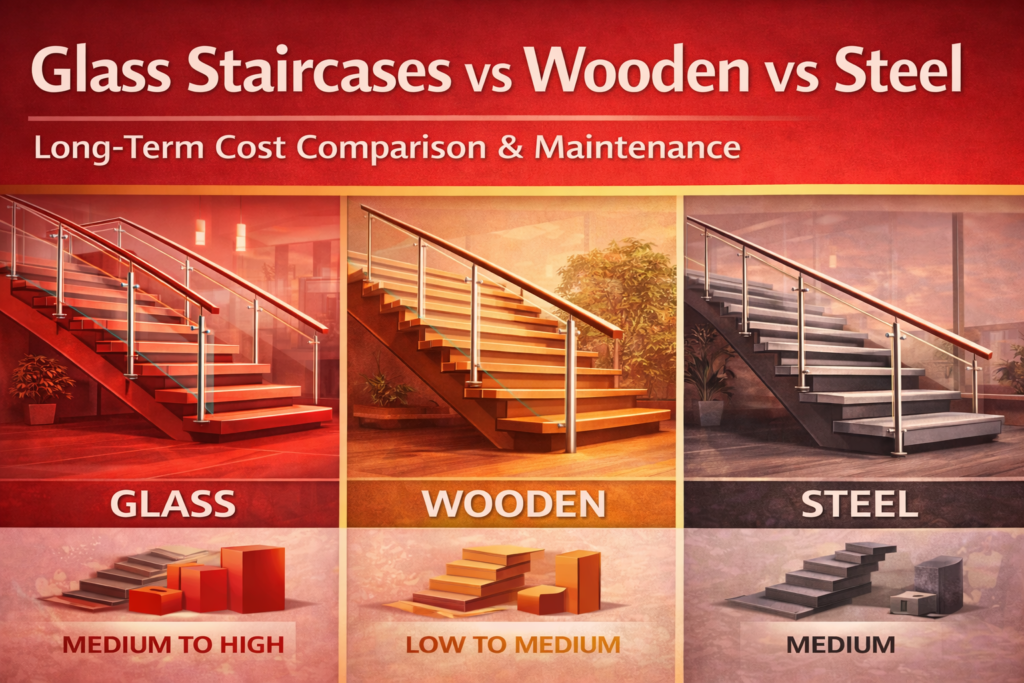
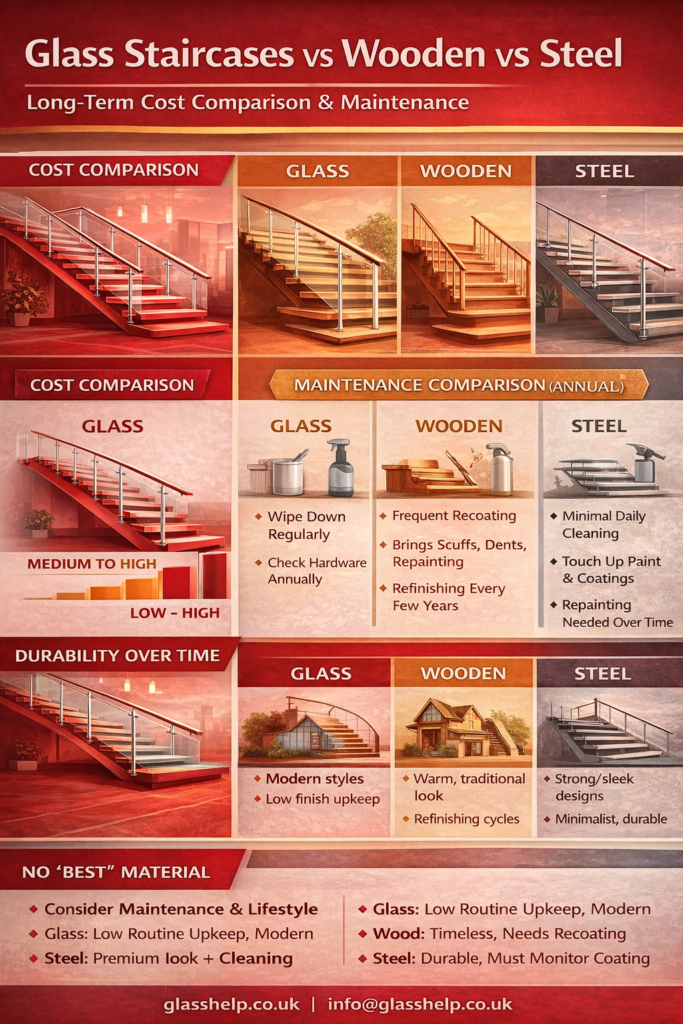
Glass Staircases vs Wooden vs Steel: Long-Term Cost and Maintenance Comparison

Dec 19, 2025

Choosing a staircase is not just a design decision — it’s a 10–30 year ownership decision. The material you choose affects maintenance workload, long-term costs, durability, and how the staircase ages in real homes (kids, pets, wet shoes, moving furniture) and in commercial spaces (high footfall, cleaning teams, stricter inspections).

This guide compares glass vs wood vs steel staircases with a practical focus on what you’ll spend over time and what you’ll need to maintain — not just what looks good on day one.


The quick takeaway (for most buyers)

  • Wood often has the lowest entry cost and feels warm, but it typically has the highest ongoing “finish” maintenance (scratches, dents, refinishing, repainting/staining).
  • Steel is strong and can last decades, but long-term cost depends heavily on corrosion protection (especially outdoors/coastal areas) and paint/coating upkeep.
  • Glass (usually glass balustrades/panels, sometimes glass treads in premium builds) can be low-maintenance day-to-day, but it may bring higher upfront cost and higher “replacement cost” if a panel is damaged.

If you’re planning a modern look with maximum light, compare options and configurations on this glass staircase page (it also helps you understand how thickness and glass type choices affect cost). Glass Help


1) What “long-term cost” actually includes

When people compare staircase prices, they often compare only the build/installation quote. A better comparison is lifecycle cost, which includes:

  1. Upfront cost (materials + fabrication + install)
  2. Routine cleaning (time and products)
  3. Periodic maintenance (recoating wood, repainting steel, replacing seals/hardware)
  4. Repairs (chips, cracks, squeaks, loose fixings)
  5. Major refresh (full refinish / major repaint / panel replacement)
  6. Downtime disruption (especially for businesses)

A common way homeowners meet surprise costs is during renovation cycles — stairs often need updates during broader refurb work. UK renovation cost guidance can help you benchmark what “staircase work” tends to cost when updates become necessary. MyJobQuote


2) Upfront cost comparison (what typically drives it)

Glass staircases (usually: glass balustrades + metal/wood structure)

Cost drivers

  • Glass type (toughened/laminated), thickness, edge finishing
  • Hardware system (frameless channels, posts, clamps)
  • Custom fabrication and site measuring
  • Higher precision fitting (alignment matters visually)

Reality check
Most homes don’t use all-glass structural treads. The common “glass staircase” look is glass side panels / balustrades paired with timber or steel strings and treads — often a smart balance of cost + style. Glass Help

Wooden staircases

Cost drivers

  • Timber species (softwood vs hardwood)
  • Finish quality (painted, stained, clear lacquer)
  • Joinery complexity (winder stairs, curved details)
  • Balustrade style

Wood can be economical, but premium hardwood and bespoke joinery can climb quickly.

Steel staircases

Cost drivers

  • Steel grade, fabrication complexity, welding time
  • Coating system (powder coat, paint, galvanizing)
  • Design style (floating, mono-stringer, industrial)

Steel often becomes cost-effective when you need strength in a compact design, but fabrication and finishing can add up.


3) Maintenance workload: what you actually do year-to-year

Glass: low effort cleaning, periodic checks

Typical routine

  • Regular wipe-down to reduce fingerprints, dust, streaks
  • Occasional deeper clean for corners, clamps, handrails
  • Annual check: fixings tight, seals intact, no chips on edges

Good care advice usually boils down to cleaning + being mindful when moving bulky items + checking fixings periodically. stairpartsonline.co.uk

Common long-term costs

  • Replacing worn rubber gaskets or protective pads (small cost)
  • Hardware refresh if exposed to moisture (bathroom zones / near pool areas)
  • Panel replacement if damaged (rare, but costly compared to wood scratches)

Who glass suits best

  • Buyers who want bright, modern spaces and prefer cleaning over refinishing
  • Homes where you’ll value visibility and “open” feel long-term

Wood: “finish maintenance” is the big one

Typical routine

  • Sweep/vacuum often (grit scratches finishes)
  • Spot clean spills quickly (especially on stained wood)
  • Protect high-wear areas (runners, mats, pads on furniture)

Periodic maintenance

  • Recoating or refinishing depending on wear:
    • Painted stairs show scuffs and chips
    • Clear-coated wood shows scratches and dull patches
    • Stained wood may need touch-ups where it wears through

Common long-term costs

  • Refinishing is the classic big-ticket maintenance event for wood stairs over the years (especially in family homes).

Who wood suits best

  • Buyers who want warmth and don’t mind periodic refresh cycles
  • Homes where the staircase is likely to be updated as part of décor changes

Steel: minimal daily work, but coatings matter

Typical routine

  • Dust and wipe down (especially matte finishes that show marks)
  • Keep moisture under control (wet shoes + trapped water near fixings)

Periodic maintenance

  • Inspect coating for chips/scratches (they can become rust points)
  • Touch up exposed steel, especially on edges and weld zones
  • Outdoor or coastal installs: more frequent checks

Common long-term costs

  • Repainting or recoating over time, depending on environment and finish system
  • Rust remediation if maintenance was delayed

Who steel suits best

  • Buyers who want strong, slim designs
  • Commercial spaces where durability matters and maintenance can be scheduled

4) Durability over time: how each material “ages”

Glass aging pattern

  • Looks “new” for a long time if cleaned regularly
  • Can show fingerprints and smears easily (more visible in strong daylight)
  • Hardware condition often determines long-term appearance

Wood aging pattern

  • Develops character, but also:
    • squeaks (movement)
    • dents (impact)
    • finish wear on nosings (front edge of treads)
  • Very fixable, but maintenance is hands-on

Steel aging pattern

  • Structurally stable
  • Appearance depends on coating system:
    • powder coat: durable but chips can be visible
    • paint: easy touch-ups but may need rework later

5) Long-term cost scenarios (realistic examples)

Scenario A: Busy family home (kids/pets)

  • Wood: higher chance of dents/scratches → refinishing sooner
  • Glass: frequent cleaning, but less “wear and tear” damage from daily use
  • Steel: durable, but watch for coating chips from toys/furniture impacts

Scenario B: Rental property

  • Wood: repairs are common; refinishing cost can appear between tenancies
  • Steel: robust; touch-up paint is manageable
  • Glass: looks premium, but damage events (rare) can be expensive

Scenario C: Commercial / high footfall

  • Steel often wins for structural resilience
  • Glass works well for balustrades if installed to spec and maintained (cleaning schedules)
  • Wood can look great but may show wear quickly unless well protected

6) How to choose: a practical checklist

Choose GLASS if you want:

  • Maximum light and modern style
  • Lower “finish maintenance” than wood
  • A staircase that stays visually consistent for years
    Start with a configuration review on this glass staircase page to understand panel types, thickness options, and what typically affects pricing. Glass Help

Choose WOOD if you want:

  • Warmth, classic feel, and easy future style changes
  • You don’t mind refinishing cycles (or you plan a runner anyway)

Choose STEEL if you want:

  • Structural strength, slim profiles, and long service life
  • You’re willing to monitor coatings (especially in damp/outdoor settings)

7) Buyer tips to reduce long-term costs (any material)

  • Plan for cleaning access (especially glass corners and clamps)
  • Protect high-wear zones (tread nosings, landing edges)
  • Specify the right finish for your lifestyle:
    • wood: durable topcoat, darker stain hides marks
    • steel: good coating system for environment
    • glass: choose hardware that resists corrosion where needed
  • Do an annual “stair MOT”: check looseness, wobble, noises, and any damage (simple inspections prevent expensive fixes later). stairpartsonline.co.uk

Conclusion

There isn’t one “best” staircase material — but there is a best choice for your maintenance tolerance and long-term budget:

  • Wood = ongoing refinishing potential + warmth
  • Steel = long structural life + coating upkeep
  • Glass = premium look + cleaning + occasional hardware/panel risk

If you tell me whether this is UK home vs commercial, indoor vs outdoor, and your preferred style (floating / closed string / industrial / minimalist), I’ll recommend the most cost-efficient build approach and the best “low-maintenance” spec.

Tips

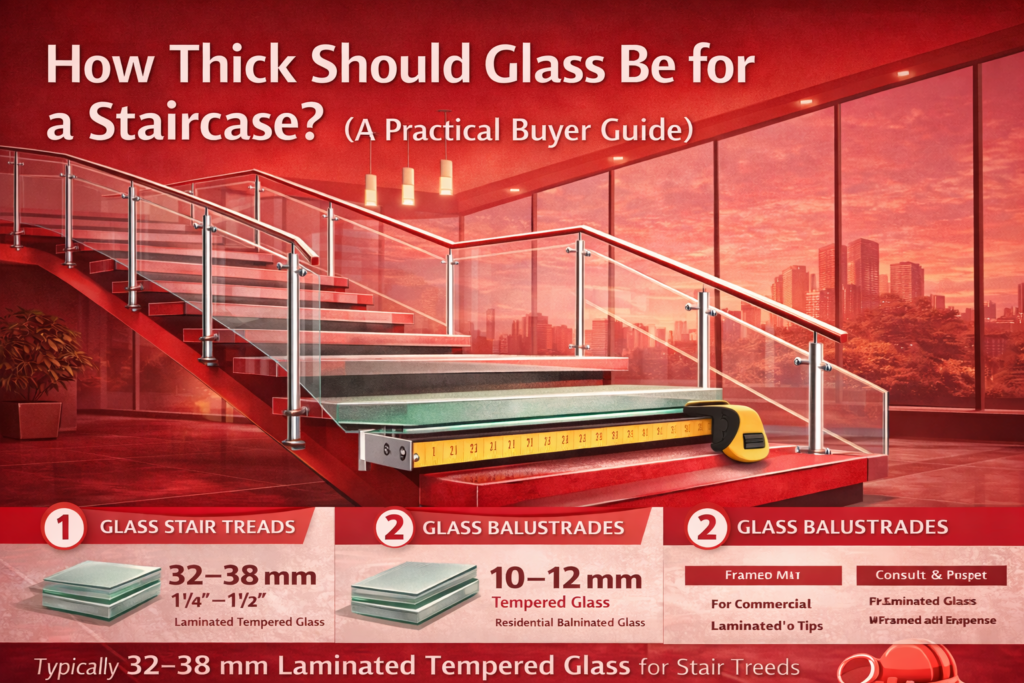
How Thick Should Glass Be for a Staircase? (A Practical Buyer Guide)

Dec 18, 2025

Glass staircases and glass balustrades bring a dramatic sense of space, light, and modern elegance to both residential and commercial interiors. But beyond their aesthetic appeal, the thickness of the glass used in stair components — whether for treads, balustrades, or guards — is one of the most critical decisions you’ll make as a buyer, designer, or homeowner.

Choosing the right thickness impacts safety, structural performance, code compliance, budget, and long-term durability. This practical guide breaks down industry standards, real-world examples, building code insights, and actionable recommendations to help you make the right choice.


1. Why Glass Thickness Matters

Glass isn’t just transparent decoration — it carries people’s weight, resists impacts, and must meet structural and legal requirements. The thickness of glass directly affects:

  • Load-bearing capacity
  • Impact resistance and fracture behavior
  • Stability under foot traffic or lateral loads
  • Compliance with safety standards and building codes

For example, glass stair treads must carry live loads safely without cracking. Likewise, glass balustrades must withstand lateral force from leaning or accidental impact. Insufficient thickness increases risk, while excessive thickness drives cost and may require heavier supporting hardware.


2. Standard Thicknesses for Glass Stair Components

There’s no universal single thickness — it varies depending on the part of the staircase and how the glass is used. Below are common real-world benchmarks backed by industry sources.


🔹 Glass Stair Treads

Glass stair treads — the horizontal surfaces you walk on — require the greatest thickness because they directly support body weight.

  • Most engineered glass stair treads use laminated tempered glass manufactured from multiple plies.
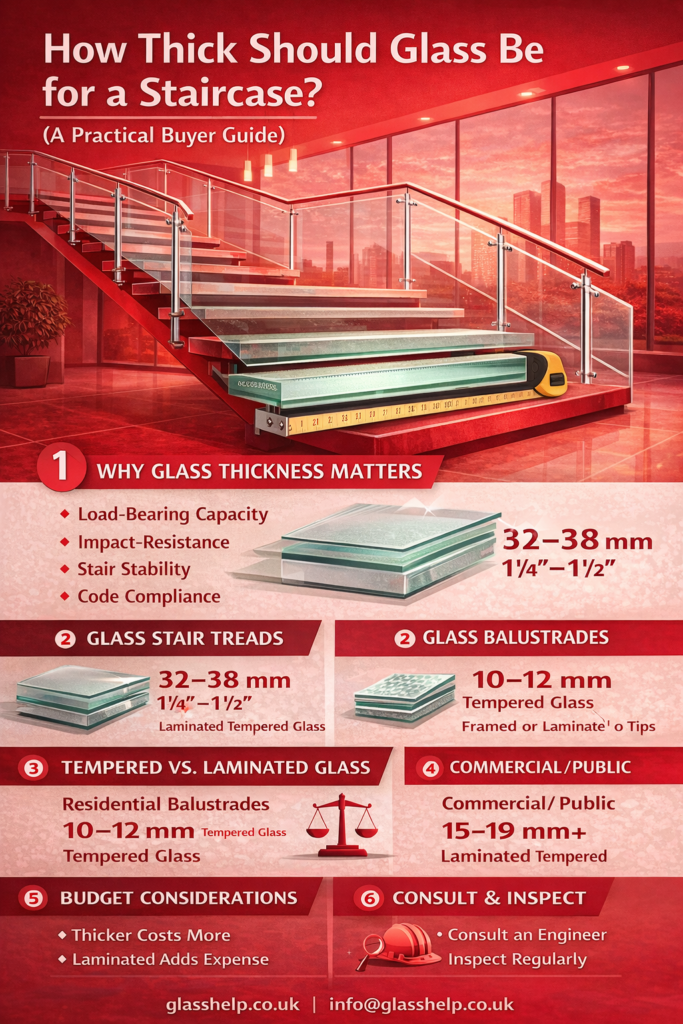
  • A common thickness range for safe, walkable glass treads is 32 mm to 38 mm (about 1¼″ to 1½″) or more, depending on span and support method. GlassWalk+1
  • Lamination ensures that if the glass cracks, shards remain bonded to the interlayer instead of falling away — a critical safety feature. Wikipedia

Because stair treads bear full foot traffic and often have spans without center supports, this thickness combines strength with controlled elasticity to resist cracking under impact.


🔹 Glass Balustrades & Guard Panels

Glass balustrades (railings alongside stairs) and guard panels protect against falls. Their thickness is determined by height, span, and whether the glass is structural or supported by posts/rails.

Common thicknesses found in practice include:

  • 10mm–12mm tempered glass for typical residential stair balustrades. GRT Building+1
  • 12mm tempered glass is a frequently specified choice for moderate loads where posts or handrails assist support. West Wholesale
  • 15mm–19mm glass for frameless or structural systems without additional framing. Favorlab Glass+1
  • 17.5mm laminated glass when a continuous top rail is not used — because lamination helps hold fragments in place. Park Glass

In commercial or public areas with heavy use, thicknesses of 20mm+ are often specified to meet regulatory loads. Balconette


🔹 Comparison (Residential vs Commercial)

ApplicationTypical Glass ThicknessType
Residential balustrade10–12 mmTempered glass
Frameless balustrade15–19 mmTempered or laminated
Glass stair tread32–38 mmLaminated tempered
Commercial guard19–25 mm+Laminated tempered

These ranges balance performance, aesthetics, and safety code requirements across settings.


3. Tempered vs Laminated: Why It Matters

Glass thickness isn’t the only factor — type of glass alters how thickness performs.

🔸 Tempered Glass

Tempered (or toughened) glass is heat-strengthened, making it much more impact-resistant than ordinary float glass. If broken, it crumbles into small, relatively blunt pieces, reducing injury risk.

For balustrades, 10 mm tempered glass is often the minimum starting point for residential stairrails. Cypress railings & Gates

🔸 Laminated Glass

Laminated glass sandwiches one or several interlayers (such as PVB) between glass plies. This means if the glass breaks, fragments stay bonded, and the panel remains a barrier — crucial for treads and unframed guards.

For steps and high-stress applications, multi-layer laminated glass with total thickness often beyond 30 mm is recommended. Grand Design Stairs


4. Building Codes & Safety Standards

Different regions have building code references that indirectly influence thickness decisions by specifying overall performance requirements.

🔹 Guard & Railing Codes

Building codes (such as the International Building Code in the U.S.) set performance criteria such as:

  • Guards must resist specified lateral loads
  • Minimum glass panel thickness is typically ¼ inch (6.4 mm) for safety glazing, but thicker is usually required based on panel size and loading. Glass Magazine
  • Handrail heights are governed separately but influence how the glass panel must perform under load. GRECO | Architectural Metal Products

Even when codes specify minimums, engineers often require heavier glass to satisfy both strength and deflection limits in real installations.


5. How to Choose the Right Thickness — Practical Steps

Here’s a simple process to help you decide:

🔹 Step 1: Identify the Component

Are you specifying:

  • Stair treads?
  • Balustrade panels?
  • Guardrail glass?
  • Frameless structural walls?

Each type has different requirements — thicker for treads, more moderate for standard railings.

🔹 Step 2: Consider Usage & Traffic

  • Private residence: Moderate use — 10–12 mm glass commonly suffices for balustrades.
  • Public/commercial: Higher loads demand thicker or laminated designs.

🔹 Step 3: Account for Span & Support

Wider unsupported spans require thicker glass or additional support brackets/rails to control deflection and stress.

🔹 Step 4: Consult Building Codes & an Engineer

Codes provide minimums but engineered thickness ensures safety and compliance. Always consult with a structural professional and local code authority before ordering glass.


6. Real Uses: Interior Glass Walls & Stair Integration

Glass staircases often integrate with interior elements like glass walls or partitions to create cohesive, light-filled spaces. When planning such integrated features, end-to-end coordination matters.

For example, if you’re pairing glass stair components with glass partition systems or walls — such as in open-plan offices or modern homes — consider matching thickness standards and use cases.


7. Budget Considerations: Thickness vs. Cost

Glass thickness influences cost significantly:

  • Thicker and laminated glass: Higher material cost + heavier installation hardware
  • More layers + anti-slip finishes: Adds to fabrication time and expense
  • Custom shapes/curves: Demand higher skilled labor and precision

As a rule, thicker glass means increased safety and performance but also requires careful budget planning.


8. Maintenance, Inspection & Lifespan

Glass of proper thickness, once installed, requires minimal maintenance:

  • Wipe with mild glass cleaner
  • Inspect anchor points and fixings annually
  • Check for chips or edge damage which can reduce strength

Glass doesn’t “wear out” like wood, but impact damage or corrosion at fixings can compromise long-term performance.


Conclusion

Choosing the right glass thickness for a staircase requires careful consideration of application type, loading, code requirements, and safety. As a guideline:

  • Glass stair treads: Typically 32–38 mm laminated tempered glass
  • Balustrades/guards: 10–12 mm or more, increasing for frameless or higher-load applications
  • Commercial/Public spaces: Often 15 mm+ laminated or multi-layer systems

Beyond numbers, always rely on structural engineers and certified installers to confirm thickness based on site conditions and local codes. This ensures your glass staircase remains as stunning as it is safe.

Tips

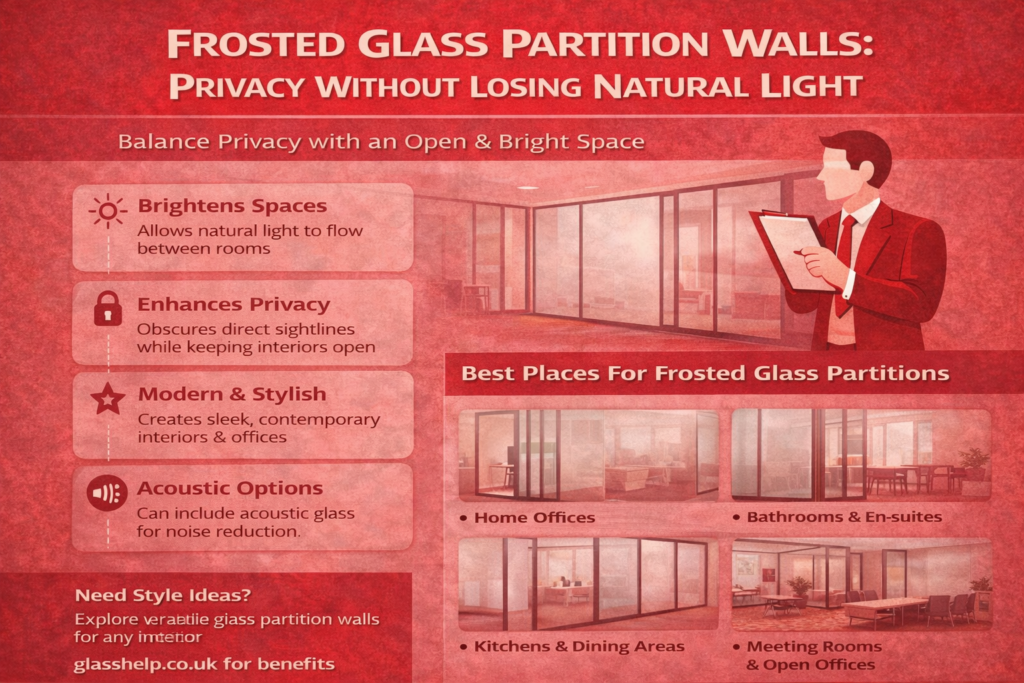
Frosted Glass Partition Walls: Privacy Without Losing Natural Light

Dec 18, 2025

Modern interiors increasingly demand privacy without isolation. Whether in homes, offices, clinics, or rental properties, people want clearly defined spaces that still feel open, bright, and connected. This is exactly where frosted glass partition walls excel.

In this in-depth guide, you’ll learn what frosted glass partition walls are, how they work, where they perform best, and how to choose the right solution for your space — all while preserving precious natural light.


What Are Frosted Glass Partition Walls?

Frosted glass partition walls are internal glazed walls made from etched, sandblasted, acid-etched, or film-treated glass that diffuses light while obscuring direct visibility. Unlike solid walls, frosted glass allows daylight to pass through, but unlike clear glass, it provides visual privacy.

They are widely used in:

  • Homes (kitchens, bathrooms, home offices)
  • Offices and meeting rooms
  • Clinics and healthcare spaces
  • Rental properties
  • Commercial interiors

Because they combine light transmission with discretion, frosted glass partitions have become a preferred alternative to solid walls and curtains.


Why Frosted Glass Is the Ideal Balance Between Light & Privacy

1. Natural Light Still Flows

One of the biggest drawbacks of traditional partition walls is light loss. Frosted glass solves this by scattering light rather than blocking it, helping to brighten internal rooms, hallways, and deep-plan layouts.

Interior design experts consistently highlight frosted glass as a way to maintain brightness while defining space — particularly in homes where natural light is limited.
(Source: Ideal Home – Frosted Glass in Interiors, a UK interior design blog)


2. Privacy Without Feeling Closed-In

Unlike curtains, blinds, or solid walls, frosted glass:

  • Maintains a sense of openness
  • Prevents awkward eye contact
  • Creates psychological separation without physical heaviness

This makes it ideal for:

  • Home offices
  • En-suite bathrooms
  • Meeting rooms
  • Shared living areas

House & Garden notes that frosted and textured glass is increasingly used to create “soft privacy” rather than full visual separation, especially in modern homes.
(Source: House & Garden – Using Frosted Glass in Interior Design)


3. A Cleaner, More Modern Aesthetic

Frosted glass partitions suit:

  • Contemporary interiors
  • Minimalist design
  • Industrial and Scandinavian styles

They provide a sleek architectural look without clutter, heavy framing, or fabric treatments that collect dust and require maintenance.


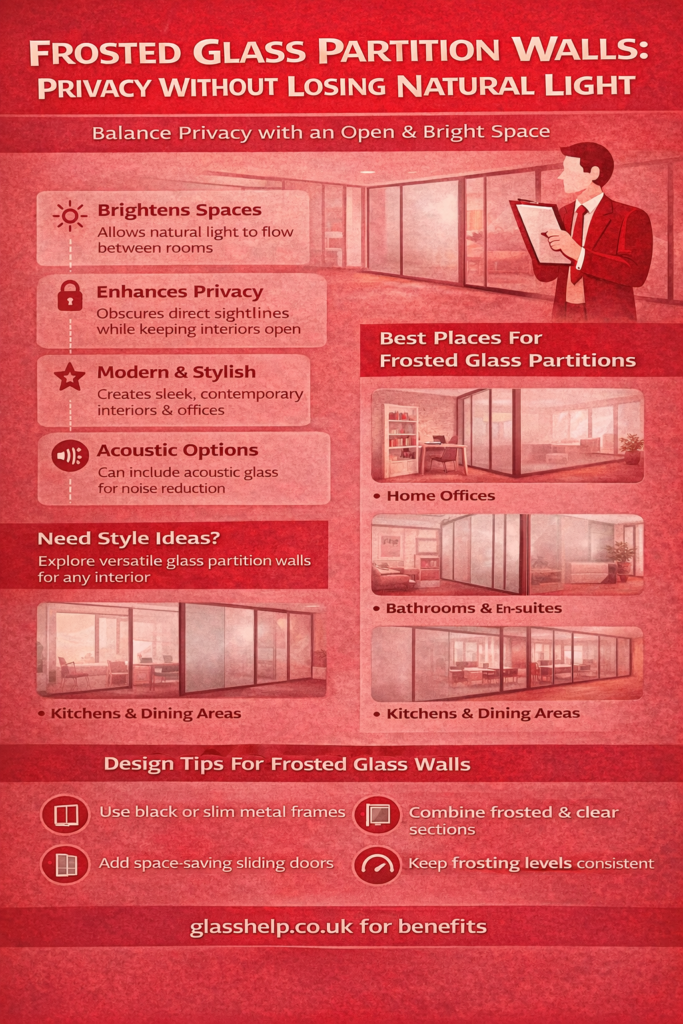
Where Frosted Glass Partition Walls Work Best

1. Kitchens & Dining Areas

Open-plan kitchens are popular, but not everyone wants cooking mess and steam on full display. Frosted glass partitions allow:

  • Light to pass between kitchen and dining areas
  • Odours and noise to be partially contained
  • Visual separation without closing the kitchen off

This creates a semi-open layout — one of the fastest-growing interior trends.


2. Home Offices

With remote work now permanent for many households, privacy matters. Frosted glass walls:

  • Reduce visual distraction
  • Preserve daylight
  • Maintain connection to the rest of the home

They’re particularly effective when paired with acoustic glass or framed systems.


3. Bathrooms & En-Suites

Frosted glass is a classic choice for bathrooms because it:

  • Provides full privacy
  • Handles moisture well
  • Allows natural light into windowless spaces

It’s frequently used for en-suite partitions, shower screens, and bathroom dividers.


4. Offices & Commercial Spaces

In professional environments, frosted glass partitions:

  • Improve confidentiality
  • Maintain transparency and openness
  • Reinforce brand professionalism

They are commonly used in meeting rooms, consultation rooms, and shared offices.

For design inspiration and system options, explore modern glass partition walls that balance compliance, privacy, and aesthetics.


Types of Frosted Glass Used in Partition Walls

Not all frosted glass is the same. Choosing the right type affects durability, appearance, and cost.

1. Acid-Etched Glass

  • Smooth, consistent finish
  • Resistant to fingerprints
  • Premium appearance

Often used in high-end residential and commercial interiors.


2. Sandblasted Glass

  • Slightly textured feel
  • Excellent privacy
  • Can show marks if not sealed

Common in bespoke and decorative designs.


3. Frosted Film (Applied to Clear Glass)

  • Cost-effective
  • Removable or changeable
  • Ideal for rentals or temporary layouts

A practical option where permanent modification isn’t desirable.


4. Patterned or Gradient Frosted Glass

  • Combines clear and opaque areas
  • Allows partial visibility where needed
  • Highly customisable

Popular in offices and design-led homes.


Frosted Glass vs Clear Glass Partitions

FeatureFrosted GlassClear Glass
PrivacyHighLow
Light TransmissionHighVery High
Visual OpennessModerateMaximum
MaintenanceEasyEasy
Best UsePrivate zonesOpen collaboration

Frosted glass is ideal when privacy is essential but darkness is not an option.


Acoustic & Practical Considerations

While frosted glass blocks sightlines, it doesn’t automatically block sound. If noise control matters:

  • Choose laminated or acoustic glass
  • Consider double-glazed partition systems
  • Ensure proper seals around frames and doors

Acoustic performance depends on the entire partition system, not just the glass finish.


Safety & Building Considerations

Frosted glass partitions must still comply with safety standards:

  • Use toughened or laminated safety glass
  • Apply manifestation markings if required
  • Ensure correct fixing and framing

Professional installers ensure both safety and regulatory compliance — especially important in offices, rentals, and public spaces.


Cost Considerations

Frosted glass partitions generally cost more than basic stud walls but offer:

  • Better light distribution
  • Higher perceived value
  • Improved aesthetics
  • Lower long-term maintenance

Costs vary depending on:

  • Glass type
  • Thickness
  • Framing
  • Door systems
  • Installation complexity

They are often considered a design investment rather than a purely functional wall.


Frosted Glass in Rental Properties

Landlords increasingly choose frosted glass partitions because they:

  • Improve layout flexibility
  • Increase rental appeal
  • Don’t permanently darken spaces

Removable frosted films or modular glazed systems are especially popular in rental settings where reversibility matters.


Design Tips for Frosted Glass Partition Walls

✔ Use black or slim metal frames for a modern look
✔ Combine frosted panels with clear upper sections for added light
✔ Pair with sliding doors to save space
✔ Use consistent frosting levels for visual harmony

Interior designers recommend frosted glass as a way to “soften boundaries without losing architectural clarity” — particularly in compact or light-sensitive homes.
(Source: Ideal Home – Glass Dividers & Privacy Solutions)


Why Frosted Glass Is a Smart Long-Term Choice

Frosted glass partition walls offer a rare combination of:

  • Privacy
  • Light
  • Style
  • Flexibility

Unlike solid walls, they don’t permanently lock a space into one function. Unlike curtains or blinds, they don’t feel temporary or cluttered.

When designed properly, they enhance both daily comfort and long-term property value.

For homeowners, designers, and businesses seeking elegant zoning solutions, modern glass partition walls — especially frosted systems — deliver the perfect balance.


Conclusion: Privacy Without Sacrificing Light

If you want to divide space without blocking daylight, frosted glass partition walls are one of the smartest solutions available. They preserve openness, improve functionality, and elevate interiors — all while offering the privacy modern living demands.

Whether you’re redesigning a home, fitting out an office, or upgrading a rental property, frosted glass partitions provide a timeless, flexible, and visually refined answer.

Tips

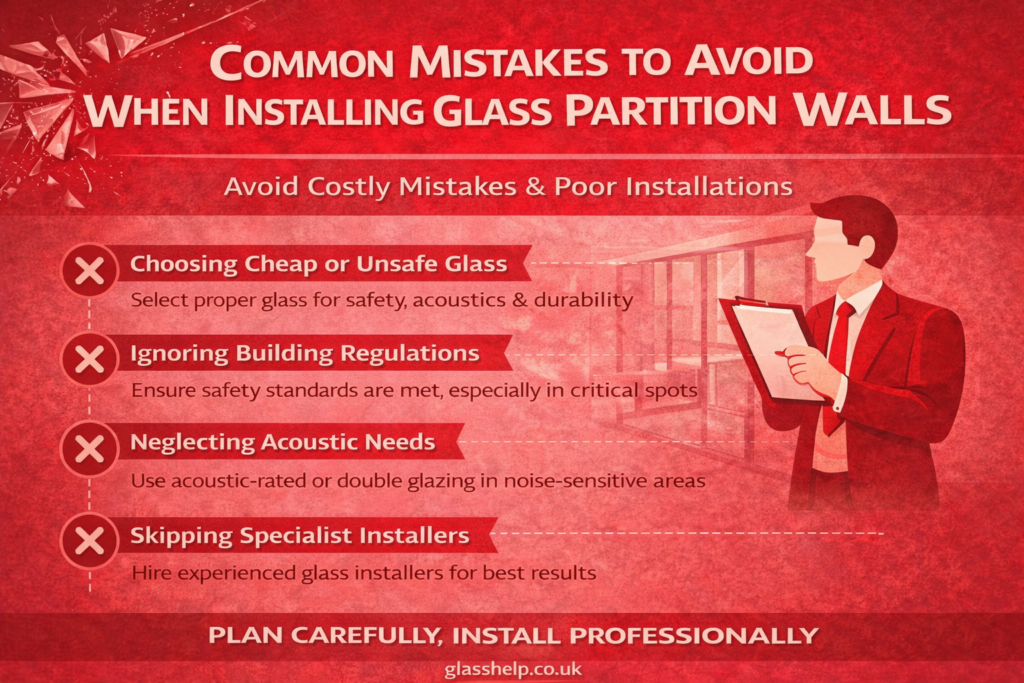
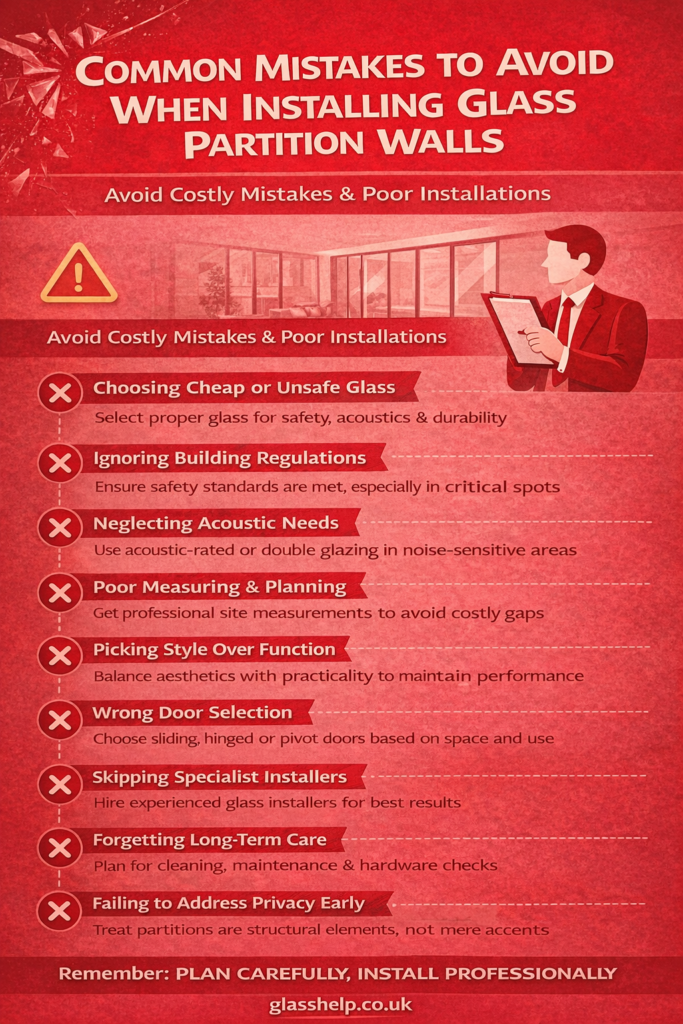
Common Mistakes to Avoid When Installing Glass Partition Walls

Dec 18, 2025

Glass partition walls are a powerful design feature. They allow light to flow, create modern zoning, and elevate both residential and commercial interiors. However, poor planning or incorrect installation can quickly turn a premium feature into an expensive problem.

This guide highlights the most common mistakes people make when installing glass partition walls, explains why they happen, and shows you exactly how to avoid them — saving you money, time, and frustration.

Whether you’re a homeowner, landlord, designer, or business owner, this article will help you get it right the first time.


Why Glass Partition Installations Go Wrong

Glass partitions look simple, but they are precision systems. They involve:

  • Structural tolerances
  • Safety regulations
  • Acoustic performance
  • Door mechanics
  • Visual alignment

Most issues arise when glass walls are treated like decorative features instead of engineered building elements.

Let’s break down the mistakes — and how to avoid each one.


Mistake #1: Choosing the Wrong Type of Glass

Why it happens

Many people assume “glass is glass” and select panels based on appearance alone.

The problem

Using incorrect glass can lead to:

  • Poor sound insulation
  • Safety risks
  • Regulatory non-compliance
  • Cracks or breakage over time

What to do instead

Always choose glass based on function, not just aesthetics:

  • Toughened (tempered) glass for safety
  • Laminated glass for higher impact resistance and acoustic control
  • Acoustic laminated glass for offices, meeting rooms, and bedrooms

According to specialist glass installers, acoustic and safety performance should be considered before visual finish, not after.
(visionglassdoors.co.uk)


Mistake #2: Ignoring Building Regulations & Safety Requirements

Why it happens

Internal partitions are often assumed to be exempt from regulations.

The problem

In the UK, internal glass walls must still meet safety standards, especially in:

  • Critical locations
  • High-traffic areas
  • Door and walkway zones

Failing to comply can create:

  • Injury risk
  • Insurance issues
  • Costly rework after inspection

What to do instead

Ensure your glass partition:

  • Uses safety glazing where required
  • Includes manifestation markings (visual bands or dots) to prevent walk-through accidents
  • Is installed by professionals familiar with UK regulations

Building compliance isn’t optional — even for interior features.


Mistake #3: Underestimating Acoustic Needs

Why it happens

Glass looks solid, so people expect it to block sound like a wall.

The problem

Standard single-glazed glass offers limited sound insulation. This leads to:

  • Noisy offices
  • Distracting home workspaces
  • Reduced privacy

What to do instead

If sound control matters:

  • Use acoustic laminated glass
  • Consider double-glazed partition systems
  • Ensure perimeter seals are specified correctly

Acoustic performance depends on the entire system, not just the glass thickness.
(thekccgroup.com)


Mistake #4: Poor Measurement & Tolerance Planning

Why it happens

Walls, floors, and ceilings are rarely perfectly level — especially in older buildings.

The problem

Incorrect measurements can result in:

  • Gaps at the ceiling or floor
  • Stress fractures in glass
  • Doors that don’t align or close properly

Glass cannot be “trimmed” on site like timber or plasterboard.

What to do instead

  • Always allow for structural movement and tolerance
  • Use professional site surveys
  • Avoid DIY measuring for custom glass

Precision at this stage prevents costly remakes later.


Mistake #5: Choosing Style Over Practicality

Why it happens

Frameless glass and ultra-minimal designs look stunning in photos.

The problem

Purely aesthetic choices can lead to:

  • Poor door sealing
  • Limited acoustic control
  • Difficult maintenance

What to do instead

Balance aesthetics with performance:

  • Slim framed systems often outperform frameless ones acoustically
  • Framed glass allows better alignment and durability
  • Hardware choice affects long-term usability

Modern glass partition walls come in many configurations — the best choice depends on how the space will actually be used.


Mistake #6: Incorrect Door Selection

Why it happens

Doors are often chosen last — or treated as an afterthought.

The problem

The wrong door can cause:

  • Awkward traffic flow
  • Reduced accessibility
  • Noise leakage
  • Mechanical failure over time

What to do instead

Choose doors based on:

  • Swing space availability
  • Frequency of use
  • Accessibility requirements

Options include:

  • Sliding glass doors (space-saving)
  • Hinged doors (traditional feel)
  • Pivot doors (design-led spaces)

Door hardware quality is just as important as glass quality.
(prismglass.co)


Mistake #7: Skipping Professional Installation

Why it happens

Glass partitions look simple, leading some to attempt DIY or use non-specialist installers.

The problem

Improper installation can result in:

  • Glass stress points
  • Poor alignment
  • Safety hazards
  • Voided warranties

Glass is unforgiving — small installation errors can cause major issues.

What to do instead

Use experienced glass partition installers who:

  • Understand load distribution
  • Use correct fixings and seals
  • Follow manufacturer guidelines

Professional installation protects both safety and investment.


Mistake #8: Forgetting Long-Term Maintenance

Why it happens

Glass partitions are often seen as “fit and forget”.

The problem

Without maintenance:

  • Tracks clog with debris
  • Hinges loosen
  • Seals degrade
  • Doors lose alignment

What to do instead

Plan for:

  • Easy-clean glass finishes
  • Accessible hardware
  • Occasional seal checks

Well-maintained glass partitions can last decades with minimal intervention.


Mistake #9: Not Considering Privacy Early Enough

Why it happens

Clear glass is chosen by default, with privacy addressed later.

The problem

Retro-fitting privacy solutions:

  • Costs more
  • Limits design options
  • May reduce light effectiveness

What to do instead

Decide privacy needs upfront:

  • Frosted glass
  • Acid-etched finishes
  • Decorative films or gradients

Privacy and light can coexist — if planned correctly.
(glassinteriors.co.uk)


Mistake #10: Treating Glass Partitions as “Just Dividers”

Why it happens

Glass partitions are sometimes seen as cosmetic add-ons.

The problem

This mindset leads to:

  • Under-specification
  • Budget shortcuts
  • Poor integration with lighting, flooring, and ceilings

What to do instead

Think of glass partitions as architectural systems, not accessories. When designed properly, they:

  • Increase perceived space
  • Improve property value
  • Enhance functionality
  • Future-proof interiors

High-quality systems pay for themselves in performance and longevity.


Quick Checklist: Avoid These Glass Partition Mistakes

✔ Choose the correct glass type
✔ Follow safety and building standards
✔ Plan for acoustics early
✔ Measure professionally
✔ Balance style with function
✔ Select the right doors
✔ Use experienced installers
✔ Plan for maintenance
✔ Address privacy from the start
✔ Treat glass as a structural feature


Conclusion: Plan Smart, Install Right

Glass partition walls can completely transform a space — but only when installed correctly. Most problems don’t come from the glass itself, but from poor decisions made early in the process.

By avoiding the mistakes outlined above, you’ll ensure your glass partitions are:

  • Safe
  • Functional
  • Visually striking
  • Built to last

If you’re planning a project and want expert guidance, explore modern glass partition walls solutions and specifications to ensure your installation is both beautiful and technically sound.