
Clear, Frosted, or Tinted Glass Staircases: Which One Should You Choose?
Glass staircases have become one of the most popular elements in modern interior design — bringing light, openness, and architectural elegance to homes and commercial spaces. But beyond materials and safety types (like tempered or laminated glass), one of the key decisions you’ll make as a homeowner or designer is what finish of glass to choose.
Do you want crystal-clear transparency? A frosted, diffused look? Or a tinted version that adds color and reduces glare?
Each style has unique benefits and trade-offs — and the right choice depends on your functional needs, aesthetic goals, privacy requirements, and lighting conditions.
In this in-depth guide, we’ll break down everything you need to know about clear, frosted, and tinted glass staircases so you can make an informed decision for your build or renovation.
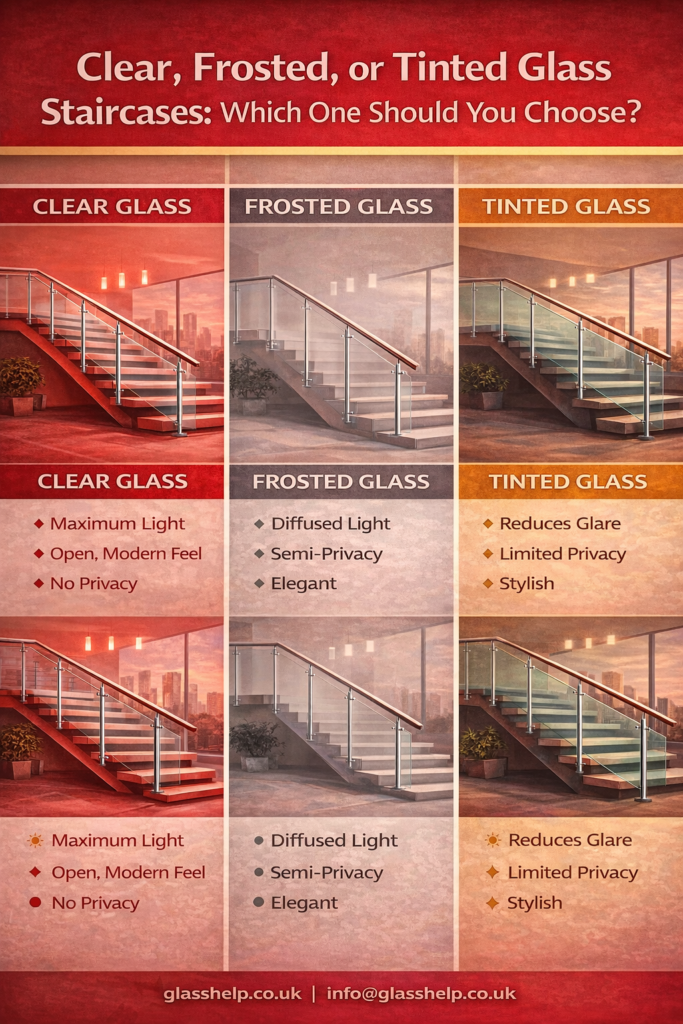
🔹 What Types of Glass Finishes Are Common in Staircases?
Before we dive into pros and cons, it’s important to understand what these finishes actually mean.
According to custom staircase and railing design experts, glass stair systems can be made using a variety of glass types including clear, frosted/etched, tinted, low-iron, and laminated glass — all of which can be safety-treated (e.g., tempered). Glass Help
Here’s how the main finishes differ:
Clear Glass
- Transparent and unobstructed.
- Maximizes light flow and visual openness.
- Most common choice for minimalist, modern staircases.
Frosted Glass
- Has a matte or translucent surface caused by sandblasting or etching. Wikipedia
- Offers diffused light with reduced visibility.
- Great for semi-privacy while maintaining brightness.
Tinted Glass
- Contains colored pigments that add subtle shading or tone. kavifencing.com
- Reduces glare and can lower heat gain.
- Ideal for spaces with strong sunlight or where colored style is desired.
All three can be installed as part of a staircase system, whether it’s a frameless glass balustrade, a glass infill panel, or a rail system integrated with metal or timber. Glass Help
🌟 Clear Glass Staircases: Bright, Open, and Timeless
Pros of Clear Glass
- Maximum Natural Light
Clear glass provides the least obstruction to daylight, making interior spaces feel larger and brighter. aisglass.com - Unobstructed Views
If you have beautiful interior architecture, outdoor scenery, or artwork, clear glass lets it shine without interruption. - Modern Aesthetic
The transparent effect supports minimalist, sleek designs — a key trend in contemporary interiors. - Versatility
Clear glass works with almost any material (wood treads, steel stringers, etc.) without adding visual weight. The Glass Railing Store
Cons of Clear Glass
- Visibility of Smudges & Fingerprints
Clear panels show dust, fingerprints, and streaks more visibly than other finishes. - No Privacy or Light Diffusion
In spaces where you want a bit of discretion (e.g., staircases adjacent to busy rooms), clear glass may feel too exposed. - Heat & Glare
Without surface treatment or tint, clear glass can amplify glare under strong sunlight — which can be uncomfortable in some orientations.
Best For:
- Open-plan living areas
- Small spaces that need the illusion of openness
- Modern or minimal interior styles
🌫 Frosted Glass Staircases: Subtle, Soft, and Stylish
What Is Frosted Glass?
Frosted glass gets its texture from sandblasting or chemical etching, creating a translucent surface that scatters light but obscures direct visibility. Wikipedia
This makes frosted glass an excellent choice when you want a balance between light transmission and privacy.
Pros of Frosted Glass
- Privacy Without Full Opacity
Frosted glass diffuses visibility — perfect when your staircase sits adjacent to high-traffic areas. deventerprise.co.uk - Soft Lighting Effects
Light that passes through frosted glass is gentler and more evenly distributed, reducing harsh shadows or glare. - Elegant Aesthetic
The matte look adds a sophisticated, refined touch that pairs beautifully with wood, steel, or mixed-material stairs. - Design Flexibility
Frosted glass can be plain or patterned and even combined with other decorative details. TBK Metal Co., Ltd.
Cons of Frosted Glass
- Less Transparency
If you want complete openness, frosted glass won’t provide the same visual continuity as clear glass. - Cleaning Considerations
The textured surface can show fingerprints and dust differently from smooth clear glass, requiring thoughtful cleaning techniques.
Best For:
- Staircases near common areas (living rooms, kitchens)
- Homes where privacy is important without reducing light
- Decorative or themed interiors
🌈 Tinted Glass Staircases: Stylish, Comfortable, and Controlled
What Is Tinted Glass?
Tinted glass incorporates subtle hues — from gray to bronze, green, or even custom colors — that reduce glare and the amount of light passing through. betterglass.com
Tint isn’t just about aesthetics; it also influences thermal comfort and visual perception.
Pros of Tinted Glass
- Reduced Glare & Heat
Tints minimize direct sunlight intensity, making interiors more comfortable in bright conditions. betterglass.com - Added Privacy
Tinted glass offers a degree of privacy while still keeping spaces light and open. - Visual Style & Personality
The color adds character and can tie into architectural themes or interior palettes.
Cons of Tinted Glass
- Reduced Light Transmission
While tinted glass still transmits light, it doesn’t let in as much natural light as clear or frosted glass. - Darkening Effect
In rooms that already have limited light, tinted panels can make spaces feel smaller or darker.
Best For:
- Staircases with heavy sunlight exposure
- Interiors where glare control matters
- Warm climates or east/west facing stair wells
🧩 How to Choose the Right Finish for Your Staircase
Choosing between clear, frosted, or tinted glass isn’t just about privacy or aesthetics — it’s about how the glass functions in your unique space. Here’s a step-by-step decision guide:
1. Assess Natural Light
- Maximize light: Choose clear glass.
- Diffuse intense light: Frosted glass.
- Control glare/heat: Tinted glass.
2. Consider Privacy Needs
- High privacy without room darkening → frosted
- Moderate privacy with design impact → tinted
- No privacy concerns → clear
3. Match Aesthetic Intent
- Minimalist → clear
- Classy & refined → frosted
- Bold & contemporary → tinted
4. Safety First
Regardless of finish, safety glass like tempered or laminated safety glass is essential in stair applications. Choose a qualified supplier and installer to meet building codes and structural requirements.
🛠 Safety + Design: The Bigger Picture
Glass staircases do more than just look good.
They can maximize space, improve light flow, and contribute to a modern interior feel — whether it’s clear, frosted, or tinted. Combined with structural safety glass and proper installation, they also support practical everyday use without compromising on performance. Glass Help
If you’re planning or refining your staircase project, it helps to review different glass options, finishes, and configurations.
👉 For real case studies, style inspiration, and guidance on materials and installation, check out this detailed guide to glass staircase options and design considerations.
🔗 Glass staircase inspiration and types — https://www.glasshelp.co.uk/glass-staircase/
🏁 Final Thoughts
There’s no one “best” glass finish for every staircase — it depends on how you *use the space and what you want it to feel like.
Here’s a quick recap:
| Finish Type | Light | Privacy | Style | Comfort |
|---|---|---|---|---|
| Clear Glass | 🌞🌞🌞🌞🌞 | ❌ | ✨ Modern, Endless Light | Great |
| Frosted Glass | 🌞🌞🌞 | ✅ | 🧿 Elegant, Calm | Good |
| Tinted Glass | 🌞🌞 | 🤝 Moderate | 🎨 Stylish, Unique | Best in Bright Areas |
Choosing the right glass finish will enhance your staircase’s look and function — whether that’s creating a bright open space, a softly lit focal point, or a glare-controlled ascent between floors.