
Custom Mirrors for Furniture: Tables, Cabinets & Wall Panels
Custom mirrors are no longer limited to bathrooms and hallways. Today, they are increasingly being used directly on furniture—from dining tables and cabinets to decorative wall panels—creating interiors that feel brighter, more spacious, and distinctly high-end.
Unlike standard mirrors, cut-to-size mirrors are made to precise dimensions, allowing them to integrate seamlessly with furniture pieces rather than looking like afterthoughts. When done correctly, mirrored furniture enhances light, improves visual balance, and elevates the overall design of a room.
This guide explores how and where custom mirrors work best on furniture, what to consider before ordering, and how to avoid common mistakes.
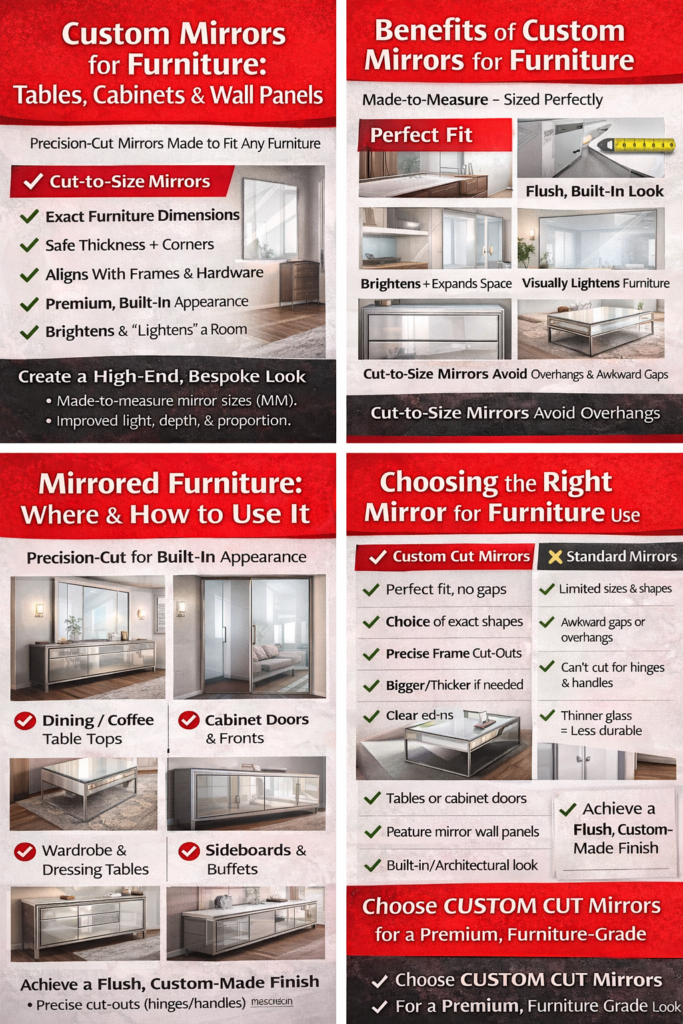
Why Custom Mirrors Are Ideal for Furniture Applications
Furniture dimensions vary widely, and even small measurement errors can ruin the look—or safety—of mirrored surfaces. Custom mirrors allow you to:
- Match exact furniture measurements
- Achieve a flush, built-in appearance
- Choose appropriate mirror thickness
- Control reflections and symmetry
- Avoid overhangs, gaps, or sharp edges
Interior design authorities frequently highlight mirrors as a tool to add depth and brightness when incorporated thoughtfully into furniture and architectural elements. According to Architectural Digest, mirrors can visually expand a room and elevate furniture design when proportion and placement are handled correctly.
Mirrored Table Tops: Dining, Coffee & Console Tables
One of the most popular uses of custom mirrors on furniture is mirrored table tops.
Where Mirrored Table Tops Work Best
- Dining tables
- Coffee tables
- Console tables
- Side tables
- Dressing tables
Why Custom Sizing Matters
Tabletops require absolute precision. A mirror that is even slightly oversized can create sharp overhangs, while one that’s undersized looks unfinished.
Custom cut mirrors allow:
- Exact alignment with table edges
- Rounded or softened corners for safety
- Thicker glass for durability
- Clean, polished edges for exposed surfaces
Mirrored tabletops are especially effective in smaller dining or living rooms, where they visually lighten heavy furniture and reflect light around the space.
Mirrored Cabinet Doors & Furniture Fronts
Mirrors are increasingly being used on cabinet doors and furniture fronts to enhance storage units without adding visual bulk.
Common Applications
- Wardrobe doors
- Bedroom cabinets
- Sideboards and buffets
- Display cabinets
- Bar units
- Bathroom storage furniture
Why Custom Mirrors Are Essential
Cabinet doors involve hinges, handles, and frames. Custom mirrors can be cut to:
- Fit within framed panels
- Align perfectly with hardware
- Avoid hinge interference
- Maintain consistent margins
According to The Spruce, mirrored furniture fronts are particularly effective in small rooms because they reflect light while maintaining storage functionality.
Mirrored Wall Panels Behind Furniture
Another popular application is using custom mirrors as wall panels positioned behind furniture.
Where They’re Commonly Used
- Behind dining sideboards
- Above hallway console tables
- Behind sofas as feature panels
- Behind dressing tables
- Behind bar units or shelving
Benefits of Mirrored Wall Panels
- Adds depth without physical bulk
- Reflects natural and artificial light
- Enhances symmetry
- Creates a luxury, architectural feel
Large mirrored wall panels must be precisely measured, often divided into sections for safety and easier installation—something only custom mirrors can accommodate properly.
Bedroom Furniture with Custom Mirrors
In bedrooms, mirrors serve both functional and aesthetic purposes.
Ideal Uses
- Wardrobe door mirrors
- Dressing table mirrors
- Decorative panels above furniture
Design Considerations
- Mirrors should align exactly with furniture widths
- Reflections should not be visually distracting
- Neutral mirror finishes work best in restful spaces
Custom sizing ensures wardrobe mirrors sit flush with door panels, creating a tailored, built-in look rather than a mismatched or floating appearance.
Living Room Furniture with Mirrored Elements
Living rooms benefit from mirrored furniture when mirrors are used strategically and in moderation.
Effective Applications
- Mirrored console tables
- Sideboards with mirrored fronts
- Coffee tables with mirrored tops
- Feature mirror panels behind furniture
Mirrored furniture helps reflect light and reduce the visual weight of large pieces, making the room feel more open and balanced.
Kitchens & Dining Areas: A Subtle but Powerful Use
While less common, mirrors can work beautifully in kitchens and dining rooms when applied selectively.
Examples
- Mirrored cabinet panels on feature units
- Mirror panels above dining sideboards
- Decorative mirror backs behind open shelving
Kitchens demand precise sizing and durable finishes, making custom mirrors essential for a clean, professional result.
Home Office Furniture & Storage Units
Mirrors can improve both light and comfort in home offices.
Smart Uses
- Mirrored cabinet fronts
- Mirror panels behind shelving
- Decorative mirrors near windows
In smaller home offices, mirrors reduce the boxed-in feeling and help distribute natural light more evenly across the room.
Choosing the Right Mirror for Furniture Use
Before ordering a custom mirror for furniture, consider the following:
✔ Thickness
- Thicker mirrors for tables and doors
- Thinner mirrors for decorative wall panels
✔ Edge Finish
- Polished edges for exposed surfaces
- Hidden edges acceptable within frames
✔ Safety
- Rounded corners for tabletops
- Secure fixing methods for doors and panels
✔ Reflection Planning
- Avoid reflecting clutter or harsh light
- Consider sightlines and room layout
Custom mirrors give you full control over all these factors.
Common Mistakes to Avoid
- Using standard mirrors that don’t match furniture dimensions
- Ignoring edge finishes on exposed surfaces
- Choosing mirrors that are too thin for daily use
- Forgetting hinge and handle clearances
- Overusing mirrors in a single room
Most of these issues are avoided simply by choosing cut-to-size mirrors instead of off-the-shelf options.
Where to Buy Custom Mirrors for Furniture Projects
If you’re planning a mirrored furniture project, choosing a supplier that offers full size, thickness, and finish control is essential.
👉 Explore custom cut to size mirrors suitable for furniture, cabinets, and wall panels here.
Final Thoughts
Custom mirrors for furniture are not just decorative—they are design tools that enhance light, improve proportions, and elevate interiors.
When mirrors are:
- Precisely sized
- Correctly specified
- Thoughtfully positioned
They transform ordinary furniture into bespoke, high-end features that feel intentional and refined.