
Fire-Rated Glass Explained Safety Standards & Applications in the UK
📏 Custom Sizes Available
🚚 Nation Wide Delivery
🛡️ BS EN 12150 Certified
Fire-Rated Glass Explained: Safety Standards & Applications in the UK
Updated · Safety Guide by Glass Helper UK
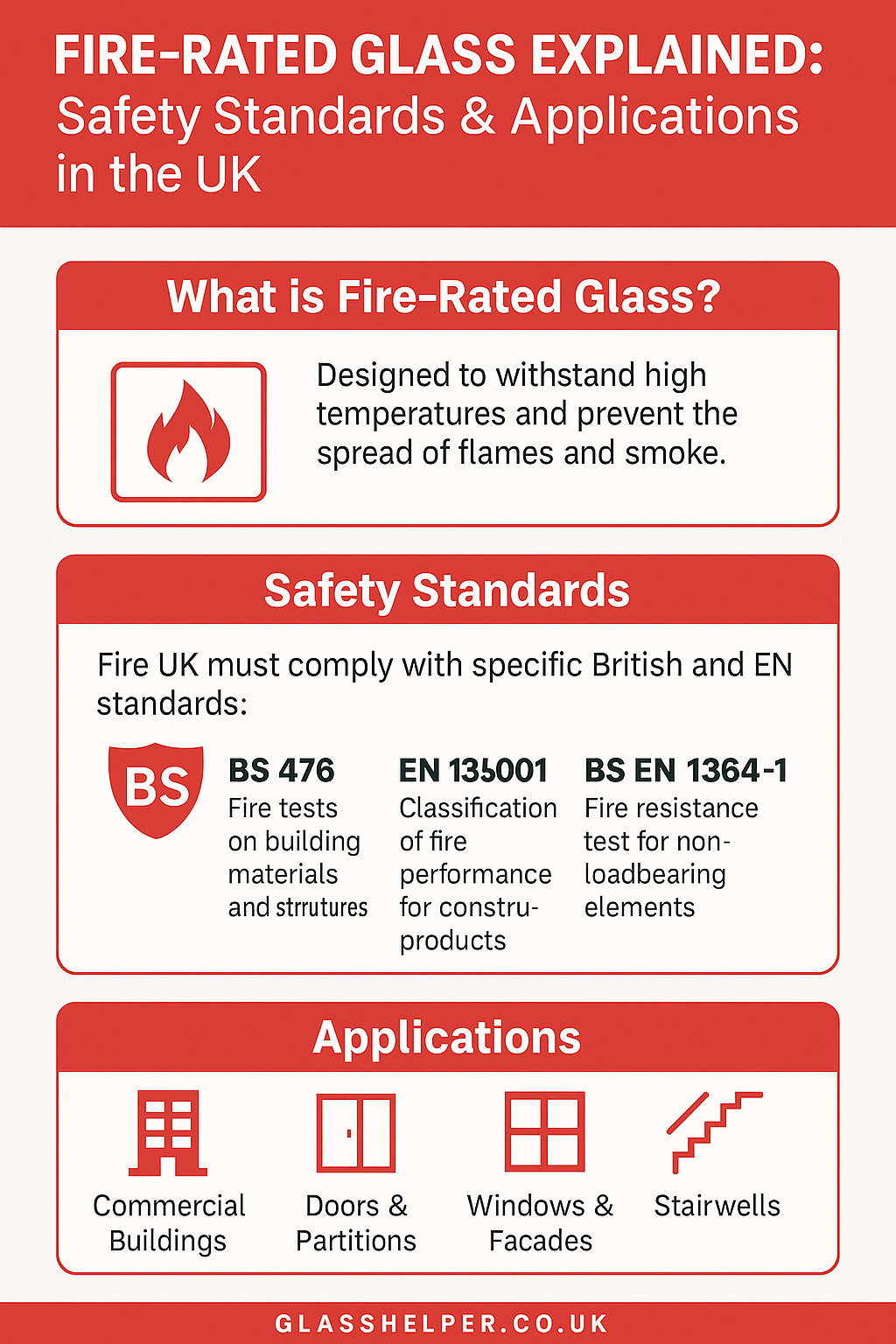
Fire-rated glass plays a critical role in protecting lives and property in the UK. Whether it’s used in doors, partitions, or facades, knowing the different fire ratings and where they apply is essential. This guide breaks down the standards, types, and applications so you can choose correctly for safety, legal compliance, and design.
📏 Custom Sizes Available
🚚 Nation Wide Delivery
🛡️ BS EN 12150 Certified
UK & European Standards
Fire-rated glass in the UK must conform to BS EN 13501-2 for fire classification of construction products, which includes glass. Other relevant standards include BS EN 12150 (for toughened safety glass) and BS EN 14449 (for laminated glass safety). Additionally, many fire-rated glass products are tested under BS 476 where relevant.
Fire Rating Classes (E, EW, EI)
- E-class (Integrity only): Prevents the passage of flames and smoke, but does not limit heat transfer.
- EW-class (Integrity + Radiation control): Adds limited control of heat radiation — safer for people near the other side of the barrier.
- EI-class (Integrity + Insulation): Provides full barrier against flames, smoke, and significant heat transfer. Used where full protection is needed.
📏 Custom Sizes Available
🚚 Nation Wide Delivery
🛡️ BS EN 12150 Certified
Types of Fire-Rated Glass
There are various constructions and materials used for fire-rated glass:
- Wire-glass: traditional wired mesh inside the glass; provides reliability but lower clarity.
- Laminated / Intumescent interlayer glass: combines layers that swell in fire, sealing the gap.
- Mineral glass panels: non-organic, non-combustible, used in high-temperature conditions.
- Glass with fire-resistant coatings or films for added performance.
📏 Custom Sizes Available
🚚 Nation Wide Delivery
🛡️ BS EN 12150 Certified
Where to Use Fire-Rated Glass
- Fire doors & frames for escape routes, corridors, stairwells.
- Partitions between zones (e.g. between kitchen & living area, office suites).
- Facades or glazed walls near exits, balconies, or exposed external areas.
- Between mixed-use buildings or areas with higher fire risk.
- Where regulations mandate ratings for certain heights or distances from egress paths.
For tempered glass options tested for fire safety, see Tempered Glass, or explore Custom Glass Solutions that can meet fire-rated standards.
Frequently Asked Questions (FAQ)
What rating does a fire door need in the UK?
Typically, fire doors are required to achieve at least 30-minute integrity and insulation (EI 30) depending on building regulations and local authority guidance.
Is wired glass still accepted?
In many cases, wired glass is acceptable, though modern alternatives (laminated or bonded interlayer glass) offer better clarity, safety and aesthetics.
Can fire-rated glass be used in shower or bathroom settings?
Yes, but ensure the glass is certified for area, rated for moisture exposure, and properly sealed; certification should include the type (E, EW or EI) and performance level required.
Do fire-rated standards apply to low windows?
Yes—if a window is low to the floor on an escape path or in a door, safety and fire ratings may be required by the building code.
Are there restrictions on glass clearness in fire-rated panels?
Some glass types (e.g. wire or patterned glass) may reduce visibility; make sure any glass meets necessary clarity where safety lines of sight are important.
📏 Custom Sizes Available
🚚 Nation Wide Delivery
🛡️ BS EN 12150 Certified