
Frosted Glass Partition Walls: Privacy Without Losing Natural Light
Modern interiors increasingly demand privacy without isolation. Whether in homes, offices, clinics, or rental properties, people want clearly defined spaces that still feel open, bright, and connected. This is exactly where frosted glass partition walls excel.
In this in-depth guide, you’ll learn what frosted glass partition walls are, how they work, where they perform best, and how to choose the right solution for your space — all while preserving precious natural light.
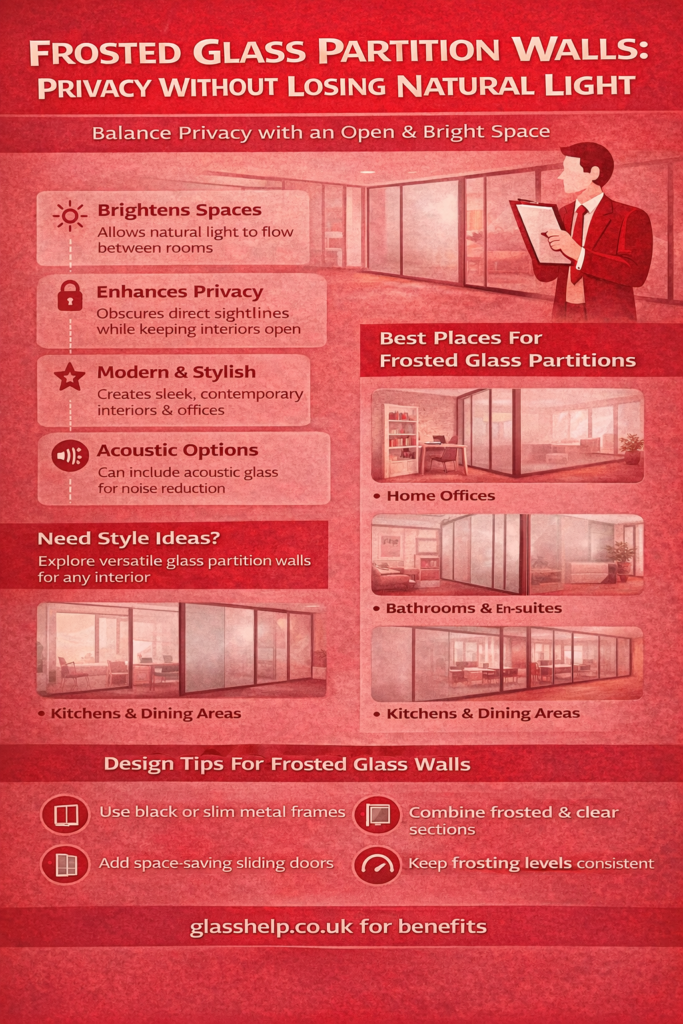
What Are Frosted Glass Partition Walls?
Frosted glass partition walls are internal glazed walls made from etched, sandblasted, acid-etched, or film-treated glass that diffuses light while obscuring direct visibility. Unlike solid walls, frosted glass allows daylight to pass through, but unlike clear glass, it provides visual privacy.
They are widely used in:
- Homes (kitchens, bathrooms, home offices)
- Offices and meeting rooms
- Clinics and healthcare spaces
- Rental properties
- Commercial interiors
Because they combine light transmission with discretion, frosted glass partitions have become a preferred alternative to solid walls and curtains.
Why Frosted Glass Is the Ideal Balance Between Light & Privacy
1. Natural Light Still Flows
One of the biggest drawbacks of traditional partition walls is light loss. Frosted glass solves this by scattering light rather than blocking it, helping to brighten internal rooms, hallways, and deep-plan layouts.
Interior design experts consistently highlight frosted glass as a way to maintain brightness while defining space — particularly in homes where natural light is limited.
(Source: Ideal Home – Frosted Glass in Interiors, a UK interior design blog)
2. Privacy Without Feeling Closed-In
Unlike curtains, blinds, or solid walls, frosted glass:
- Maintains a sense of openness
- Prevents awkward eye contact
- Creates psychological separation without physical heaviness
This makes it ideal for:
- Home offices
- En-suite bathrooms
- Meeting rooms
- Shared living areas
House & Garden notes that frosted and textured glass is increasingly used to create “soft privacy” rather than full visual separation, especially in modern homes.
(Source: House & Garden – Using Frosted Glass in Interior Design)
3. A Cleaner, More Modern Aesthetic
Frosted glass partitions suit:
- Contemporary interiors
- Minimalist design
- Industrial and Scandinavian styles
They provide a sleek architectural look without clutter, heavy framing, or fabric treatments that collect dust and require maintenance.
Where Frosted Glass Partition Walls Work Best
1. Kitchens & Dining Areas
Open-plan kitchens are popular, but not everyone wants cooking mess and steam on full display. Frosted glass partitions allow:
- Light to pass between kitchen and dining areas
- Odours and noise to be partially contained
- Visual separation without closing the kitchen off
This creates a semi-open layout — one of the fastest-growing interior trends.
2. Home Offices
With remote work now permanent for many households, privacy matters. Frosted glass walls:
- Reduce visual distraction
- Preserve daylight
- Maintain connection to the rest of the home
They’re particularly effective when paired with acoustic glass or framed systems.
3. Bathrooms & En-Suites
Frosted glass is a classic choice for bathrooms because it:
- Provides full privacy
- Handles moisture well
- Allows natural light into windowless spaces
It’s frequently used for en-suite partitions, shower screens, and bathroom dividers.
4. Offices & Commercial Spaces
In professional environments, frosted glass partitions:
- Improve confidentiality
- Maintain transparency and openness
- Reinforce brand professionalism
They are commonly used in meeting rooms, consultation rooms, and shared offices.
For design inspiration and system options, explore modern glass partition walls that balance compliance, privacy, and aesthetics.
Types of Frosted Glass Used in Partition Walls
Not all frosted glass is the same. Choosing the right type affects durability, appearance, and cost.
1. Acid-Etched Glass
- Smooth, consistent finish
- Resistant to fingerprints
- Premium appearance
Often used in high-end residential and commercial interiors.
2. Sandblasted Glass
- Slightly textured feel
- Excellent privacy
- Can show marks if not sealed
Common in bespoke and decorative designs.
3. Frosted Film (Applied to Clear Glass)
- Cost-effective
- Removable or changeable
- Ideal for rentals or temporary layouts
A practical option where permanent modification isn’t desirable.
4. Patterned or Gradient Frosted Glass
- Combines clear and opaque areas
- Allows partial visibility where needed
- Highly customisable
Popular in offices and design-led homes.
Frosted Glass vs Clear Glass Partitions
| Feature | Frosted Glass | Clear Glass |
|---|---|---|
| Privacy | High | Low |
| Light Transmission | High | Very High |
| Visual Openness | Moderate | Maximum |
| Maintenance | Easy | Easy |
| Best Use | Private zones | Open collaboration |
Frosted glass is ideal when privacy is essential but darkness is not an option.
Acoustic & Practical Considerations
While frosted glass blocks sightlines, it doesn’t automatically block sound. If noise control matters:
- Choose laminated or acoustic glass
- Consider double-glazed partition systems
- Ensure proper seals around frames and doors
Acoustic performance depends on the entire partition system, not just the glass finish.
Safety & Building Considerations
Frosted glass partitions must still comply with safety standards:
- Use toughened or laminated safety glass
- Apply manifestation markings if required
- Ensure correct fixing and framing
Professional installers ensure both safety and regulatory compliance — especially important in offices, rentals, and public spaces.
Cost Considerations
Frosted glass partitions generally cost more than basic stud walls but offer:
- Better light distribution
- Higher perceived value
- Improved aesthetics
- Lower long-term maintenance
Costs vary depending on:
- Glass type
- Thickness
- Framing
- Door systems
- Installation complexity
They are often considered a design investment rather than a purely functional wall.
Frosted Glass in Rental Properties
Landlords increasingly choose frosted glass partitions because they:
- Improve layout flexibility
- Increase rental appeal
- Don’t permanently darken spaces
Removable frosted films or modular glazed systems are especially popular in rental settings where reversibility matters.
Design Tips for Frosted Glass Partition Walls
✔ Use black or slim metal frames for a modern look
✔ Combine frosted panels with clear upper sections for added light
✔ Pair with sliding doors to save space
✔ Use consistent frosting levels for visual harmony
Interior designers recommend frosted glass as a way to “soften boundaries without losing architectural clarity” — particularly in compact or light-sensitive homes.
(Source: Ideal Home – Glass Dividers & Privacy Solutions)
Why Frosted Glass Is a Smart Long-Term Choice
Frosted glass partition walls offer a rare combination of:
- Privacy
- Light
- Style
- Flexibility
Unlike solid walls, they don’t permanently lock a space into one function. Unlike curtains or blinds, they don’t feel temporary or cluttered.
When designed properly, they enhance both daily comfort and long-term property value.
For homeowners, designers, and businesses seeking elegant zoning solutions, modern glass partition walls — especially frosted systems — deliver the perfect balance.
Conclusion: Privacy Without Sacrificing Light
If you want to divide space without blocking daylight, frosted glass partition walls are one of the smartest solutions available. They preserve openness, improve functionality, and elevate interiors — all while offering the privacy modern living demands.
Whether you’re redesigning a home, fitting out an office, or upgrading a rental property, frosted glass partitions provide a timeless, flexible, and visually refined answer.