
Glass Staircases Explained: Safety, Strength, and Building Code Compliance
Glass staircases are one of the most captivating architectural features in modern homes and commercial spaces. With their sleek transparency and ability to visually expand any area, glass stairs are increasingly embraced by architects, interior designers, and homeowners alike. But beyond stunning aesthetics, questions of safety, structural strength, and compliance with building codes are paramount before deciding on this bold design element.
In this deep-dive article, we’ll explore everything you need to know about glass staircases — from materials and engineering to safety features and legal compliance — so you can make informed decisions for your next project.
1. What Are Glass Staircases?
Glass staircases are stair systems that use glass as a primary structural or design component — typically for treads, risers, balustrades (guardrails), or even stringers. They can range from fully frameless, floating designs to hybrid systems combining glass with steel, timber, or other materials.
One popular and reliable design reference for bespoke installations and design ideas is the Glass Staircase Guide on GlassHelp, which details various glass staircase options and their real-world applications.
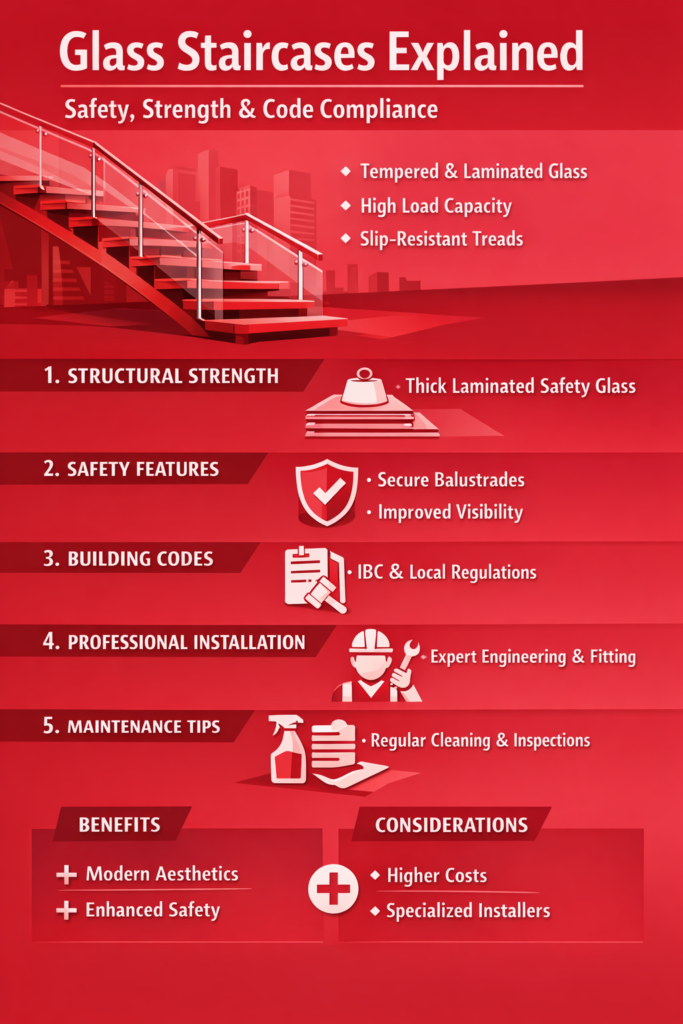
👉 Explore modern glass staircase ideas and construction details here:
🔗 Glass staircase guide on GlassHelp — https://www.glasshelp.co.uk/glass-staircase/
2. The Strength of Glass: Understanding Load, Thickness, and Materials
Glass isn’t just about visual impact — modern architectural glass is engineered to be extremely strong and durable.
Types of Structural Glass
The most common engineered glass used in staircases includes:
- Tempered Glass: Heated and rapidly cooled to increase strength. When it breaks, it shatters into small, less harmful pieces.
- Laminated Glass: Made by bonding two or more glass panes with an interlayer (like PVB) so that if the glass cracks, fragments stay bonded to the interlayer — enhancing safety. GlassWalk
Glass Thickness & Structural Strength
The thickness of glass in stair applications isn’t arbitrary — it’s dictated by structural requirements.
- Glass stair treads often use multi-ply laminated glass over 1 inch thick to safely bear loads without a central support. GlassWalk
- Balustrade panels and guards typically start at 10–12 mm tempered glass for residential applications, increasing in thickness for frameless or commercial projects. Express Toughening Ltd
Load Capacity and Safety Factors
Glass stair treads and balustrades must support both static and dynamic loads. Building codes generally require guardrails and glass panels to withstand lateral forces (e.g., 200 lb concentrated load or specific foot traffic loads). The Glass Railing Store+1
Engineers design structural glass with safety factors of four or greater to ensure long-term performance and occupant safety. Glass Magazine
3. Safety First: Why Glass Staircases Are Not Just Pretty
A common misconception is that glass staircases are fragile or unsafe. In reality, properly engineered and installed glass stair systems can be exceedingly safe — sometimes more so than traditional materials.
Key Safety Attributes of Glass Staircases
High-Strength Performance
Safety glass (tempered and laminated) is significantly stronger than ordinary annealed glass. Laminated glass, in particular, holds together if cracked, reducing risk. GlassWalk
Improved Visibility
The transparent nature of glass stair panels allows better sight lines, reducing blind spots on stairs — particularly helpful in multi-story homes or commercial buildings where visibility matters.
Balustrade Safety
Glass balustrades stop falls at height, just like other materials, but without visual interruption. Building authorities treat these barriers with the same stringency as traditional rails — focusing on height, strength, and resilience. The Glass Railing Store
Child & Pet Safety
Solid glass prevents limbs or toys from falling through gaps — unlike some rail designs with larger spacing. The limited openings near glass balustrades adhere to child safety standards. IQ Glass
Slip Resistance & Tread Treatment
Glass treads can be finished with acid-etching, ceramic frit, sandblasting, or bonded slip-resistant textures that enhance traction while preserving aesthetics. GlassWalk
4. What Building Codes Apply to Glass Staircases?
Compliance with regional building codes isn’t optional — it’s essential for safety, insurance, and inspection approval.
International Building Code (IBC) & Glass
In regions following the International Building Code (IBC), glass used in stair guards and balustrades is considered a hazardous location, and strict glazing performance requirements apply. This includes:
- Mandatory safety glazing such as laminated or fully tempered glass. China Best Buying
- Minimum thickness standards and load capacities to withstand everyday use and accidental impacts. Glass Magazine
Building codes also regulate the height of stair balustrades and handrails. For example, IBC guidelines often require:
- Handrail Heights: Typically between 34–38 inches for stairs. The Glass Railing Store
- Guardrail Heights: Around 36 inches minimum in residential structures, often 42 inches for commercial properties. GRECO | Architectural Metal Products
Regional Standards (UK & Eurocodes)
In the UK, standards like BS 6180:2011 govern barriers and balustrades, covering load resistance and the use of safety glass. Eurocodes such as BS EN 1991 ensure structures handle live loads expected in public spaces. Mournecraft
Local Inspections & Engineer Certification
Because building codes can vary by city, state, or country, it’s critical to involve a structural engineer and local building inspector early in the design process. They will verify compliance with specific code editions and local amendments before installation begins. Glass Flooring Systems Inc.
5. Installation Best Practices
A quality installation is just as important as thoughtful design and compliant materials.
Professional Fabrication & Engineering
Glass staircases should be engineered with precise structural calculations and prefabricated by professionals experienced in glass construction. This ensures:
- Correct load distribution
- Suitable anchorage systems
- Proper slip-resistant finishes
Experienced Installation Crew
Glass panels and treads are heavy and delicate — installing them requires specialized hardware, rigging, and attention to detail. Professional installers reduce the risk of errors that could compromise strength or aesthetics.
Coordination With Trades
Glass stair projects often intersect with carpentry, metalwork, and electrical trades (for lighting). Ahead-of-time coordination ensures clean integration without rework.
6. Maintenance & Longevity
One of the best aspects of glass staircases is ease of maintenance.
- Routine Cleaning: A microfibre cloth with warm, soapy water keeps glass pristine.
- Inspections: Periodic checks ensure no hardware loosens and that the glass remains undamaged.
- Scratch Prevention: Avoid abrasive cleaners to preserve clarity.
With proper care, glass stair systems can last decades, making them a durable and long-term investment.
7. Are Glass Staircases Worth It? Pros vs. Cons
Pros:
- Timeless, modern appearance
- Increased light flow and sense of space
- Strong, engineered safety systems
- Adds market value to properties
Cons:
- Typically higher upfront cost
- Specialized installation required
- Requires thoughtful cleaning and maintenance
On balance, glass staircases combine beauty with function for homeowners willing to invest in quality design and installation.
Conclusion
Glass staircases are more than just a design trend — they are robust, code-compliant architectural features that can elevate interiors while adhering to the highest safety and structural standards. With engineered glass, proper building code compliance, professional installation, and ongoing maintenance, a glass staircase can be both a stunning focal point and a safe, long-lasting part of your space.
Whether you’re renovating a home or designing a commercial space, start with trusted design resources — including the Glass Staircase Guide on GlassHelp — and always consult structural engineers and local authorities to bring your vision to life safely.
👉 Discover detailed glass staircase options and planning advice here:
🔗 https://www.glasshelp.co.uk/glass-staircase/