
How Are Glass Juliet Balconies Installed?
A Step-by-Step Installation Overview for Homeowners
Glass Juliet balconies are increasingly popular across the UK for one simple reason: they provide safety, light, and modern design without the complexity of a walk-out balcony.
But while they may look simple once installed, the installation process itself is precise, technical, and safety-critical. Poor installation can lead to structural issues, compliance failures, or long-term problems.
This step-by-step guide explains how glass Juliet balconies are installed, what happens at each stage, and what homeowners should expect before, during, and after installation.
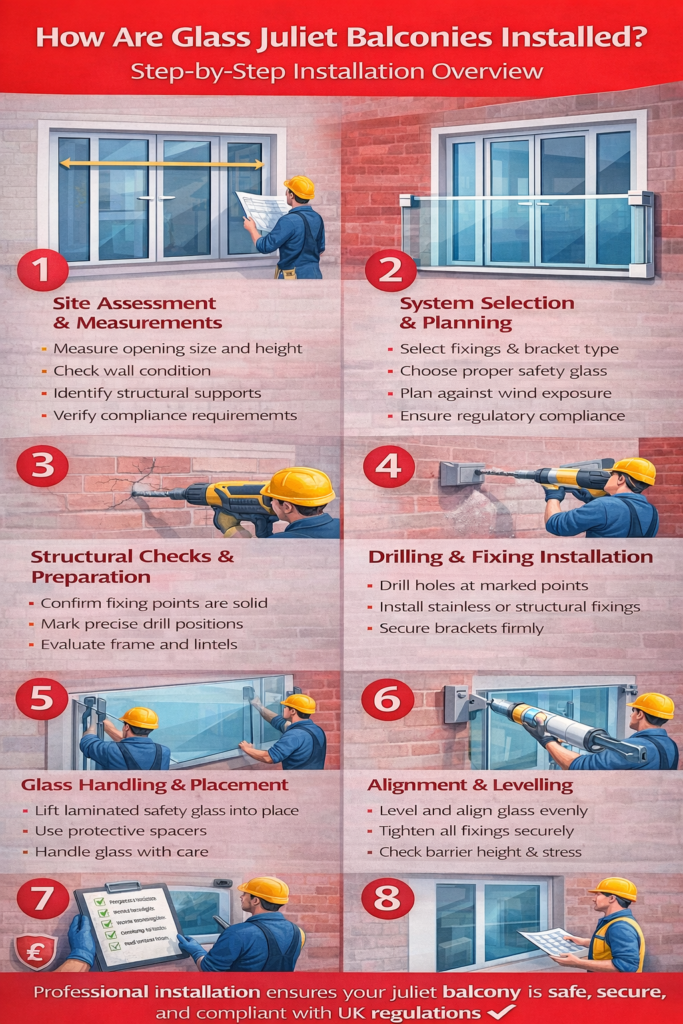
Why Installation Quality Matters
A glass Juliet balcony is not decorative glass — it is a fall-prevention barrier. That means it must:
- Be securely fixed to the structure
- Resist horizontal loads
- Use correct safety glass
- Meet UK building regulations
Even the best glass system can fail if installed incorrectly. That’s why understanding the process helps homeowners choose the right installer and avoid costly mistakes.
Step 1: Site Assessment & Measurements
Every professional installation begins with a site survey.
What installers check at this stage:
- Width and height of the door or window opening
- Wall construction (brick, block, stone, timber frame)
- Condition of masonry and mortar
- Location of lintels and structural supports
- Internal floor height relative to external ground level
Accurate measurements are critical. Even small errors can affect:
- Glass sizing
- Fixing alignment
- Compliance with minimum barrier height
This stage also determines whether side-fixing, face-fixing, or framed systems are most suitable.
Step 2: System Selection & Compliance Planning
Once measurements are confirmed, the installer selects the appropriate system based on:
- Opening width
- Glass thickness requirements
- Fixing method
- Exposure to wind and weather
- Building style
At this stage, compliance with UK regulations is considered. Juliet balconies must act as effective guarding, meaning correct height, strength, and glass specification are essential.
If you want a clear explanation of how modern systems are designed and configured, this guide to glass Juliet balconies explains common fixing methods and system types used in UK homes:
glass Juliet balconies – https://www.glasshelp.co.uk/glass-juliet-balcony/
Step 3: Structural Checks & Preparation
Before anything is fixed, the wall itself must be suitable.
What installers prepare:
- Confirm fixing points are structurally sound
- Check masonry is not crumbling or hollow
- Ensure fixings will not interfere with lintels or frames
- Mark exact drilling positions
If issues are foundfound (such as weak brickwork or shallow reveals), installers may:
- Use alternative fixing methods
- Specify additional support brackets
- Recommend remedial work before installation
Skipping this step is one of the most common causes of failed installations.
Step 4: Drilling & Fixing Installation
This is where the system starts taking shape.
Typical process:
- Fixing holes are drilled precisely into the masonry
- Stainless steel or structural fixings are installed
- Brackets or mounting plates are secured and levelled
- Fixings are torque-checked to manufacturer specifications
Accuracy here is vital. Misaligned fixings can cause:
- Uneven glass loading
- Stress points
- Long-term loosening
Professional installers use specialist tools to ensure fixings are perfectly aligned and secure.
Step 5: Glass Handling & Placement
Glass panels for Juliet balconies are heavy and fragile before installation. This step requires care and experience.
What happens:
- Laminated safety glass is lifted into position
- Glass is seated into brackets or frames
- Protective spacers and gaskets are applied
- Load distribution is checked
The glass is never forced into position. If it doesn’t fit correctly, installation stops and measurements are reviewed.
This stage often requires two or more installers, especially for wide openings or thicker laminated glass.
Step 6: Alignment, Levelling & Securing
Once the glass is in place, installers focus on fine adjustment.
This includes:
- Ensuring the glass is perfectly level
- Adjusting brackets to remove stress
- Tightening fixings evenly
- Confirming barrier height meets requirements
For frameless systems, this step is especially important, as the glass itself provides most of the structural performance.
Step 7: Sealing & Weather Protection
After structural fixing, attention turns to weatherproofing.
Typical sealing work:
- Silicone or specialist seals applied at fixing points
- Protection against water ingress
- Prevention of thermal movement damage
Good sealing protects:
- The building fabric
- Fixings from corrosion
- Long-term performance of the balcony
Step 8: Final Safety Checks & Inspection
Before the job is signed off, installers carry out final checks.
These include:
- Visual inspection of glass and fixings
- Confirmation of barrier height
- Stability and rigidity testing
- Cleaning and removal of protective films
Some installers also provide:
- Installation certificates
- Product warranties
- Maintenance guidance
For homeowners interested in regulatory context, the UK Planning Portal provides a helpful overview of balcony and guarding safety expectations:
Balcony building regulations overview – https://www.planningportal.co.uk/permission/common-projects/balconies/building-regulations
Step 9: Handover & Maintenance Advice
A professional installer should explain:
- How to clean the glass safely
- How often fixings should be inspected
- What signs of movement or wear to watch for
Most glass Juliet balconies require minimal maintenance, but periodic visual checks are recommended, especially after severe weather.
How Long Does Installation Take?
For most homes:
- Standard installation: 2–4 hours
- Large or complex openings: Half to full day
Preparation and manufacturing time (before installation day) is usually 2–4 weeks, depending on glass specification.
Can Glass Juliet Balconies Be DIY Installed?
In short: not recommended.
Because Juliet balconies are safety-critical, professional installation is strongly advised. DIY fitting can:
- Void warranties
- Fail building control checks
- Create safety risks
For homeowners curious about professional installation practices, this overview from a specialist glass supplier explains how Juliet balconies are typically fitted and supported:
Glass Juliet balcony installation explained – https://ukoglass.co.uk/what-is-a-glass-juliet-balcony/
Common Installation Mistakes to Avoid
- Incorrect measurements
- Fixing into weak masonry
- Using non-laminated glass externally
- Poor sealing around fixings
- Skipping final alignment checks
Choosing an experienced installer avoids nearly all of these issues.
Final Thoughts
Glass Juliet balconies may appear simple, but their installation is a precise, engineered process designed to protect people at height.
When installed correctly, they:
- Provide excellent safety
- Enhance natural light
- Add modern architectural value
- Require minimal ongoing maintenance
Understanding the installation process helps homeowners make informed decisions, ask the right questions, and ensure their Juliet balcony performs safely for decades.