
Indoor vs Outdoor Glass Balustrades: Which Type Do You Need?
Glass balustrades have become a defining feature of modern homes, valued for their ability to combine safety, openness, and contemporary design. However, not all glass balustrades are the same. One of the most common questions homeowners ask before ordering is:
“Do I need an indoor or an outdoor glass balustrade?”
While they may look similar at first glance, indoor and outdoor glass balustrades are designed for very different environments. Choosing the wrong type can affect durability, safety, maintenance, and long-term cost.
This guide will help you clearly understand:
- The difference between indoor and outdoor glass balustrades
- How materials and construction vary
- Where each type works best
- Safety, weather resistance, and maintenance considerations
- How to choose the right option for your home
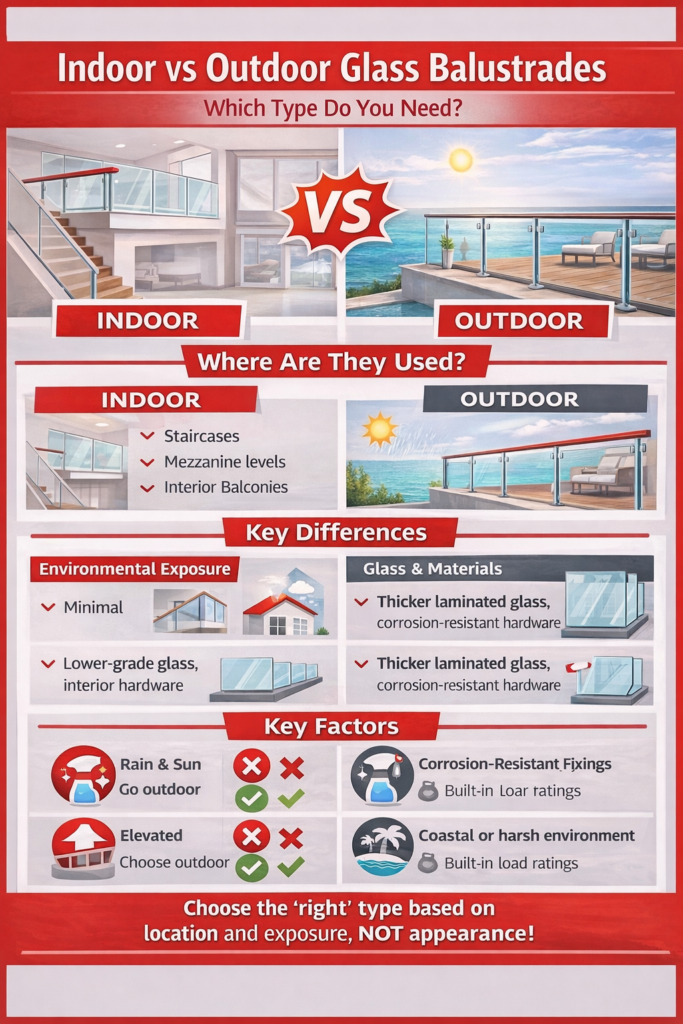
What Is a Glass Balustrade? (Quick Refresher)
A glass balustrade is a protective barrier made from safety glass, commonly installed along staircases, balconies, terraces, decking, and mezzanine levels. Instead of traditional wooden or metal railings, glass panels provide fall protection while maintaining light flow and visibility.
Modern glass balustrade systems use toughened or laminated safety glass, combined with metal fixings or base channels, to meet strict building regulations. If you want to explore available styles and configurations, this overview of glass balustrade systems provides a helpful starting point:
👉 glass balustrade systems – https://www.glasshelp.co.uk/glass-balustrade/
What Are Indoor Glass Balustrades?
Indoor glass balustrades are designed specifically for internal environments where exposure to weather, moisture, and temperature extremes is minimal.
Common Indoor Applications
- Staircases
- Mezzanine floors
- Landing edges
- Split-level living areas
- Interior balconies
Key Characteristics of Indoor Glass Balustrades
1. Focus on aesthetics
Indoor glass balustrades are often chosen primarily for their visual impact. Frameless or semi-framed designs are common, creating a clean, minimalist look that complements modern interiors.
2. Lighter environmental demands
Because indoor systems are not exposed to rain, UV radiation, or frost, the materials do not need the same level of weather protection as outdoor systems.
3. Glass types used
Indoor balustrades usually use:
- Toughened glass
- Laminated safety glass (especially for staircases)
The thickness may be slightly lower than outdoor balustrades, depending on height and fixing method.
4. Fixings and hardware
Internal balustrade fixings are typically:
- Stainless steel or aluminium
- Chosen more for appearance than corrosion resistance
- Often polished or brushed for decorative appeal
What Are Outdoor Glass Balustrades?
Outdoor glass balustrades are engineered to withstand constant exposure to weather and environmental stress. They must meet stricter performance requirements than indoor systems.
Common Outdoor Applications
- Balconies
- Roof terraces
- Garden decking
- Pool surrounds
- Juliet balconies
Key Characteristics of Outdoor Glass Balustrades
1. Weather resistance is critical
Outdoor balustrades must endure:
- Rain and moisture
- UV exposure
- Wind load
- Temperature changes
- Airborne pollution or salt (in coastal areas)
Because of this, every component must be designed for long-term durability.
2. Stronger glass specifications
Outdoor balustrades typically require:
- Thicker toughened or laminated glass
- Laminated glass is often preferred, as it remains in place even if broken
This is especially important for elevated balconies or exposed locations.
3. Corrosion-resistant fixings
All fixings and handrails are usually made from:
- Marine-grade stainless steel (e.g. 316 stainless)
- Powder-coated aluminium
These materials resist rust and corrosion over time.
4. Higher structural demands
Outdoor systems must be designed to resist wind pressure and comply with stricter load requirements set by building regulations.
Key Differences Between Indoor and Outdoor Glass Balustrades
1. Environmental Exposure
| Factor | Indoor | Outdoor |
|---|---|---|
| Rain & moisture | ❌ Minimal | ✅ Constant |
| UV exposure | ❌ None | ✅ High |
| Temperature changes | ❌ Stable | ✅ Extreme |
| Wind load | ❌ Low | ✅ High |
Outdoor balustrades must be significantly more robust to handle these factors safely.
2. Glass Thickness and Type
Indoor balustrades may use thinner glass where permitted, while outdoor balustrades usually require thicker laminated glass for safety and durability.
Outdoor systems are often designed with the assumption that:
- The glass may be the primary structural barrier
- Failure is not acceptable due to height and exposure
3. Fixings and Materials
Indoor balustrades prioritise design and finish, while outdoor balustrades prioritise corrosion resistance and strength.
For example:
- Indoor: decorative clamps, brushed steel
- Outdoor: base channels, concealed drainage, weather-rated fixings
4. Maintenance Requirements
Indoor Glass Balustrades
- Simple cleaning with glass cleaner
- Minimal inspection needed
- Rarely affected by staining or corrosion
Outdoor Glass Balustrades
- Require regular cleaning to remove dirt, salt, or water marks
- Periodic inspection of fixings recommended
- May need more frequent maintenance in coastal or exposed locations
Which Type Is Safer?
Both indoor and outdoor glass balustrades are safe when correctly designed and installed. The difference lies in how they achieve safety.
- Indoor systems rely on controlled conditions and regulated use
- Outdoor systems rely on stronger materials and engineering
In practice, outdoor balustrades are built to higher performance thresholds, but both must comply with building regulations for height, load resistance, and glass type.
How to Choose the Right Type for Your Home
Ask yourself the following questions:
1. Where will the balustrade be installed?
If it’s exposed to weather, moisture, or wind — you need an outdoor-rated system, even if the area feels semi-covered.
2. Is the area elevated?
Balconies, roof terraces, and raised decking almost always require outdoor-grade glass balustrades due to fall risk and wind load.
3. Do you prioritise appearance or durability?
Indoor balustrades allow more freedom in styling. Outdoor balustrades must prioritise performance first, aesthetics second.
4. Are you near the coast or in a harsh environment?
Coastal homes should always use outdoor systems with marine-grade materials, even for partially sheltered areas.
Can the Same Design Be Used Indoors and Outdoors?
Visually, yes — technically, no.
You can achieve a consistent look throughout your home by using similar frameless or semi-framed designs, but:
- The specification of glass and fixings must differ
- Outdoor balustrades should never be replaced with indoor-rated systems
A professional supplier will match the appearance while upgrading the materials where required.
Cost Differences to Expect
While prices vary depending on size and design:
- Indoor glass balustrades are generally more affordable
- Outdoor glass balustrades cost more due to:
- Thicker glass
- Higher-grade fixings
- More complex installation
However, choosing the correct system from the start avoids expensive replacements or safety issues later.
Final Thoughts: Which Type Do You Need?
If your balustrade is inside your home and protected from the elements, an indoor glass balustrade is usually sufficient and offers excellent design flexibility.
If your balustrade is outside, elevated, or exposed, you should always choose an outdoor glass balustrade system designed for weather resistance and structural safety.
The key is not how the balustrade looks — but where and how it will be used.
By understanding the differences between indoor and outdoor glass balustrades, you can make a confident, informed decision that delivers both style and long-term safety.