
Sliding vs Hinged Glass Shower Screens: Which Works Best for Your Bathroom?
Complete UK Buyer’s Guide — Hygiene, Space, Style & Practicality
Choosing between sliding and hinged glass shower screens is one of the biggest practical decisions you’ll make when designing or renovating your bathroom. The right choice depends on your bathroom size, layout, daily use, cleaning preferences, and long-term practicality.
In this comprehensive guide, we’ll compare sliding vs hinged shower screens across multiple criteria — from space efficiency and maintenance to accessibility and aesthetics — so you can confidently choose the best fit for your space and lifestyle.
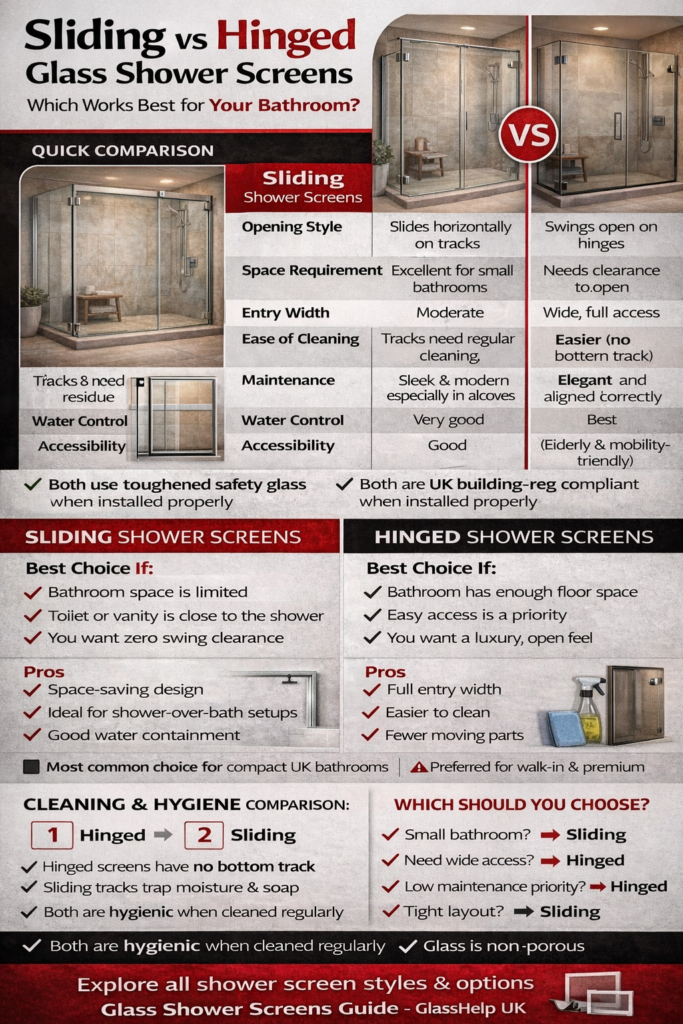
🛁 What Are Sliding and Hinged Shower Screens?
Sliding Shower Screens
Sliding shower screens consist of one or more glass panels that glide horizontally on top/bottom tracks to open and close. They are excellent for bathrooms with limited space, where there’s no clearance for doors to swing outward.
Sliding screens typically use tracks and rollers to support movement. Plumbworld+1
Hinged Shower Screens
Also called pivot or swing doors, hinged screens are attached to the wall by hinges. They swing open like a door, providing full entry width and generally a more open feel. Plumbworld+1
Both options may come in framed, semi-framed, or frameless styles depending on how much hardware you want visible. They are usually made from toughened safety glass for durability and compliance with UK rules. For examples and design variations of shower screens, visit this guide:
👉 Glass shower screens styles and options — https://www.glasshelp.co.uk/glass-shower-screens/
🧠 Detailed Comparison: Sliding vs Hinged Shower Screens
Below is a clear head-to-head look at how these two common designs stack up.
| Feature | Sliding Shower Screens | Hinged Shower Screens |
|---|---|---|
| Space Requirement | Excellent for small bathrooms — no clearance needed to open. Schicker Luxury Shower Doors, Inc. | Requires room to swing open; best suited to larger spaces. Plumbworld |
| Entry Width | Limited to track opening range; can feel narrower. Schicker Luxury Shower Doors, Inc. | Full opening — easier access, especially for larger users. ABC Glass & Mirror |
| Cleaning & Maintenance | Tracks can accumulate soap scum and require regular cleaning. Schicker Luxury Shower Doors, Inc. | No bottom track — easier to wipe down and maintain. ABC Glass & Mirror |
| Style & Aesthetic | Sleek & modern, especially in alcoves. Schicker Luxury Shower Doors, Inc. | Elegant and classic; works well in walk-in designs. ABC Glass & Mirror |
| Accessibility | Smooth side-to-side movement, but narrower space. Wholesale Bathrooms Glasgow | Wider opening — better for mobility, elderly access. Plumbworld |
| Water Containment | Good with quality seals; overlapping panels help keep splashes inside. Schicker Luxury Shower Doors, Inc. | Good when fitted precisely; potential splash outward if hinge swings in. ABC Glass & Mirror |
| Installation Complexity | Moderate — tracks must be level and smooth. Schicker Luxury Shower Doors, Inc. | Higher precision needed for hinges and swing clearance. ABC Glass & Mirror |
| Cost Range | Often more economical than complex hinged options. Schicker Luxury Shower Doors, Inc. | Can be higher — hinges and hardware may add cost. ABC Glass & Mirror |
📏 Space & Bathroom Layout — Critical Starting Point
One of the most practical considerations when choosing between sliding and hinged screens is available space:
Sliding Screens
- Ideal for compact bathrooms where space is at a premium.
- Because sliding doors move sideways along a track, they require no clearance for opening, making them perfect for narrow bathrooms or shower-over-bath setups. Schicker Luxury Shower Doors, Inc.
Hinged Screens
- Work best in bathrooms with ample floor space.
- Hinged doors need room to swing open — typically outward — which means they’re less suitable in tight enclosures but great when access and ease of movement are priorities. Plumbworld
🧼 Cleaning & Maintenance Differences
Sliding Shower Screens
- Tracks collect soap scum, grime, and mildew over time.
- Regular cleaning of the track and rollers keeps doors operating smoothly.
- Good quality tracks often include removable runners for deeper clean cycles. Schicker Luxury Shower Doors, Inc.
Hinged Shower Screens
- Easier to keep clean due to fewer nooks and crannies.
- No bottom tracks mean smooth glass panels that are easy to wipe down.
- Hinges can occasionally need lubrication or checking over time, but overall maintenance is lower. ABC Glass & Mirror
🚪 Accessibility & Everyday Use
Hinged Screens
- Because the door can swing fully open, they provide the widest point of entry — helpful for larger users, families, or users with mobility challenges. ABC Glass & Mirror
- Easy access means less stepping over trays and narrower gaps.
Sliding Screens
- Sliding panels may limit entry width slightly, which can feel tight for some users. Schicker Luxury Shower Doors, Inc.
- That said, sliding doors don’t require clearance — making them practical in tight, cluttered bathrooms.
If accessibility is a priority (e.g., for elderly users or people with limited mobility), it’s worth considering how the door type impacts ease of entry and exit.
🛠 Installation Considerations
Glass shower screens — whether sliding or hinged — must be installed correctly to ensure safety, watertight performance, and longevity. Both types use toughened safety glass to meet building standards. glasshelper.co.uk
Sliding Screens
- Track alignment is essential for smooth movement.
- Tracks must be level and well-sealed to prevent water ingress beneath the doors.
Hinged Screens
- Hinges must be securely fixed to the wall or frame.
- Sufficient clearance around the door swing area must be allowed in the design phase.
Professional installation helps avoid:
- Misalignment
- Water leaks
- Premature hardware wear
GlassHelper’s shower door installation services supply and fit a range of screen styles with safety glass and corrosion-resistant hardware — ideal for either sliding or hinged options. glasshelper.co.uk
🏡 Style, Aesthetics & Design Impact
Both sliding and hinged screens can be integrated into different visual styles, but they have slightly different aesthetics.
Sliding Screens
- Good for minimalist, modern bathrooms
- Tracks and runners can be designed to match hardware finishes
- Keep open sightlines when closed
Hinged Screens
- Often associated with a more upscale, elegant appearance
- Frameless hinged designs can create a nearly invisible barrier
- Mobile pivot locations allow creative placement
Note: aesthetic impact also depends on the glass type — clear, frosted, or textured options can shift the visual expression of either screen type.
💡 Practical Tips for Your Decision
Here’s a simple rule of thumb when choosing between these options:
✔ Go Sliding If:
- Your bathroom is small or narrow
- You want uninterrupted floor space
- Easy access matters more than wide entry
- You want a more space-efficient solution
✔ Go Hinged If:
- You have sufficient room for door swing
- You want larger shower entry
- You prefer simpler cleaning
- You’re aiming for a slightly more luxury look
✨ Final Thoughts
There’s no one-size-fits-all answer — the right choice between sliding and hinged glass shower screens comes down to your bathroom’s space, usage, and personal style.
Sliding screens are unbeatable in compact spaces and offer a sleek, practical solution. Hinged screens deliver a wider entry, easier cleaning, and a timeless feel when room allows.
Whatever you choose, ensure the glass is toughened safety glass and professionally installed to maximise durability and performance — whether you’re upgrading an existing enclosure or designing a new bathroom from scratch.
If you want to explore design styles, glass finishes, and custom options that work with either sliding or hinged systems, check out this detailed guide to today’s shower screen choices:
👉 Glass shower screens — types, features & how to choose — https://www.glasshelp.co.uk/glass-shower-screens/