
Tempered vs Regular Glass Shelves: What’s the Difference and Which Is Safer?
Glass shelves are popular in modern homes because they look clean, minimal, and let light pass through spaces. But when people order glass shelves, one of the most important (and often misunderstood) decisions is tempered glass vs regular (annealed) glass.
At first glance, both can look identical. The real difference is how they behave under stress, impact, and breakage—and that difference directly affects safety, durability, and where each type should be used.
This guide explains the differences clearly, without jargon, so you can choose the right and safest option for your home.
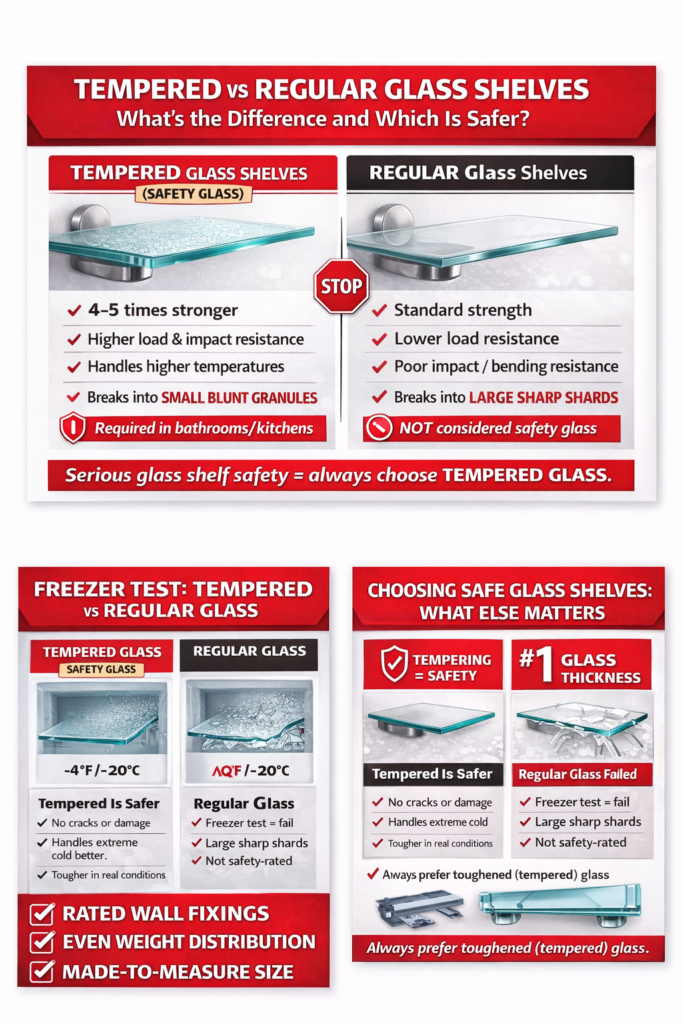
What Is Regular (Annealed) Glass?
Regular glass, also known as annealed glass, is standard float glass that has cooled slowly during manufacturing. This slow cooling leaves the glass in a natural, unstressed state.
Key characteristics of regular glass:
- Smooth, clear appearance
- Easier to cut and drill after manufacturing
- Lower cost than tempered glass
- Breaks into large, sharp shards when it fails
Because of how it breaks, regular glass is not considered safety glass.
Common uses of regular glass:
- Picture frames
- Small decorative panels
- Low-risk, non-structural applications
- Shelves that carry very light loads and are not in high-traffic areas
While it may be acceptable in limited situations, regular glass carries a higher injury risk if it breaks.
What Is Tempered (Toughened) Glass?
Tempered glass (also called toughened glass) is regular glass that has undergone a heat treatment process. The glass is heated to high temperatures and then rapidly cooled, creating internal stresses that dramatically increase strength.
Key characteristics of tempered glass:
- 4–5 times stronger than regular glass
- Highly resistant to impact and bending
- Handles temperature changes better
- Breaks into small, blunt granules instead of sharp shards
- Classified as safety glass
This break pattern is the main reason tempered glass is required or strongly recommended in many household applications.
Strength Comparison: Tempered vs Regular Glass Shelves
| Feature | Regular Glass | Tempered Glass |
|---|---|---|
| Strength | Standard | 4–5× stronger |
| Load resistance | Limited | Much higher |
| Impact resistance | Low | High |
| Heat resistance | Low | High |
| Break pattern | Large sharp shards | Small blunt pieces |
| Safety rating | ❌ Not safety glass | ✅ Safety glass |
For shelving, strength and break behavior are not optional considerations—they directly affect user safety.
Which One Is Safer for Glass Shelves?
Tempered glass is significantly safer.
There is no real comparison when safety is the priority.
Here’s why:
1. Safer breakage
If a tempered glass shelf breaks, it crumbles into small, rounded pieces that are far less likely to cause serious cuts. Regular glass breaks into long, razor-sharp shards that can cause deep injuries.
2. Better load tolerance
Shelves are exposed to:
- Uneven loads
- Accidental knocks
- Items placed and removed daily
Tempered glass handles these stresses far better than regular glass.
3. Required in many household settings
In bathrooms, kitchens, hallways, and areas near people, safety glass is strongly recommended. Some building and safety standards effectively rule out regular glass in these locations.
Can Regular Glass Be Used for Shelves at All?
Technically, yes—but only in very limited scenarios.
Regular glass shelves may be acceptable when:
- The shelf is small and short-span
- Load is extremely light (decor only)
- Shelf is not above head height
- Area has minimal foot traffic
- Safety risk is clearly understood
Even then, many professionals advise upgrading to tempered glass because the price difference is small compared to the safety benefit.
Weight Capacity Differences (Real-World Use)
While exact load limits depend on thickness, span, and support type, the same thickness of tempered glass will always outperform regular glass.
For example:
- An 8mm tempered glass shelf can safely support loads that would put an 8mm regular glass shelf at risk.
- Tempered glass flexes less and tolerates accidental point loads better.
If you’re unsure how thickness and glass type affect strength together, this guide explains real limits clearly:
👉 https://www.glasshelper.co.uk/how-much-weight-can-a-glass-shelf-hold-real-limits-explained/
Tempered Glass Thickness Options for Shelves
Tempered glass shelves are commonly available in:
- 6mm – light use, short spans
- 8mm – most common household choice
- 10mm – heavier loads, longer spans, premium feel
Thickness selection matters, but tempering is what makes the shelf safe in daily use.
If you’re ordering custom shelves, most suppliers allow you to choose both thickness and glass type at the same time.
Bathrooms, Kitchens & Living Areas: What Should You Use?
Bathrooms
- High humidity
- Frequent handling
- Bottles and toiletries
✅ Tempered glass only (8mm preferred)
Kitchens
- Heavier items
- Temperature changes
- Higher impact risk
✅ Tempered glass only (8–10mm recommended)
Living rooms & display areas
- Decorative shelves: tempered preferred
- Books or collectibles: tempered essential
In real homes, tempered glass is not a luxury—it’s a practical safety upgrade.
Cost Difference: Is Tempered Glass Worth It?
Many people assume tempered glass is much more expensive. In reality:
- The price difference is usually modest
- Especially for custom-cut shelves, tempering adds relatively little
- The safety and durability benefits far outweigh the extra cost
Considering that a glass shelf sits above people, pets, or valuable items, tempered glass offers better long-term value.
Important Limitation to Know About Tempered Glass
Once tempered:
- ❌ It cannot be cut, drilled, or reshaped
- All sizing, holes, and edge finishes must be finalized before tempering
This is why accurate measurements are critical when ordering.
Which Should You Choose? (Simple Answer)
Choose regular glass only if:
- The shelf is decorative
- Load is minimal
- Safety risk is very low
- Budget is extremely tight
Choose tempered glass if:
- The shelf will carry real weight
- The shelf is above waist height
- The shelf is in a bathroom, kitchen, or living space
- Safety matters (it usually does)
For most homes, tempered glass is the correct and safest choice.
Ordering the Right Glass Shelves
If you’re planning to buy custom shelves, look for options that allow:
- Tempered (toughened) safety glass
- Multiple thickness choices (6mm, 8mm, 10mm)
- Polished edges
- Made-to-measure sizing
You can explore custom-cut tempered glass shelves here:
👉 https://www.glasshelp.co.uk/glass-shelves/
Final Verdict
Tempered glass shelves are safer, stronger, and better suited to real-life use.
Regular glass may look the same, but it does not perform the same—and when it fails, the consequences are much more serious.
If you’re investing in glass shelves for your home, tempered glass is the smarter and safer decision almost every time.